

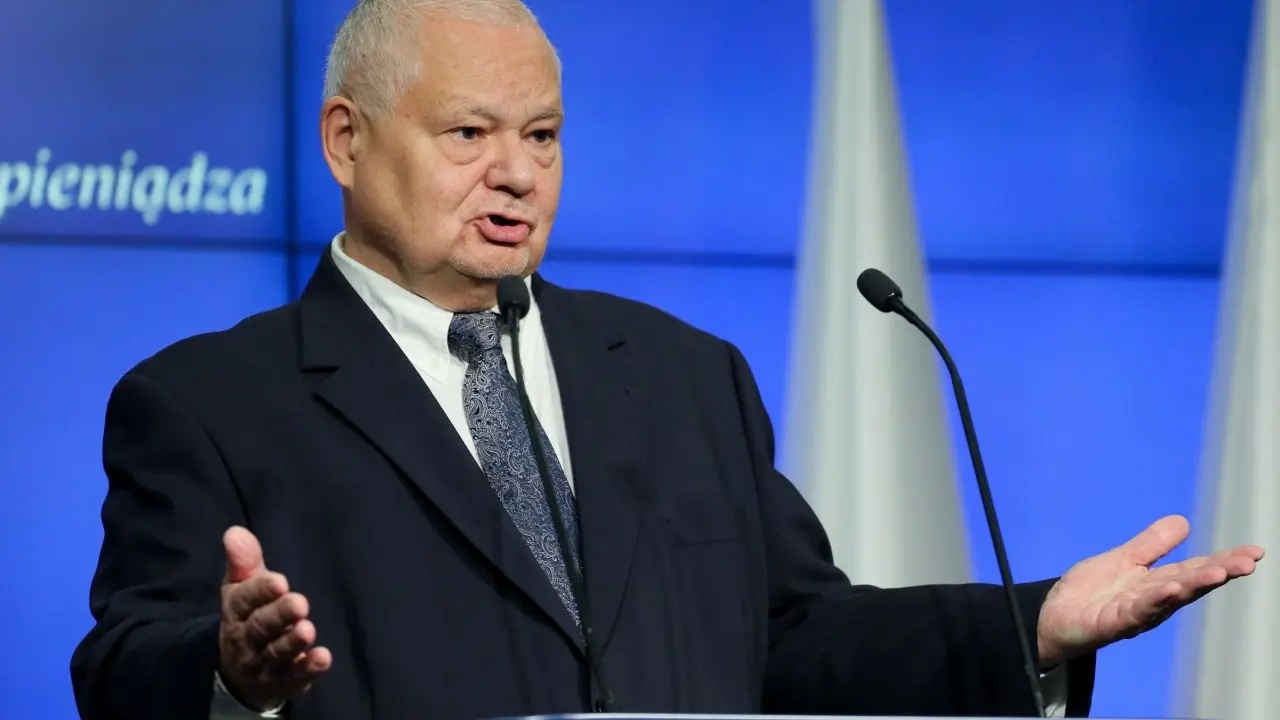
Poland is expected to leave rates unchanged next week, while Hungary, the Czech Republic and Turkey release September inflation data alongside key activity figures
Poland: NBP expected to leave rates unchanged
We expect the National Bank of Poland (NBP) to leave interest rates unchanged on Wednesday 7 October, with the reference rate remaining at 3.75%. On the one hand, headline CPI rose to 4.0%YoY in September, moving well above the central bank's 2.5% target (+/- 1 percentage point). On the other hand, inflation is solely being driven by an external energy shock, with no clear signs of broader inflationary pressures or second-round effects. Core inflation likely declined last month, while fuel and household energy prices account for around 2.5 percentage points of annual inflation.
This means policymakers still have some time before taking any policy action. We believe the debate on monetary tightening may begin in November, when the NBP publishes its new staff macroeconomic projections. We continue to expect rates to remain unchanged for the rest of this year, although we see scope for 50bp of rate hikes in early 2027.
Hungary: Higher fuel prices set to push inflation up
We expect the favourable underlying budget performance to continue in Monday's data release. Following an August deficit caused by a high volume of RRF prepayments, we expect a rebound in September, primarily due to seasonal tax payments.
Tuesday sees the release of industrial output and retail sales data. This is going to be extremely important, as it will involve the impact of the significant summer heatwave, the almost full shutdown of the Paks Nuclear Power Plant, and the voluntary energy reduction activities of households and companies. Consequently, we anticipate a substantial monthly decline in industrial production. Extreme weather conditions have traditionally had a positive impact on retail sales. However, this time, it was met with skyrocketing fuel prices and plummeting fuel sales. Therefore, we expect these two impacts to cancel each other out.
Inflation data will be released on Wednesday. Following the upside surprises across Europe, we are now incorporating this into our inflation forecast for Hungary in September. We are anticipating a significant increase in headline inflation, with fuel prices accounting for around 75% of the acceleration. The other major impact is the recent weakening of the HUF, which is accelerating price changes in imported food, durables, and FX-sensitive services. Other than that, we still don’t expect to see major second-round effects in the data. If our nowcast is close to the actual outcome, we will need to revise the full-year 2026 inflation forecast upwards from 1.7% to 1.8-1.9%.
Czech Republic: Inflation set to jump on higher energy prices
Tuesday 6 October brings the flash estimate of September CPI. Annual headline inflation likely surged in September, with energy prices being the main driver of the increase. That said, we expect a punchy price increase in fuels, but also monthly price gains in regulated prices and foodstuffs. Czech industry entered solid ground this year, and real industrial output growth likely maintained a solid pace in August. Decent export performance is set to have contributed to a less pronounced trade deficit in the same month. Households still benefited from robust nominal wage gains combined with subdued inflation, which probably enabled real retail sales to improve in August. Meanwhile, the unemployment rate is set to have risen marginally higher in September.
Turkey: Annual inflation expected to fall further
We expect a further decline in annual inflation from 31.5% in August to 30.0% in September, with a monthly increase of 2.0%. The benign monthly figure would be driven by food inflation and education despite a rise in transport, while the drop in annual inflation is to be supported by a large base in the same month last year.
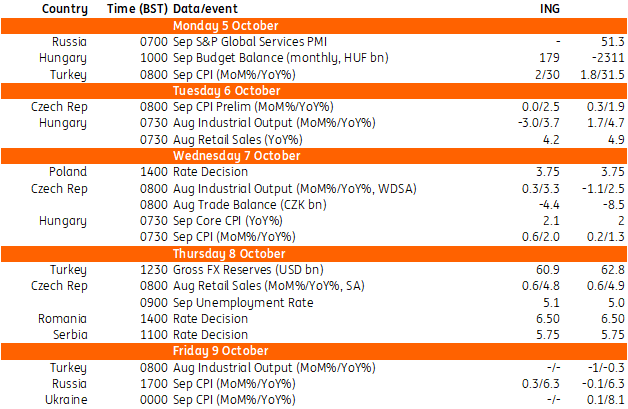
Key events in CEE & CCA next week


Comments
Log in or sign up to join the conversation.