

Markets will be watching UK inflation and labour market data next week, while US industrial production and the July FOMC minutes should provide fresh insight into the strength of activity and the Federal Reserve's policy outlook.

THINK Ahead in developed markets
United States (James Knightley)
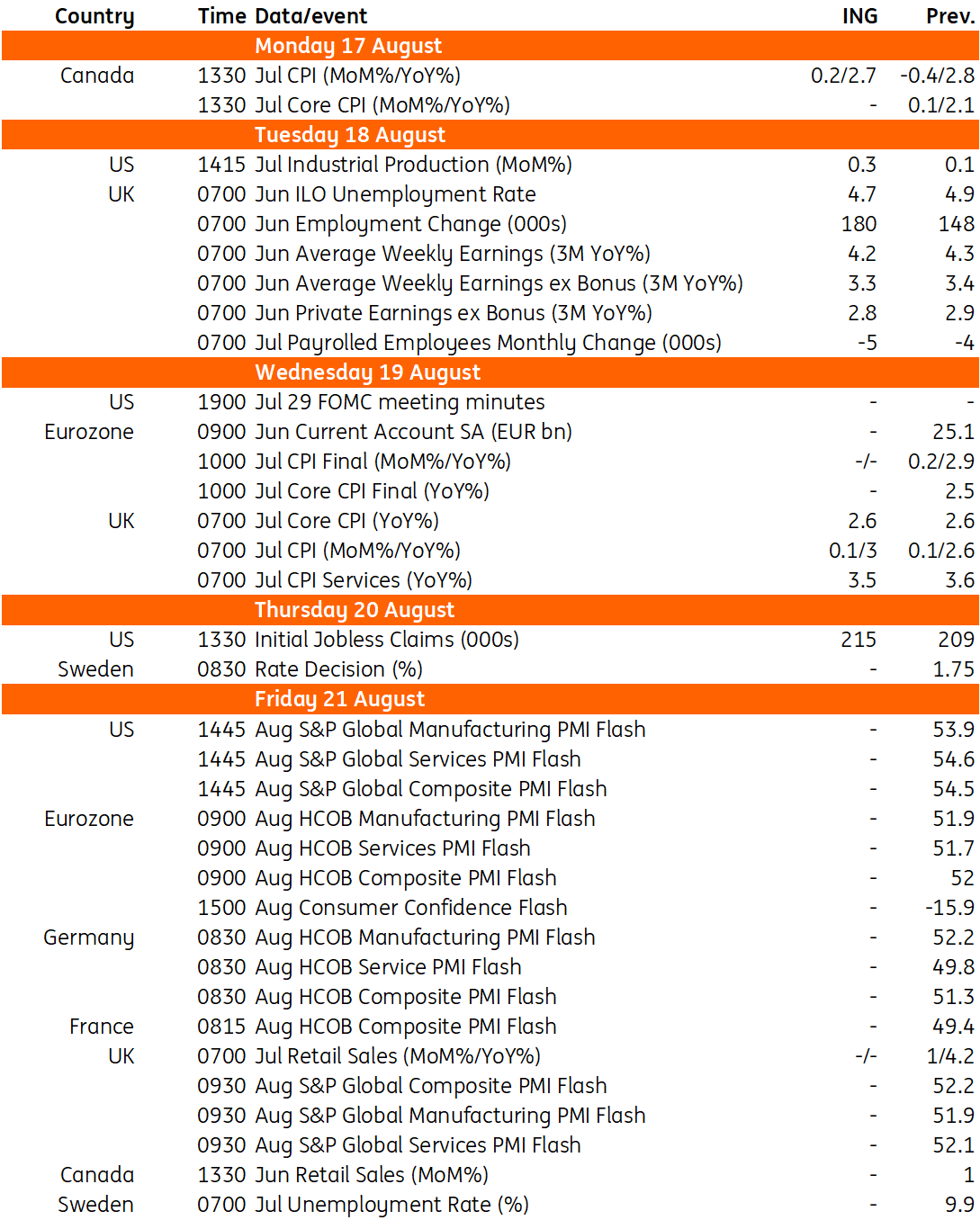
Industrial production (Tue): Market expectations regarding potential Federal Reserve interest rate hikes have diminished in the wake of poor jobs numbers and benign inflation prints. Three weeks ago, a 25bp rate hike on 16 September was fully expected, but that has since dropped to less than a 50% chance. The data calendar is light for the coming week, with industrial production expected to rise perhaps 0.3% month-on-month based on the strength of the ISM index. It arguably could be even stronger, but a dip in hours worked led us to be somewhat cautious in our prediction.
FOMC minutes (Wed): The release of the July FOMC minutes will also be closely followed given the muddled messaging from new Fed Chair Kevin Warsh at the press conference. We will hear whether there is any shift in thinking within the broader Fed after the June summary of economic projections showed a 9-9 forecast split on whether they predicted a rate hike this year.
UK (James Smith)
Jobs/wages (Tue): Expect the jobs market to remain fragile; private-sector hiring, particularly in consumer services, remains weak. Surveys don’t point to an imminent improvement. Private sector wage growth is biased lower in the near term, and is set to remain below the level the Bank of England views as consistent with its medium-term 2% inflation target.
Inflation (Wed): A 13% rise in the household energy price cap is likely to have dragged headline inflation back up to 3% in July, though the pickup is dampened by a circa 3% fall in diesel/petrol costs through July. Services inflation is likely to fall further, despite the usual July bounce in social rents. Though headline inflation is likely to rise towards 3.5% later this year, we see little reason for the Bank of England to hike rates through 2026. We expect cuts to resume in 2027.
Key events in developed markets


Comments
Log in or sign up to join the conversation.