


A skirmish broke out on Twitter.
I don't know the starting point of the beef, but the Hedgeye guys went after Ryan, who responded with the following.
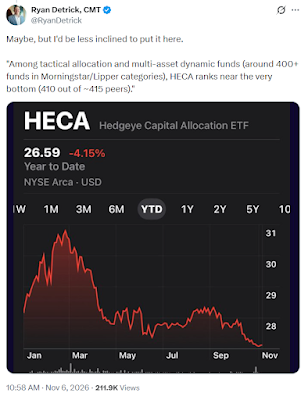
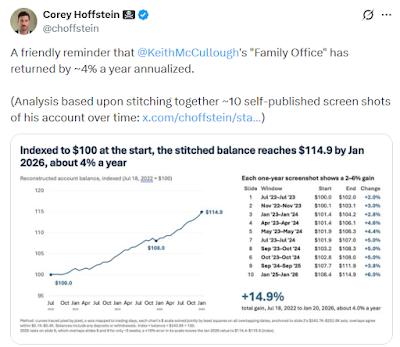
Then Corey jumped in and based on the screenshot and the thread, there's ongoing beef there too.
The HECA ETF is a new one to me. Based on the factsheet, it is a multi-asset strategy, based on a proprietary process for evaluating macro factors related to increasing/decreasing GDP and increasing/decreasing inflation. The four conditions are referred to as quads so maybe it is quadrant-inspired? It seems like it performs an analytical assessment versus just maintaining an allocation to all assets, relying on at least one of them doing well no matter what is going on, which is what PRPFX does. HECA is trying to get out in front of macro changes, and PRPFX is trying to be ready for whatever comes.
The fund's website includes the term all-weather, and the factsheet says HECA could either be a core holding like some of the multi-asset funds we've looked at recently or a satellite holding as a diversifier. The primary objective appears to be never going down more than 15% and then providing growth when possible.
This backtest provides some good context.
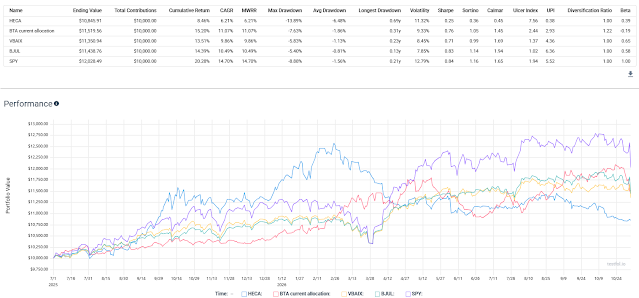
Why is HECA doing poorly this year?
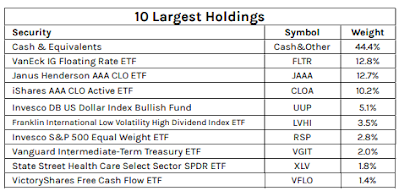
The holdings don't tell the story. Gemini says the turnover is 671%, which is very high, and that the fund got caught wrong-footed on equity trades, including thematic ETFs earlier in the year. The way this is framing itself, HECA reminds me of BIVIX and DYMIX in terms having no idea what to actually expect from the fund.
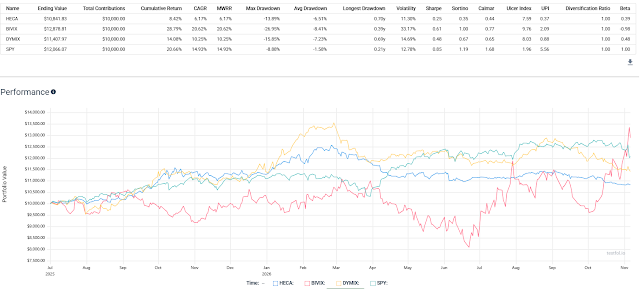
The funds aren't necessarily bad or good. It's just that at times they look like the broad market and at other times they look nothing like the broad market. If they never look like the market, then ok, low-correlation diversifier. But if the correlation changes by a lot and does so frequently, that's tougher to implement.
The 15% max drawdown sounds like a 15% buffer, which is why I included BJUL in the first backtest. Unfortunately for HECA though, it has lagged far behind BJUL and done so with much more volatility. Here's some harshness from Gemini.
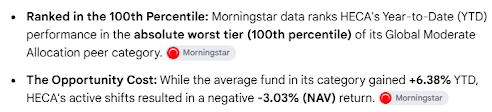
The idea of a fund that solves all problems is intellectually appealing so I am always going to want to dig in, but whatever someone wants to get out of HECA, there are probably better ways to get it.



Comments
Log in or sign up to join the conversation.