

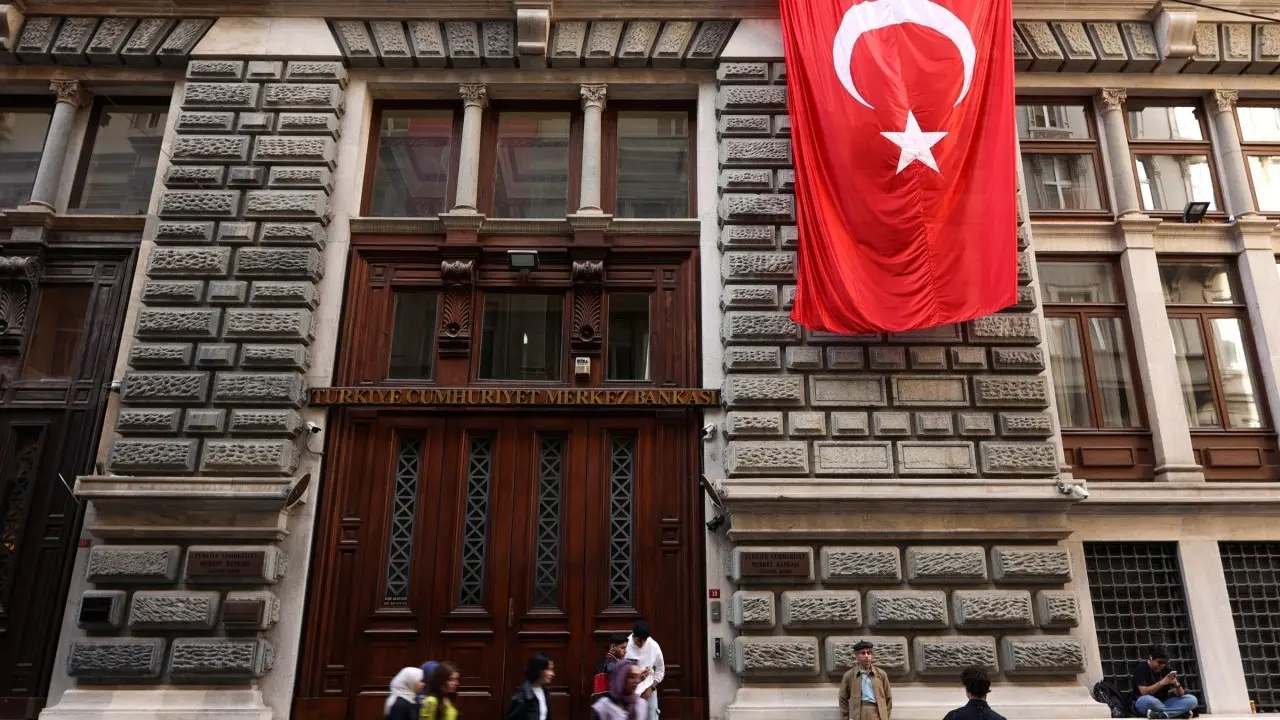
The Turkish central bank kept rates on hold, signalling continued caution amid heightened geopolitical uncertainty and growing inflation risks from rising oil prices
In the September rate-setting meeting, the Central Bank of Turkey (CBT) maintained its policy rate (1-week repo rate) at 37%, and kept the interest rate corridor stable with the upper and lower bands at 40% and 35.5%, respectively. The decision was widely expected and suggests the central bank remains concerned about geopolitical risks, despite easing underlying inflation pressures and subdued domestic demand.
Last month, the CBT eased liquidity conditions, bringing the effective cost of funding down from the corridor's upper band to the policy rate. The move was based on two arguments: that tensions between the US and Iran had begun to subside, and that weak demand was limiting the impact of cost pressures on inflation expectations and broader pricing behaviour.
Ahead of today's meeting, the prevailing expectation was a hold given the limited time that had elapsed since its liquidity move. Additionally, recent developments have likely impacted the CBT decision, including renewed geopolitical tensions that have pushed energy prices higher and increased the risk of a rebound in September inflation, plus an adjustment in the government’s 2027 inflation forecast from 9% to 21%, implying a further disinflation pushback in the current stabilisation programme which launched in mid-2023. Against this backdrop, the MPC opted to leave the policy rate unchanged.
The CBT has continued to keep an eye on both the growth and inflation outlook. It expressed greater confidence that domestic demand remains weak, pointing not only to recent economic data but also to "the limited pass-through of supply shocks to domestic prices", the bank said in its statement. This suggests that the CBT is confident that slowing economic activity has been instrumental in preventing broad-based second-round effects from the energy price shock.
Additionally, in previous MPCs, the bank has provided its assessment of released inflation data and its expectation for the upcoming figure. In the September statement, it does not provide a specific analysis phrase but adds a general sentence that: “Despite monthly fluctuations, recent inflation figures and leading indicators suggest that the underlying trend of inflation is decelerating."
Regarding the forward guidance, the CBT reiterated a prudent meeting‑by‑meeting approach and kept the door open to further tightening if needed. In addition, it left the messaging around the macroprudential framework and liquidity management unchanged, indicating that a cautious approach in these areas would be preserved.
Overall, the CBT has reiterated its narrative of improving underlying monthly inflation momentum, as higher rates and slower loan growth have weakened domestic demand, containing the indirect effects on inflation.
Given this backdrop, we see the policy rate at 35% by the end of 2026, with two 100bp cuts in the last quarter of this year. The key risks are the Middle East conflict and the inflation outlook, while the central bank will also continue to closely monitor demand conditions, international reserves and depositor behaviour to determine the pace of cuts.



Comments
Log in or sign up to join the conversation.