


Every once in a while in my investing journey I come across a company value versus stock price disconnect that feels absurd but then the value/price dissociation continues to become even more pronounced. I perceive that I have found one of the best deals in the market at the time and the deal just… keeps getting better. These tend to align with my best performing stocks over the next months-to-years.
The most recent example is Gain Therapeutics (GANX). Several years ago I was convinced the company was undervalued and that the company had the best GCase-targeting Parkinson’s therapy in development (at least compared to ones that had any publicly available information on them). Since then, the stock price has gone down with stock dilution keeping the market capitalization relatively steady, and the evidence for their lead drug’s efficacy has become more impressive and clinically compelling.
I’ve written about Gain in several articles over the past few years, and readers can access those here:
I’ll focus on the most recent company and competitive landscape events instead of rehashing anything that I’ve already written about.
Those articles go into great detail on how GT-02287 (Rexaceract) works and why it was expected to be superior to other GCase programs in the same Parkinson’s development landscape. Just recently we have some clinical evidence that this theory is true.
Competitive Landscape: Fallout as Predicted
In June 2026, Bial reported topline results from its phase 2b clinical trial studying the effects of BIA 28-6156 (pariceract) in GBA-associated Parkinson’s. BIA 28-6156, which is a GCase activator molecule, did not demonstrate significant differentiation from placebo on the primary or key secondary endpoints measured.
For those unfamiliar with GCase (glucocerebrosidase, it is a lysosomal enzyme that breaks down lipids (such as glucosylceramide) into glucose and the backbone lipid (e.g. ceramide). Breaking down these sphingolipids is critical for lysosomal function—the cellular waste management system. GCase is encoded by the GBA1 gene, and its function is impaired in both GBA1-associated as well as idiopathic Parkinson’s disease.
GCase Investors who pay attention to details would have potentially expected Bial’s failure because GCase, particularly in the case of GBA1 mutation but also in idiopathic Parkinson’s, is subject to misfolding (due to GBA1 mutation) or impaired endoplasmic reticulum quality control (due to alpha synuclein accumulation). As a result, GCase is handled by the cell’s unfolded protein response (UPR) and endoplasmic reticulum-associated degradation (ERAD) pathways instead of shuttled to the lysosome. This causes additional cellular stress, a shortage of lysosomal GCase, and further increased alpha synuclein, resulting in a dysfunctional feedback loop.
In other words, if GCase can’t make it to the endoplasmic reticulum, and with GBA1 mutations, it won’t even fold properly, it's not a stretch to postulate that simply activating the inadequate amount of misfolded/defective lysosomal GCase won’t have a substantial effect on the lysosomal function, let alone a clinical effect for the Parkinson’s patient.
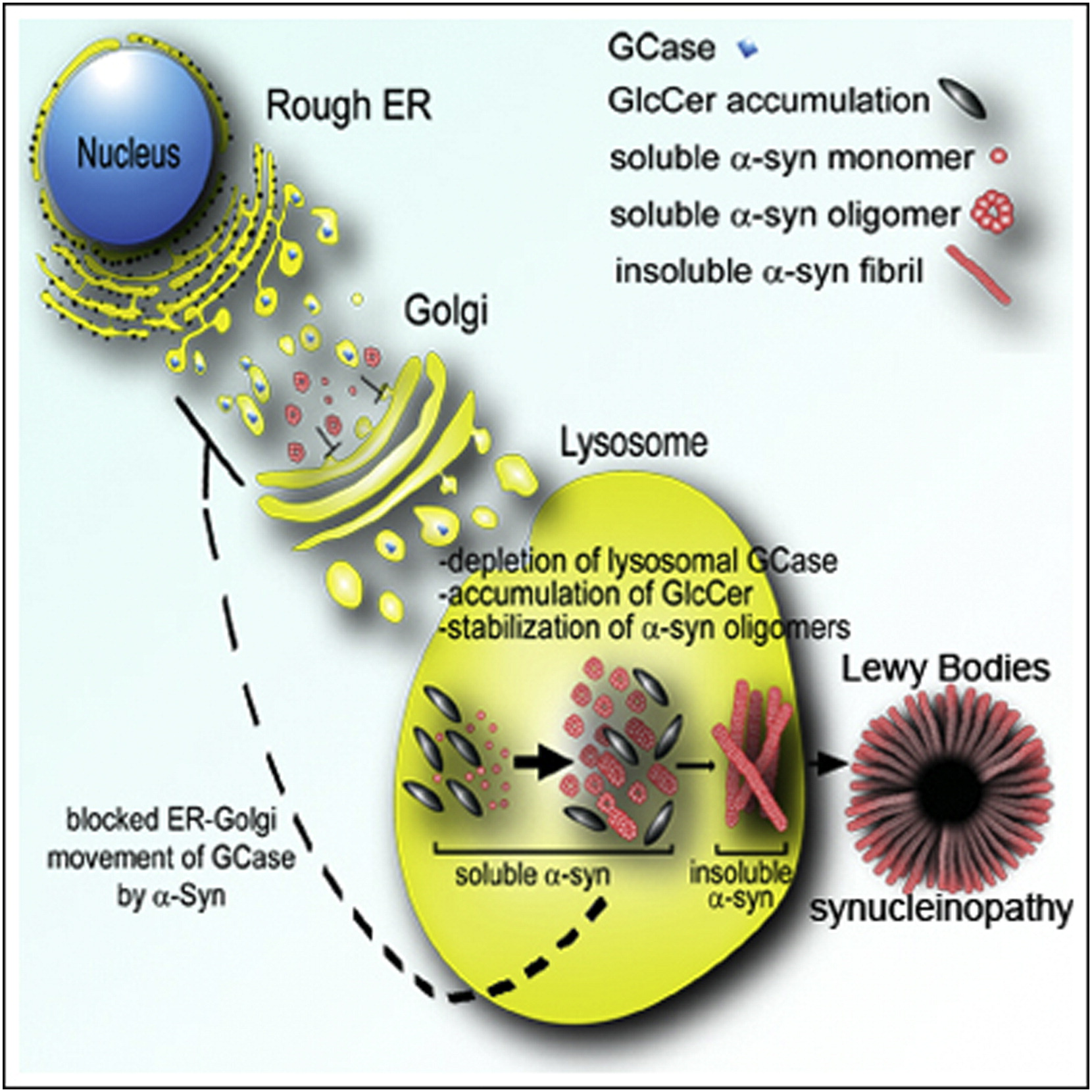
Bial axed its asset. While this is a sad outcome, astute Gain investors could have seen this coming. In contrast, Gain’s GT-02287 assists GCase folding in the endoplasmic reticulum all the way to its transport to the lysosome and mitochondria where it can actually perform its work. Gain’s drug contrasts with other drugs in its class by affecting much broader aspects of the GBA1/GCase/Parkinson’s disease cascade.
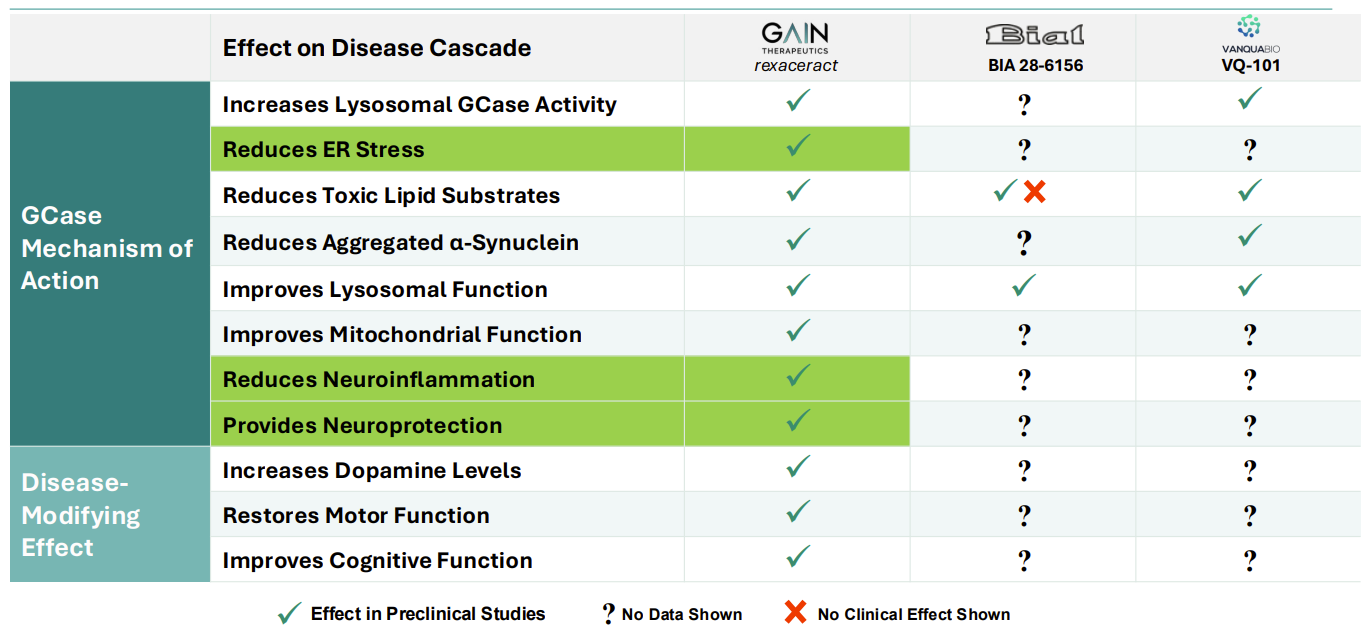
Gain Therapeutics Corporate Presentation
While Vanqua, another of Gain’s peers, has proven to reduce aggregated alpha synuclein (unlike Bial), it’s drug is also just a GCase activator (in this case, allosteric). Whether or not it improves shuttling of GCase to target organelles or improves ER stress (indicative of improved shuttling) is not known publicly, to my knowledge. The company has only reported positive target engagement, and it may run into the same difficulties as Bial, though the company has noted that they have surpassed GCase activation thresholds expected to block the accumulation of insoluble alpha synuclein, something Bial may not have been able to accomplish. Regardless, Vanqua has not reported clinical outcomes yet, but may be releasing such data this year from their phase 1’s open label extension. If they report encouraging data, it will reflect well on the GCase pathway as a relevant target in Parkinson’s, and if they report discouraging data, it is likely that their biomolecular strategy was simply flawed from the start. Both outcomes benefit Gain, which has the superior approach.
Gain’s Data Does Not Disappoint
Gain has also generated 150-day clinical data with its phase 1 extension. This comes in the form of MDS-UPDRS scale data. Overall, the patients experienced a reversal in Parkinson’s symptoms on day 90 which rebounded slightly by day 150. Day 270 data is expected in the near future.
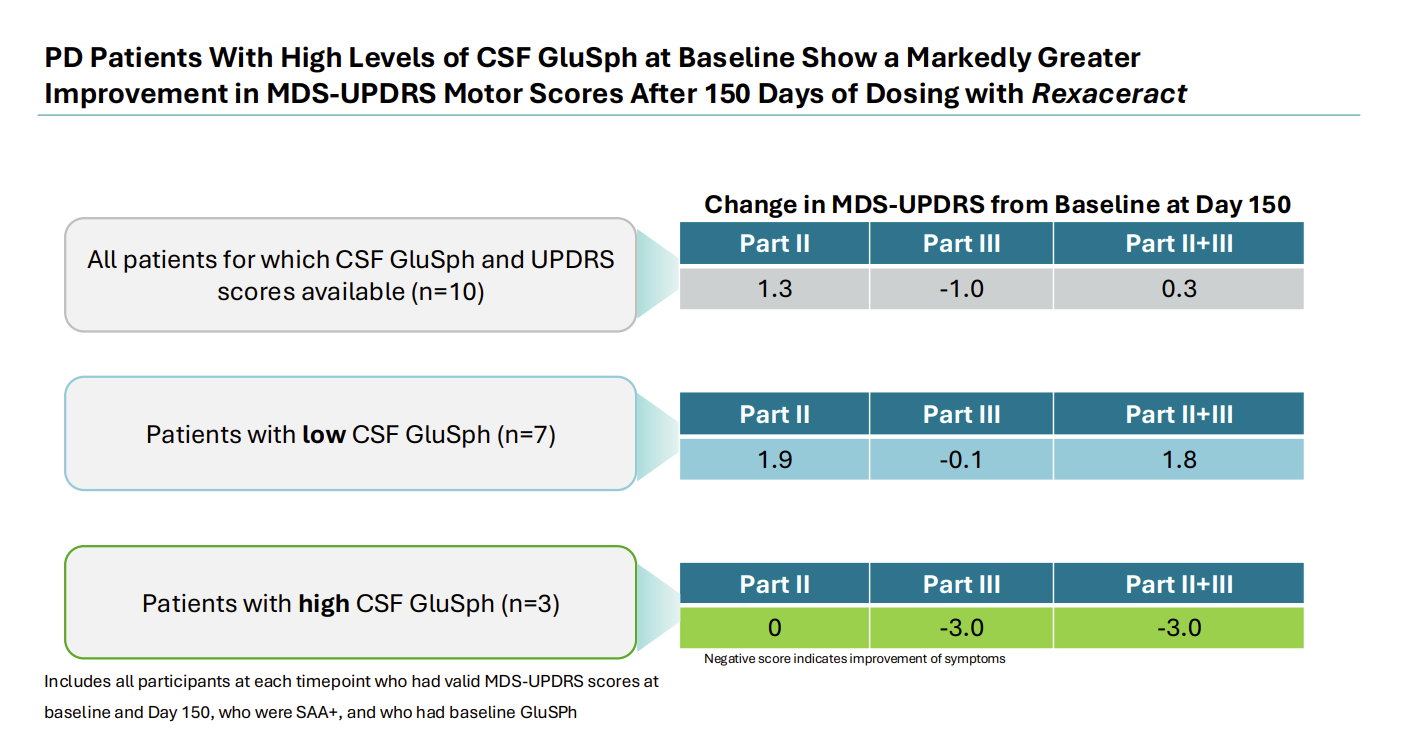
Gain Therapeutics Corporate Presentation
What makes looking at Gain’s data a little bit tricky is that there is not a placebo group (it was a phase 1b trial that had an extension). However, we know that Parkinson’s doesn’t naturally regress, and so we can use Roche (RHHBY) and Prothena (PRTA)’s fairly large phase 2 trial (PASADENA, n=316) which studied the effect of prasinezumab in early Parkinson’s disease to get an idea of how well GT-02287 might separate from a placebo group, as well as how it might compare to other drugs which Big Pharma views favorably. Roche licensed prasinezumab from Prothena over a decade ago, and there is a phase 3 trial underway.
Gain’s MDS-UPDRS Part III data compares very favorably to the entirety of the PASADENA trial participants’ data. Part III is the only part separated out in the PASADENA journal publication, so it is what is compared to Gain’s data. PASADENA didn’t separate out Parts II and III, or Part II alone, like Gain did.
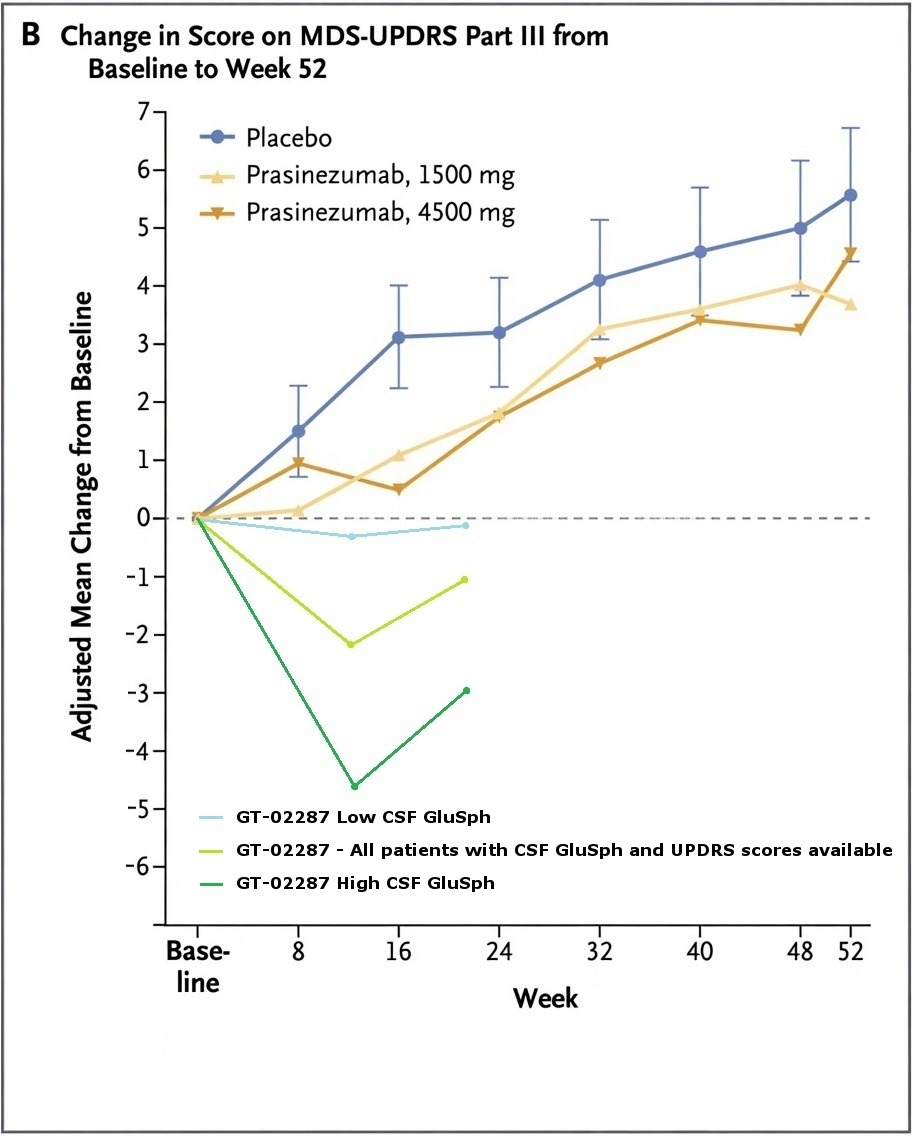
GT-02287 MDS-UPDRS Part III Day 90 and Day 150 data overlaid on PASADENA trial, Prasinezumab data. Adapted from: Trial of Prasinezumab in Early-Stage Parkinson’s Disease
As one can see, the GT-02287 data makes both prasinezumab arms look almost like another placebo.
Prasinezumab is a monoclonal antibody directed at aggregated alpha synuclein. According to Prothena (NASDAQ: PRTA), “Roche has stated that prasinezumab has peak sales potential greater than $3.5 billion (unadjusted) and could be the first disease-modifying treatment for a condition that affects 10 million people worldwide.” If Roche’s (OTCMKTS: RHHBY) forecast for this drug—that only modestly slows progression—is $3.5 billion in peak sales, what would the peak sales forecast be for a more robust drug that partially reverses Parkinson’s and may prevent progression?
While there’s a bit of apples-to-oranges comparison here, the enrollment criteria between trials were somewhat similar:
Criterion | PASADENA (Phase 2, Prasinezumab) | Gain Therapeutics GT-02287 Phase 1b |
Age | 40–80 years | 30–85 years |
PD Diagnosis | Idiopathic PD (MDS criteria implied); diagnosis ≤2 years; bradykinesia + one other cardinal sign; DaT-SPECT consistent with PD | Clinical diagnosis of PD per MDS criteria; time from diagnosis ≤5 years (or ≤7 years in some descriptions) |
Disease Severity | Modified Hoehn & Yahr (H&Y) stage 1 or 2; early-stage, mild symptoms | Modified H&Y stage 1 to ≤3; absence of severe motor fluctuations and disabling dyskinesias |
Treatment Status | Treatment-naïve or stable MAO-B inhibitor (≥90 days) | PD drug-naïve or on stable PD treatment (≥3 months) |
Genetic Focus | Excluded certain familial PD genes (e.g., Parkin, PINK1, DJ1) | Includes GBA1-PD (confirmed pathogenic variant) and idiopathic PD; excludes other major PD genes (e.g., LRRK2) |
Cognition | MMSE >25 (no significant impairment) | No dementia or moderate cognitive impairment (MoCA >17) |
Other Key Exclusions | Other parkinsonian syndromes; significant prior dopaminergic meds; previous prasinezumab exposure | No Gaucher disease; no other neurological disorders; various comorbidities (cardiac, hepatic, etc.) |
Additional Requirements | DaT-SPECT positive | Positive SAA in CSF (in some protocol versions); willing to undergo genetic testing; BMI 18–40, weight ≥55 kg / <120 kg |
Trial Size / Focus | ~316 enrolled; efficacy-focused (disease modification) | ~15–21 participants; safety, tolerability, PK/PD, biomarkers (small exploratory) |
Although there are small sample sizes in Gain’s phase 1 extension, it's really hard to look at that graph comparing the Roche/Prothena drug versus Gain’s drug, and conclude that Gain’s drug might not be doing anything. In my opinion, it’s beyond a shadow of a doubt that the drug has clinical activity, despite being a phase 2 ready asset.
Additionally, Gain will have 270 day data coming out in the next few weeks or months, which should be really telling as big pharma will be able to see the durability of clinical responses well past any time frame that could be considered placebo or random chance that patients just didn’t progress in their disease. This could be a major catalyst not just for the stock, but also for Gain to finalize an M&A or partnership deal. The chances that day 270 data is encouraging is high, as 16/19 patients who completed the original phase 1b study enrolled in the extension, and apparently the drug safety and monitoring board (DSMB) was impressed with this fact, as this indicates physicians and patients are perceiving a significant clinical benefit. In fact, one of the three patients who didn’t enroll in the extension apparently wanted to but could not due to it requiring too much travel. Either way, all signs appear positive.
Recent Progress and Next Steps
Gain’s CEO Gene Mack issued a letter to shareholders last week outlining the company’s recent progress and next steps. The company chose “rexaceract” as the International Nonproprietary Name (INN) for the drug. Gain also announced that it had received FDA IND clearance for rexaceract/GT-02287, so now the coast is clear for them to move forward with development in the U.S. with a pharma partner if they choose to. IND clearance is also what many top investment funds require to buy into a biotech company, so this may also clear the way for increased institutional interest.
The company may pursue FDA Fast Track Designation or Breakthrough Designation with this program. Additionally, a Special Protocol Assessment (SPA) may be appropriate for Gain to pursue treatment of patients only with high GluSph, which will also likely reduce risk and patient population size requirements in future registrational/phase 3 clinical trials, due to the rapid and robust clinical response observed and the very straightforward patient enrichment strategy targeting high GluSph.
Gain’s COB Khalid Islam is a master of strategy and dealmaking and I expect the company will make a wise decision on their path forward—potentially including once of these scenarios or special FDA designations. An SPA for high-GluSph patients may be the optimal path forward, reducing risk and providing a quicker path to approval. After all, ~50% of the patients in Gain’s trial were high-GluSph, so this is likely a large percent of the overall Parkinson’s population. Either way, it is likely an ongoing effort to rule out who the drug doesn’t work on to eliminate risk and narrow down exactly who might benefit.
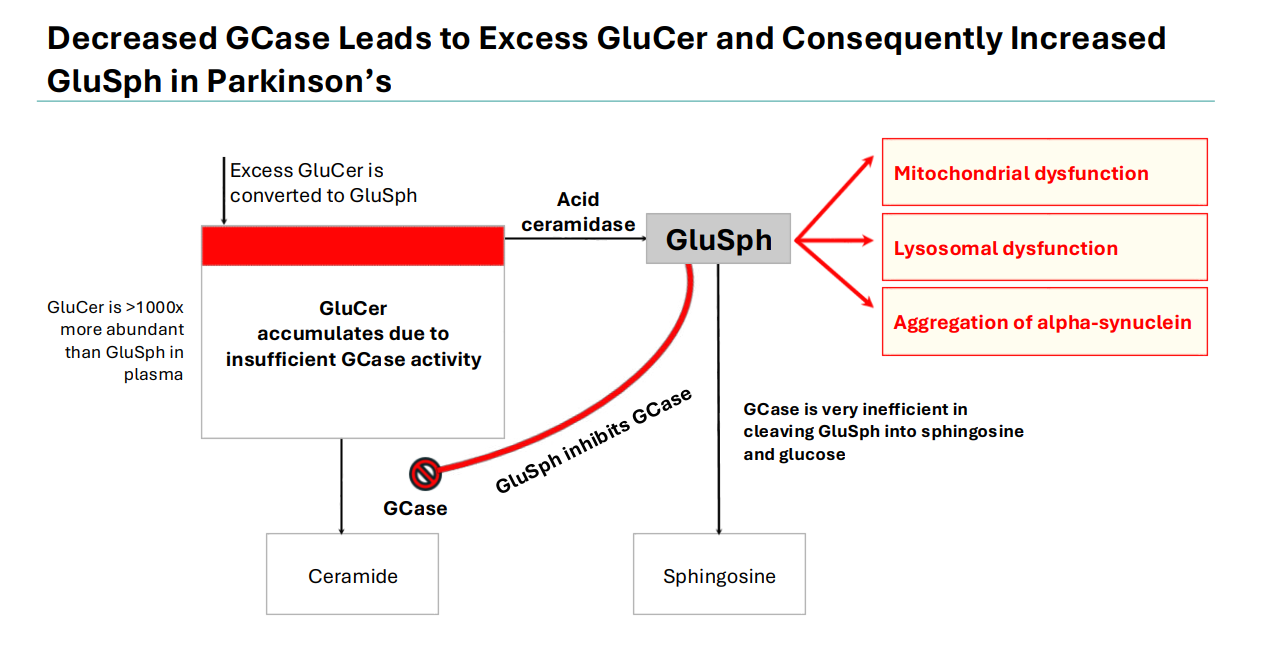
CSF GluSph being elevated means that brain GCase activity is low, as opposed to GluCer which has poor or no correlation with the disease. So it is a great biomarker for Parkinson’s pathology and is in-line with GT-02287’s mechanism of action. Since GT-02287 rescues GCase activity, and GluSph is indicative of low GCase activity, and early results suggest very robust efficacy in treating high-GluSph patients, it would make sense for Gain to pursue GluSph as an inclusion criteria for future development, even if GT-02287 appears to stabilize disease progression in low-GluSph Parkinson’s patients.
Gain Therapeutics Corporate Presentation
Dr. Islam has a track record of successful drug development investments including the billion and multi-billion dollar acquisitions of Gentium (Nasdaq: JAZZ) and Immunomedics (Nasdaq: GILD). Also, there are no FDA-approved disease-modifying treatments for Parkinson’s yet. GCase dysfunction causes GluSph to accumulate, which is now known to contribute to disease progression. GT-02287 is the first and only treatment that has reduced GluSph, and it did so in 100% of the high GluSph patients.
So the picture painted here is something like:
Gain reduces clinical development risk via enrolling high-GluSph patients in their next clinical trial, while obtaining regulatory blessings and potentially special designations for the drug. Dr. Islam and his team use this great leverage to ink a mutually lucrative deal with a pharma partner.
Gaining Traction
Gain’s early data is so promising that the company could go from obscurity to notoriety with just the comment of the right person. In fact, just a few weeks ago Superman actor Dean Cain, along with his father who has been battling Parkinson’s for years, met with Gain. Dean and his father lent their support to the company and their mission.
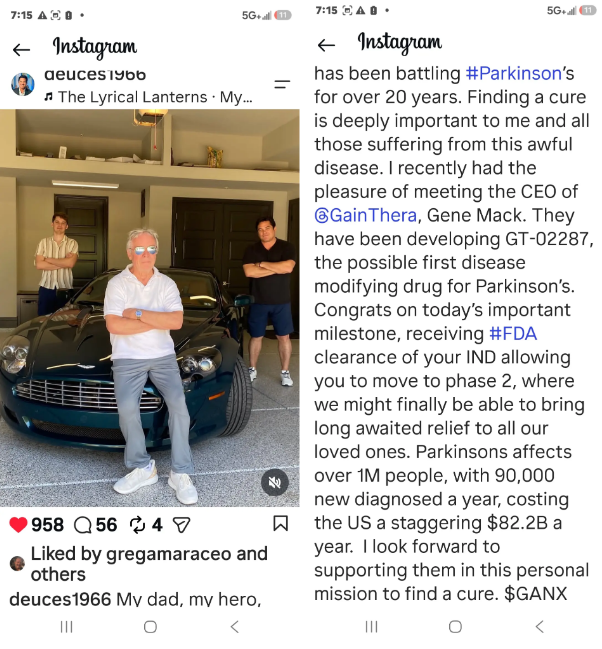
Dean Cain is apparently good personal friends with Dr. Oz and President Trump. Now obviously that doesn’t mean the company gets FDA approval, but getting the attention of the right entity never hurts, whether it’s a regulatory body, investor, big pharma company, or just for biotech industry talent or general business connections.
Why Now?
I previously mentioned how the time may finally be ripe for Gain to ink a deal with pharma. Big Pharma has a known “patent cliff” approaching, and there are limited desirable assets, especially in neurodegeneration, which is a sweet spot of interest for Bristol-Myers Squibb (BMY) (NYSE: BMY) and others such as Biogen (BIIB) (NASDAQ: BIIB), Eli Lilly (LLY) (NYSE: LLY), and Roche (OTCMKTS: RHHBY). Lilly in particular has an incredible amount of money to spend, and an absolutely gigantic market cap never hurts if they somehow would ever need capital.
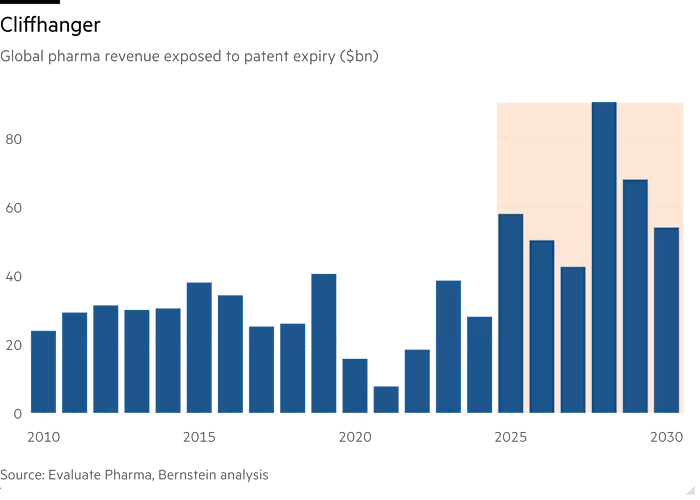
Big pharma’s scramble over patent cliff will be costly
The only way out for the majority of large pharma is to acquire their way out. Biotech is experiencing tailwinds as a sector, including a revamped FDA that requires one pivotal trial for approval. Recent initiatives by the FDA are encouraging signs that the drug could be approved even with a pivotal phase 2.
Regardless, nobody was going to do a deal until IND was approved, as the asset was too valuable for Gain, and business development at pharma would not want egg on their face from an FDA IND rejection. Gain’s phase 2 program can also be engineered to be significantly derisked at this point with the biomarker work they’ve completed. This confluence of clinical data, regulatory progress, patent cliff pressures, and well-capitalized pharmas increases the chances of a deal being done.
Conclusion
The bottom line is that time is ticking for partners to jump in before Gain executes this phase 2 trial themselves. If a phase 2 is positive, the ask for GT-02287 will go up significantly. Shareholders are in a good spot, whether this means waiting for phase 2 results or getting a partner in the near term. Some may complain that there's dilution risk, and that is true, but I see funding a phase 2 trial more as an opportunity to have an even bigger exit from an investment I’m pretty confident will be a big success.
I have already offered my thoughts on the valuation of this company in prior articles. Nothing has changed except that I have increased conviction that Gain will be a success.



Comments
Log in or sign up to join the conversation.