

Forecasting is generally a mugs' game, no more so than in forecasting interest rates. For good and valid reasons, the forecasts for long-term rates in early 2018 were touting a host of conditions that would lead to a steady rise in the 10-year rate in the United States. Perhaps the single most important factor driving interest rates higher would be strong economic growth as the world finally shrugged off the weight of the post-2008 financial crisis. The U.S. economy was given a further boost from a huge corporate tax cut. Optimistically, analysts thought that the U.S. economy could grow at a sustained real rate of 3 per cent or better in 2018; that unemployment would fall below 4 percent, and that inflation would remain in check around the Fed’s target of 2 percent. Lastly, this would be the year that wage growth accelerated in response to the low unemployment rate. Economic growth, unemployment, and inflation clocked in close to their predictions. The exception was that there was no acceleration in wage growth.
Bond yields were expected to move higher in response to tightening by the Fed. The Federal Reserve has made it clear that its policy of extraordinary accommodation has ended. Several successive increases in the Fed funds rate were anticipated and, perhaps more importantly, the unwinding of quantitative easing would also push fixed-income yields higher as the year unfolded. Bond market gurus started to muse that the 35-year-old bull market was at an end and that we should anticipate the beginning of a bear market for bonds. In addition, the higher issuance of government debt would likely add to the pressure on yields. Finally, there was a widespread expectation that worldwide long-term rates would move up, partly in tandem with those in the United States, and partly in response to a generally positive outlook for the global economy. And, indeed, real rates of interest were moving up faster than nominal rates, an indication that economic growth was picking up speed.
Now, as the year is coming to a close, we see that the bond market predictions disappointed many forecasters (accompanying table). Long-term rates did not take off and moved very little when viewed in the context of expectations expressed early in the year.
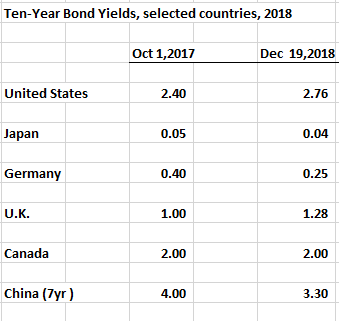
What threw these forecasts off were a series of developments, some foreseen and others unforeseen including:
· Inflation stubbornly remaining in and around the 2 per cent range;
· World trade weakening as the China-US trade tensions intensified and tariffs dominated increasingly a larger share of the bilateral trade;
· The negative impact on business capital formation from the withdrawal of liquidity (quantitative tightening by the Fed);
· The disinflationary effects of a deep slump in oil prices; and,
· The slowdown in total output spawning growing sentiment that a recession is not too far off.
Finally, these developments were not lost on the Fed in its rate-setting deliberations. Today’s announcement that the Fed will take a more gradual approach towards rate hikes in the future--- i.e. fewer and farther between--- signals to the financial markets that long-term rates are not going to go up as previously expected.


Comments
Log in or sign up to join the conversation.