
At first, that sounds ridiculous. Then you look at what Nvidia and Wall Street are actually doing. |
SECTION 01 Nvidia, THE AI CENTRAL BANKER |
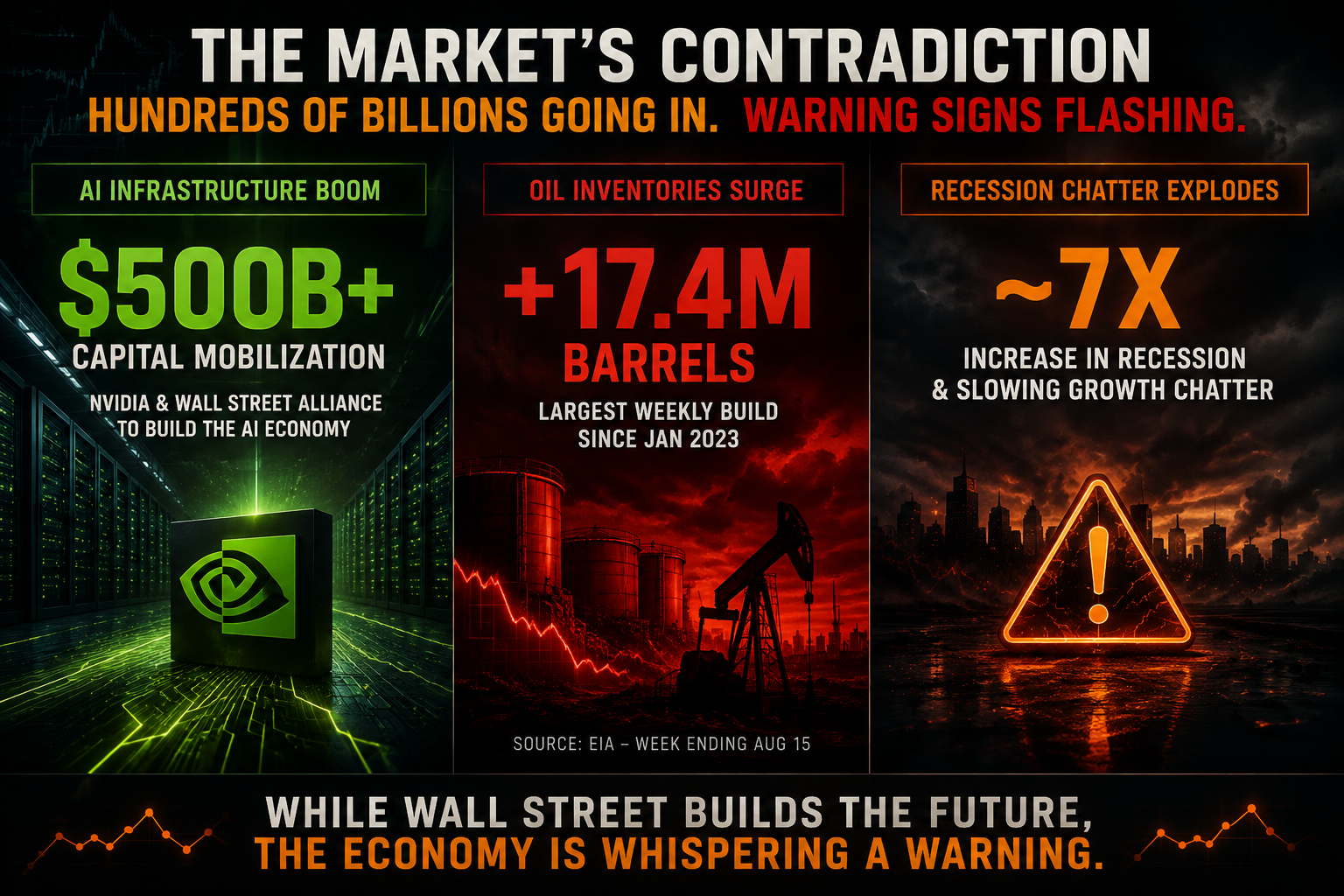
Nvidia just teamed up with Apollo, BlackRock, Blackstone, Brookfield, Goldman Sachs and KKR to mobilize more than $500 billion for AI infrastructure, effectively turning compute into an investable asset class. Nvidia isn't simply selling chips anymore. It's helping build the financing machinery that lets companies borrow enormous amounts of money to buy infrastructure that runs on Nvidia chips. Korra calls it a shadow credit system. Wall Street, naturally, loves it. Washington can spend years debating how to classify a crypto token, but give the bankers a trillion-dollar technology boom and somehow the financial engineering gets done remarkably quickly. The important question is no longer whether AI is real. It's whether these companies can earn enough money to justify the staggering amount being spent. Nobody needs AI to fail for this trade to get ugly. The returns just need to arrive slower than the bills. |
|
 |
|
SECTION 02 SOMETHING DOESN'T ADD UP |
While hundreds of billions pour into AI, Korra has detected roughly a 7x surge in recession and slowing-growth chatter across the data she monitors. Oil isn't exactly screaming boom either. U.S. commercial crude inventories recently jumped 17.4 million barrels in a single week, despite expectations for a decline. One report doesn't make a recession. But the contrast is hard to ignore: Wall Street is financing one of the largest infrastructure expansions in history while parts of the real economy are flashing warning signs. And Bitcoin now has to compete inside that environment. Then came the strangest headline of the week: Michael Saylor sold Bitcoin. Strategy sold 1,690 BTC for $108.6 million, using the proceeds to repurchase STRC preferred shares, according to its SEC filing. No, Saylor hasn't turned bearish. Strategy still held 840,447 BTC afterward. What's interesting is that Bitcoin is no longer simply the destination of Strategy's capital machine. Bitcoin has become part of the machine. Debt, preferred shares, equity, buybacks and BTC now move around the same corporate balance sheet. AI is moving in the opposite direction toward the same place: what began as software is becoming a trade in credit, data centers, land and electricity. Eventually, digital economies collide with the physical world. Bitcoin miners learned that years ago. Silicon Valley is learning it now. |
|
THE QUANTUM INSIGHT EVERYTHING IS TOUCHING EVERYTHING ELSE |
Oil moves inflation. Inflation moves rates. Rates move technology. AI moves capital and power demand. Bitcoin is increasingly embedded inside corporate finance. Markets that once lived in separate boxes increasingly don't. And that brings us to something we've been working on quietly. |
|
 |
|
THE UPGRADE QE IS GOING OMNICHAIN |
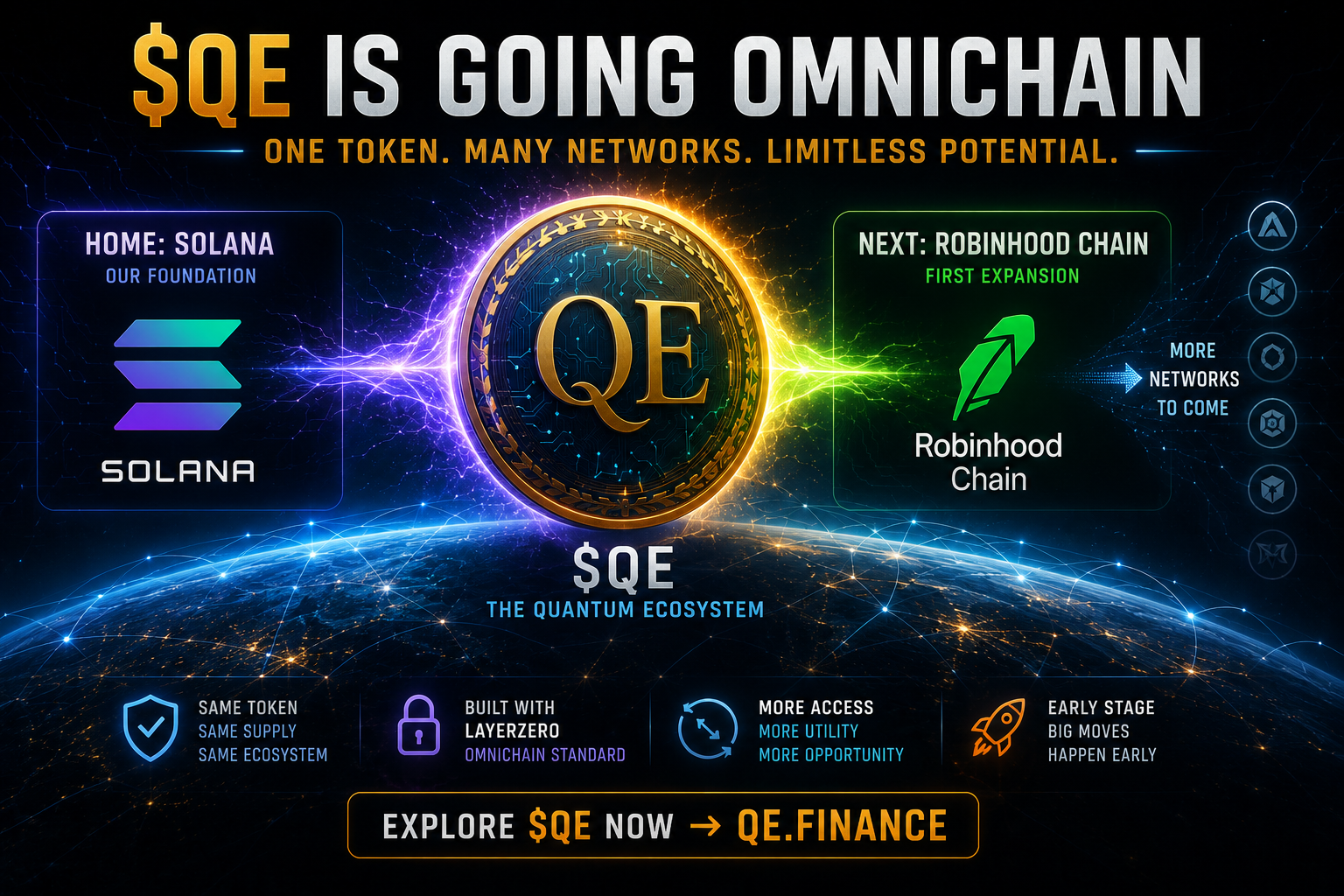
QE has lived on Solana since launch. Solana remains home, but we're now upgrading QE using LayerZero's Omnichain Fungible Token architecture, allowing the same token supply to move across multiple blockchain networks. Our first expansion target is Robinhood Chain. One token. More networks. More places to use it. And we're doing this while $QE remains an extraordinarily small asset by crypto standards. I'm not going to tell you what it should be worth. We're building. You decide. |
There’s A $500 Billion Problem Hiding In Plain Sight

Nvidia joins Wall Street titans to mobilize $500 billion for AI infrastructure, turning compute into a new credit class.
Disclaimer:
This content is for information and educational purposes only and should not be considered investment advice or an investment recommendation. Past performance is not an indication of future results. All trading carries risk. Only risk capital you're prepared to lose.


Comments
Log in or sign up to join the conversation.