
| |||||||
| |||||||
Korra’s biggest signal arrived on Aug. 28: Maximum Conviction. Nine data classes converged around Bitcoin, and Korra’s internal scorecard records the $79,000 reclaim as one of seven hits among its latest 10 resolved calls. Bitcoin traded above $81,000 during the week before falling back toward $78,000 as U.S.-Iran hostilities returned to center stage. At the same time, Strategy bought another 4,603 BTC for $369.7 million at an average price of $80,318, bringing its total holdings to 845,050 BTC. The contradiction matters. Bitcoin is becoming more institutional at exactly the same time its market identity is becoming more complicated.
Sources: Strategy | |||||||
| |||||||
Ethereum briefly pushed beyond $2,550, another move Korra had flagged. BitMine then disclosed another 53,501 ETH acquisition, taking its holdings to roughly 5.90 million ETH, with about 5.07 million staked. Solana crossed a different institutional threshold: Bitwise’s Solana ETF became the first SOL ETF to exceed $1 billion in assets. Charles Schwab says it plans to expand its crypto offering beyond Bitcoin and Ethereum to include Solana, Avalanche and Chainlink. Regulation is moving with the market. Proposed SEC custody changes have reached White House review as regulators work through how advisers and funds should hold digital assets.
Sources: BitMine • Bitwise SOL ETF • Schwab • SEC custody | |||||||
| |||||||
A string of incidents hit decentralized finance. Cronos temporarily halted after an exploit involving Tectonic; an on-chain researcher estimated roughly $75 million was affected, though that figure was not confirmed by the protocol. Fogo halted after an attacker received 400 million FOGO tokens, and Cosmos published a post-mortem on a six-chain exploit totaling roughly $5.7 million. Moonwell and Term Finance added to the week’s security concerns. Yet development is not slowing: Ethena is debating protocol economics that could direct revenue toward ENA buybacks, while LayerZero introduced ATLAS, infrastructure designed for open and institutional markets.
Sources: Tectonic estimate • Cosmos post-mortem • Ethena governance • LayerZero ATLAS | |||||||
| |||||||
Energy stole the show as August ended. Brent settled Monday at $90.49 per barrel, up 2.7%, after U.S. forces struck Iranian launchers on Larak Island and Iran reported retaliatory attacks against U.S. bases in Jordan. The location is the market. Before the war, roughly a fifth of global oil supply moved through the Strait of Hormuz. Shipping remains sharply impaired. QatarEnergy’s LNG disruptions have also extended into the autumn, while U.S. Strategic Petroleum Reserve inventories have fallen to 286.6 million barrels, the lowest since 1982. | |||||||
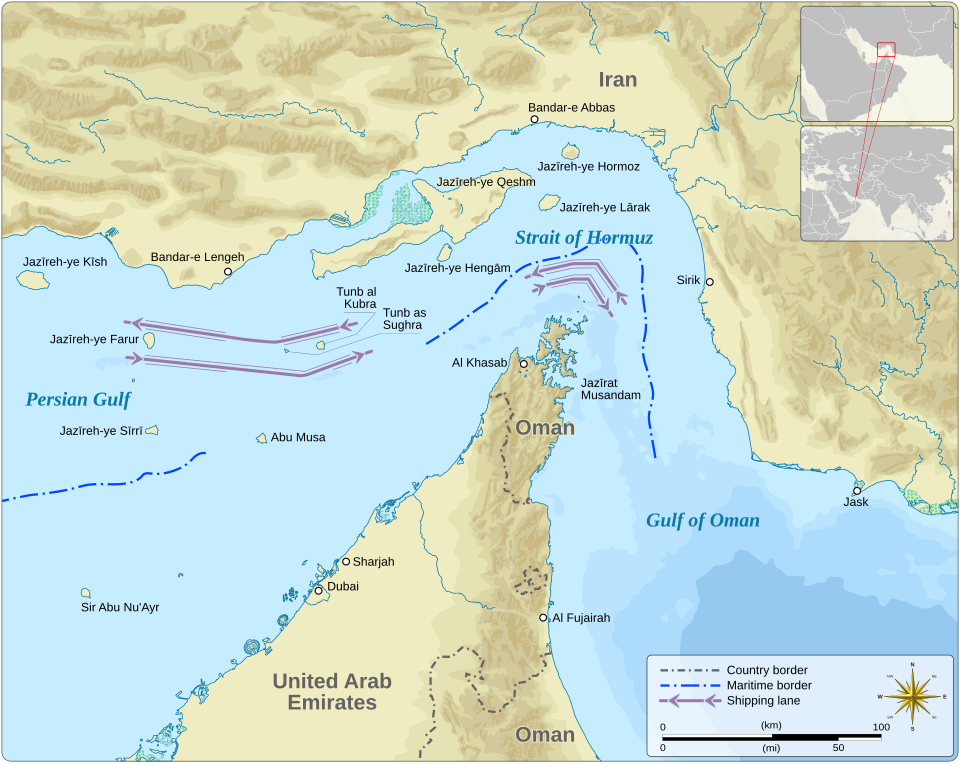 | |||||||
Strait of Hormuz map via Wikimedia Commons, Goran_tek-en, CC BY-SA 4.0. | |||||||
Oil’s move does not stay inside the energy sector. It passes through transportation, manufacturing and food, then into inflation, interest rates and valuations. That is how an oil shock eventually reaches Bitcoin, Nvidia, bonds and technology stocks.
Sources: Reuters: oil • EIA: Hormuz • Reuters: LNG • Reuters: SPR | |||||||
| |||||||
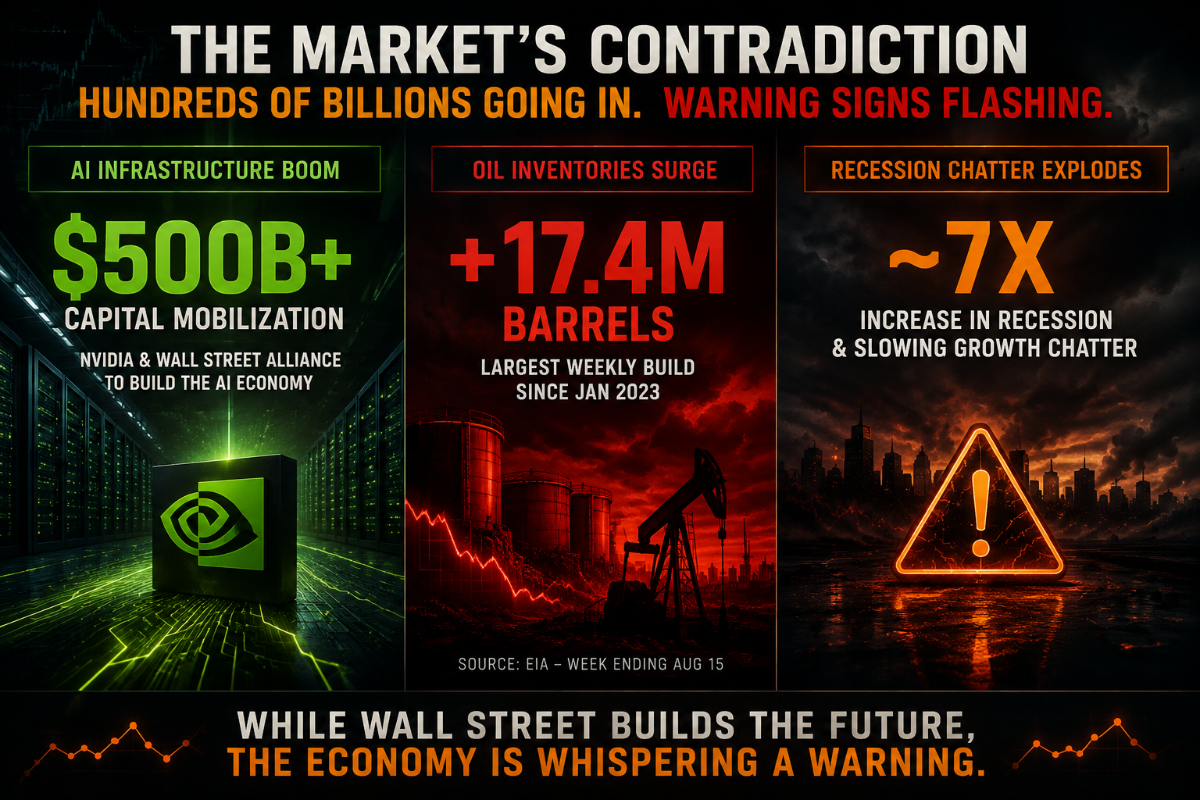
Nvidia’s fiscal second quarter made the scale of the AI buildout hard to ignore.
The more important question is what all that compute requires. IREN, which began in Bitcoin mining, reported roughly $4 billion of contracted annual recurring revenue tied to its 2026 cloud capacity and has discussed approximately $25–30 billion of fiscal 2027 capital spending. Bitcoin miners once competed primarily for cheap electricity. Now some of them control something far more strategically valuable: powered real estate and grid access.
Sources: Nvidia • IREN filing | |||||||
| |||||||
Korra’s latest 10 resolved calls include Bitcoin reclaiming $79,000 and Ethereum pushing through $2,550. The system missed a tactical VIX spike and a secondary Nvidia breakout. But the more important change is architectural. Act Two moves Korra from separate crypto, equity and macro analysis into a unified asset framework. Bitcoin can be compared directly with Nvidia. Energy can be measured against technology. And the system now attempts to distinguish a primary driver from supporting context.
Korra performance figures above reflect the internal resolved-call scorecard and are not investment advice. View the track record → | |||||||
| |||||||
This week’s macro calendar could move bonds, the dollar, equities and crypto at the same time.
The backdrop is fragile. July payrolls fell by 23,000, while May and June were revised down by a combined 103,000 jobs. BLS also published a preliminary benchmark revision lowering March 2026 payroll employment by another 79,000. A strong report could keep monetary policy restrictive, especially with oil reviving inflation risk. A weak report could intensify fears that growth is deteriorating faster than expected.
Sources: BLS employment • BLS CES | |||||||
The Bottom LineConviction does not eliminate context. Bitcoin’s institutionalization is real. AI infrastructure spending is accelerating. And energy scarcity can still rewrite the macro narrative overnight. The opportunity is not Bitcoin versus oil, AI versus crypto, or digital infrastructure versus physical infrastructure. It is understanding how money, energy and compute are becoming parts of the same system. That is the rotation worth watching. |
Bitcoin Isn’t The Hedge Right Now; So What Is?

Oil is reclaiming its role as a geopolitical hedge as Bitcoin struggles to hold $80,000 amid rising tensions.

Disclaimer:
This content is for information and educational purposes only and should not be considered investment advice or an investment recommendation. Past performance is not an indication of future results. All trading carries risk. Only risk capital you're prepared to lose.

Comments
Log in or sign up to join the conversation.