

While the US approach to economic growth rests on protecting its older industries from international competition, China’s approach is to improve on new industrial technologies to promote its international competitive position. This is best exemplified by tariffs or outright import bans on EVs made outside the US. Worse yet, President Trump loosened fuel mileage standards to favour fossil fuels in conjunction with the removal of any incentives for Americans to buy even American-made EVs. This has left the door wide open for China to dominate EV sales worldwide.
Without a doubt, the most significant development in the last 25 years was the unbelievable wave of low-cost goods made in China. The displacement of millions of jobs in the advanced economies resulted in President Trump unleashing a barrage of tariffs universally applied to economic friends and foes alike. The tariff assault was aimed at protecting US manufacturers, especially those using old technology in such basic industries as steel, aluminium, copper, lumber and furniture making. These industries continue to hide behind tariff barriers as they struggle with imports from Asia, Canada, India and the EU.
US Protective Tariffs
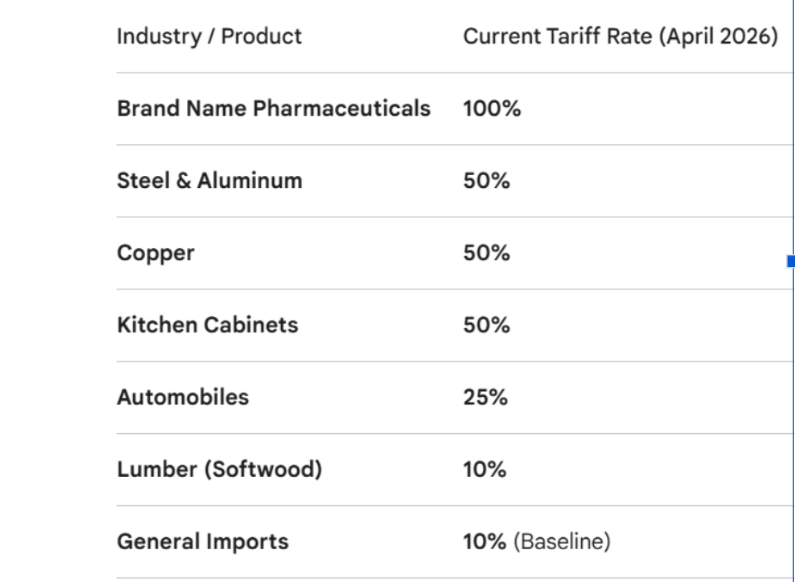
Source: Gemini
China is moving beyond those basic industries into industries requiring more advanced technologies and larger-scale operations. BYD (BYDDY) now surpasses Tesla (TSLA) as the world's largest maker of EVs. More significantly, it was able to do so because it has adopted new technologies that resulted in significant cost reductions, as much as 20% last year. Moreover, the competition within the Chinese EV industry is so fierce that further price declines are in the offing. Since 2018, Chinese EV sales have increased a hundredfold, dominating the Asian markets.
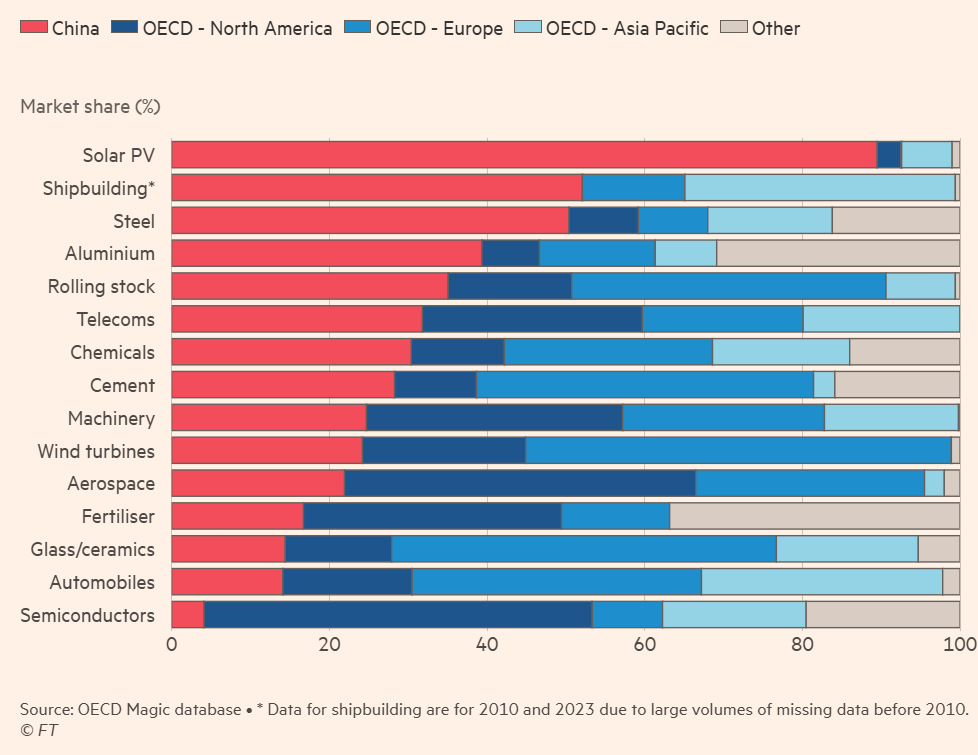
China moved into the high-tech industries in a huge way as it took advantage of new technologies, such as solar panelling, while the Trump administration eschews alternative energies for more fossil fuel output. China is hard to beat on both price and quality in solar panels, batteries, wind turbines, and telecoms. All these products have the potential for further technological breakthroughs that will lower prices further. No such comparable breakthrough exists within the fossil fuel industries.
Now there is a second wave underway — one that is even more threatening to China’s trading partners: an assault on high-end manufacturing. Critics of China’s advancements argue that the government subsidises heavily and that the currency is manipulated in favour of exports. However, there is cutthroat competition within the Chinese industries, a huge pool of skilled engineers, and an industrial scale that drives down prices.
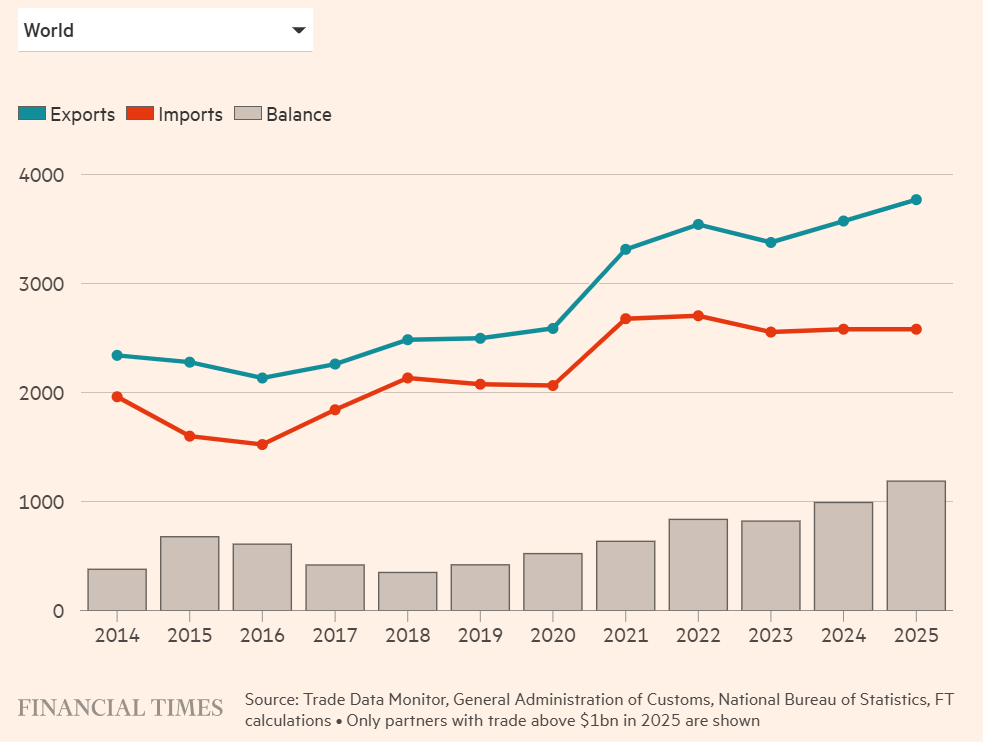
In response to the US tariff wall on so many Chinese goods, China quickly sought out new markets in Asia, South America and Africa. The Chinese export engine seemed unstoppable in 2025 when it recorded a trade surplus in goods that hit $ 1.2 tn. First quarter 2026 export sales are up another 15%.
Chinese Global Trade Surpluses
President Trump is scheduled to visit China next month, expecting to deal with the global trade imbalances. Few observers expect that he will succeed in convincing China that it is in all our best interests for China to shift away from producing for exports in favour of domestic consumption. Internally, the pressures are great in China to produce for the international market, and no Presidential visit will likely change philosophy.



Comments
Log in or sign up to join the conversation.