

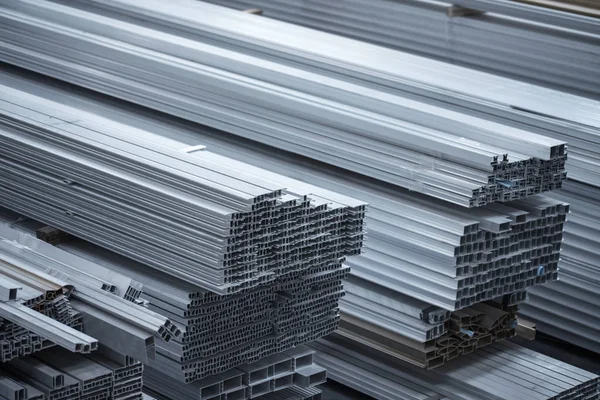
Due to Trump’s 50% Tariff on Canadian aluminum, the US pays the highest global price.
Economic Idiocy
The United States imposed a 50% tariff on Canadian aluminum (by stripping Canada of its prior exemption and raising the rate) effective August 22, 2026.
In response, Canada increased its retaliatory tariffs on U.S. processed aluminum and steel from 25% to 50% effective September 8, 2026.
The steep tariff pushed U.S. aluminum prices to a record premium over global benchmarks, raising costs for all buyers, especially automakers.
America Needs Canadian Aluminum
The Wall Street Journal reports America Needs Canada’s Aluminum. Trump’s Tariff Exposed Just How Badly.
During parts of his first term, Trump exempted Canada from a 10% aluminum tariff that he imposed on other trading partners. After he returned to the White House, he stripped Canada of its exemption and raised the tariff rate on aluminum to 50%.
“They’ve treated the United States very unfairly,” Trump said last month about Canada. “They have been one of the worst countries in the entire world.” He has said the U.S. has no need for Canada’s natural resources.
Aluminum has emerged as one of the trade war’s biggest conundrums. The steep tariff—imposed in the name of national defense—is intended to stimulate U.S. production. Yet the enormous power requirements for making aluminum have meant that Canada, where abundant hydropower has kept electricity prices from rising as sharply as in the U.S., has supplied about 70% of U.S. aluminum imports in recent years.
The tariff has pushed aluminum prices in the U.S. to a record premium over global benchmarks, punishing home buyers, data-center developers, automakers and grocery shoppers. In addition to the new levy, trading restrictions on Russian metal and the Iran War, which choked off Persian Gulf exports, have contributed to global price increases.
In Canada, Prime Minister Mark Carney is turning to Europe to forge new trade partnerships. The European Union’s top official said last month that she would work to add Canada as the trade bloc’s first associate member. Trump responded by threatening further tariffs on Europe and calling Canada “a terrible trade partner.”
“We always call aluminum ‘solid electricity,’” said Jérôme Pécresse, who runs Rio’s aluminum, lithium and Canadian businesses. “We cannot find a source of power in the U.S. which is anywhere close to what we have in Canada in terms of competitiveness.”
In the U.S., Trump’s push for domestic smelting has met resistance.
Emirates Global Aluminium, the Mideast’s largest producer, and Chicago-based Century Aluminum have said they would spend more than $4 billion to build what would be the largest U.S. smelter, capable of more than doubling domestic production of primary aluminum. The Biden administration awarded $500 million for the project, and Trump has thrown his support behind it with additional incentives.
But opposition to the project has swelled in Inola, the Oklahoma prairie town chosen as the site. Local critics have expressed concerns about pollution and foreign ownership of land and objected to taxpayer-funded incentives to the developers.
Canada’s Natural Advantage
Canada has a natural advantage of cheap hydropower to produce aluminum.
It is economic idiocy to not take advantage of that.
But Trump would rather pay the United Arab Emirates to build smelters in the US than depend on what was a reliable ally.
That’s how strong his grudge is against Canada.
Amusing Political Backlash
After a rowdy, marathon meeting in June where Trump officials promoting the smelter were heckled and booed, the Inola town council placed a moratorium on building permits and entitlements in its industrial park. Owners of property near the site sued in federal court seeking to block construction.
The smelter became a divisive issue in Oklahoma’s Republican gubernatorial primary. Former state senator Mike Mazzei came out in favor of it and won Trump’s endorsement and the nomination. But he faced xenophobic political ads aimed at the project’s Mideast investors.
“Mazzei wants to give your tax dollars to a Muslim country to build a smelter,” said the narrator in an ad made by a group called Put Oklahoma 1st. “Foreign workers, foreign landownership, threatening our way of life.”
Irony Abounds
The US can get all the aluminum it needs from Canada.
Instead, Trump wants to make it here at a much higher price by cutting deals with a Mideast country whose official religion is Muslim.
We Need Aluminum Badly Says Trump
On a public call to rally support for Mazzei, Trump vouched for Emirates Global—“very fine people with unlimited money”—and said the smelter would bring jobs, tax revenue and the envy of other states.
“This country desperately needs aluminum,” he said. “We get it all from Canada, for the most part, and we need it badly.”
Electricity Costs
Electricity accounts for about 40% of the cost of making aluminum. A single smelter can consume as much electricity as a city the size of Boston or Detroit.
For decades, the U.S. supported production with low-cost hydropower from federal utilities, the Tennessee Valley Authority and the Northwest’s Bonneville Power Administration. By the latter half of the century, though, as consumer power demand swelled, preferential power rates for smelters were phased out. Then China, Russia and other nations also began churning out low-cost aluminum, further squeezing U.S. producers by driving down market prices.
“China, Canada and other foreign adversaries had dumped massive amounts of aluminum into our country, cheated U.S. trade laws and flooded our markets,” Century Chief Executive Jesse Gary said at the South Carolina event. “Today is a direct result of President Trump’s tariff program.”
Mercy! Those dastardly Canadians are giving us cheap stuff. So let’s turn to the United Arab Emirates (and still pay much more).
Success?!
Through August of this year, Canadian aluminum shipments to Europe are up 77% from the year-earlier period, and EU carbon taxes may steer even more Canadian metal across the Atlantic to meet demand for lower-carbon metal, said Karen Norton, associate director at S&P Global Energy.
“The U.S. may have less access to Canadian metal than it does now,” she said.
Ford Motor has forecast as much as $2 billion of higher commodity costs this year. Semiconductor-equipment manufacturer Applied Materials, auto-parts maker Allison Transmission and can producer Ball have told investors that they are passing on higher aluminum costs to customers.
In Saguenay [Quebec], cruise ships share the scenic fjord with ore boats. Mayor Luc Boivin said the American tourists he meets on the quay are often quick to apologize for the trade war.
Boivin has a long list of family members and friends in the aluminum business. He likes to show off his Ford F-150 pickup truck, made with local aluminum. It is an example, he said, of how Saguenay has prospered supplying U.S. industry with raw materials—and has become a market for American products built with them.
“We have this smelter, we have the energy,” Boivin said. “I don’t know where the U.S. government will find a new supplier, and not only a supplier, a loyal supplier.”
Idiotic Tariff Ideas
Trump claimed his Tariffs would bring manufacturing back to the US while simultaneously collecting so much money the US could eliminate income taxes.
And Trump promised a tariff dividend check to everyone.
Finally, Trump claims foreign companies pay these tariffs, not US consumers and businesses.
It’s impossible to overstate the collective stupidity of those contradictory ideas.
Who Has the Cards?
Trump expected Canada to fold, just as he expected Iran to fold, the EU to fold, and China to fold.
China responded to Trump’s reciprocal tariffs by shutting off rare earth minerals. After that big smack to the face, Trump backed down.
An even bigger smack to Trump’s face is coming with the midterm elections.
But don’t expect Trump to learn anything. Trump never learns anything because he is truly incapable of learning.
Aluminum is arguably the single stupidest tariff.
Yet, Trump put a 50 percent aluminum tariff on what was once (and still should be) our best ally.
Looking Ahead
Best wishes to Canada who will have to put up with Trump for two more years (and so will everyone else, unfortunately). Canada is now moving on, making other deals.
Come January, Trump will not have support of Congress to do his mindless economic bidding.
However, there’s no telling what Trumpian madness is in store via his executive orders, many of which will be illegal or unconstitutional.
Related Posts
March 13, 2025: The Amazing “Success” of Trump’s 2018 Aluminum Tariffs in One Picture
hope you can take a bit of headline sarcasm because the true story follows.
September 18, 2025: Trump’s Aluminum Tariffs Kill Jobs and Put America Last
Tariffs are costly for companies that use the metal to make things, including recyclers
February 13, 2026: Trump to Roll Back Some Steel and Aluminum Tariffs Due to Inflation
The Financial Times discusses tariff rollbacks.
As you can see, Trump learned nothing.
April 19, 2026: How Trump’s Protectionism on Aluminum Works in Two Pictures
Production has decreased every year since 2021 and prices have soared.

Comments
Log in or sign up to join the conversation.