


Last week may have been a build-up to Halloween because some of those earnings reports were horror shows. I’m not sure how much better this week will be from that standpoint. Some stocks were absolutely destroyed during the week, and it seems like 10% to 20% moves are par for the course. It was a brutal week, and of course the S&P 500 made it seem a lot better than it was.
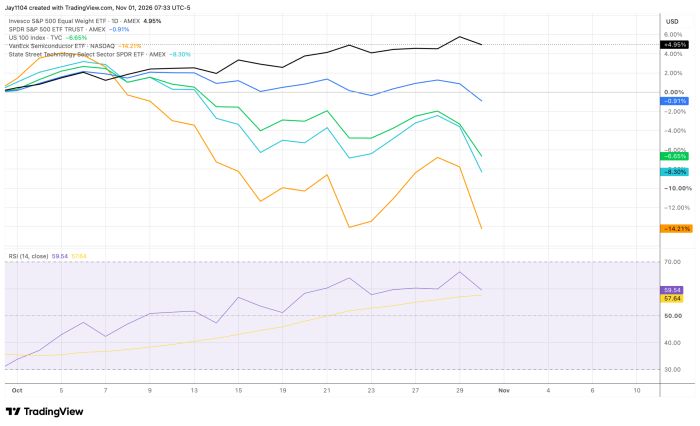
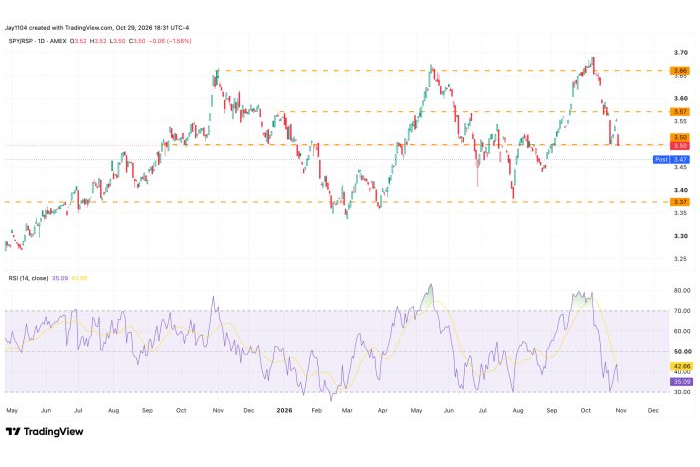
The Nasdaq 100 fell more than 6% in October, and the SMH fell more than 14%. Meanwhile, the S&P 500 moved less than 1%. The equal-weight S&P 500 was UP almost 5%.
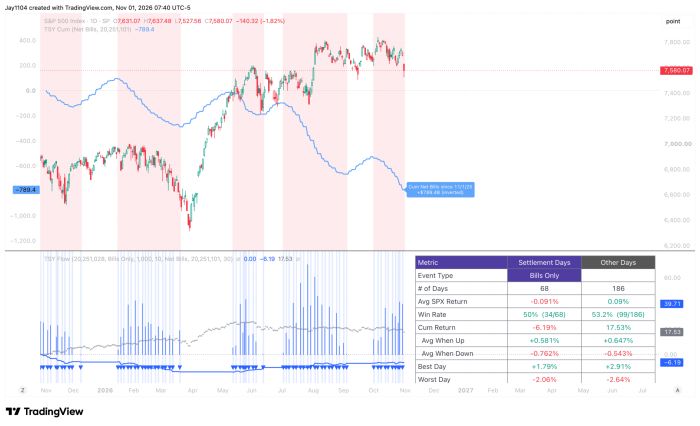
Liquidity will remain a headwind this week, though not as bad as last week. Treasury will have a $17.4 billion coupon paydown on November 2, adding liquidity to the market. Then on Tuesday, November 3, net T-bill issuance is $45.4 billion, and net issuance is only $8 billion on November 5. That is a bit deceptive, because the Treasury is paying down $25 billion in a cash management bill. In all, T-bills draining liquidity from the market has continued to be an issue, and the longer we track it, the harder it becomes to deny the impact. I can’t make the relationship more visual than the chart below.
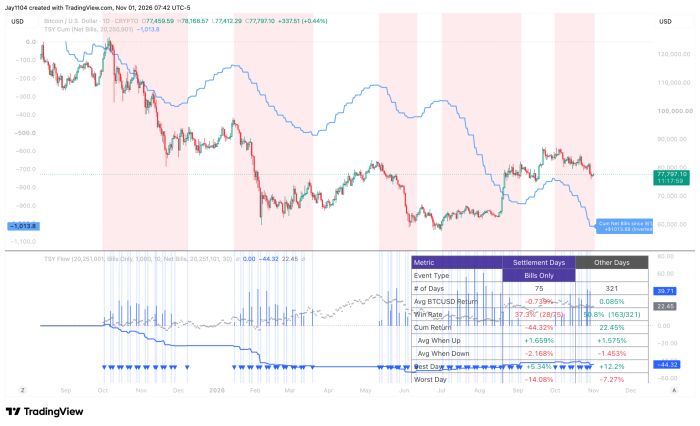
The relationship with Bitcoin is probably the most striking. Unfortunately, this means the rest of November is not going to go very well.
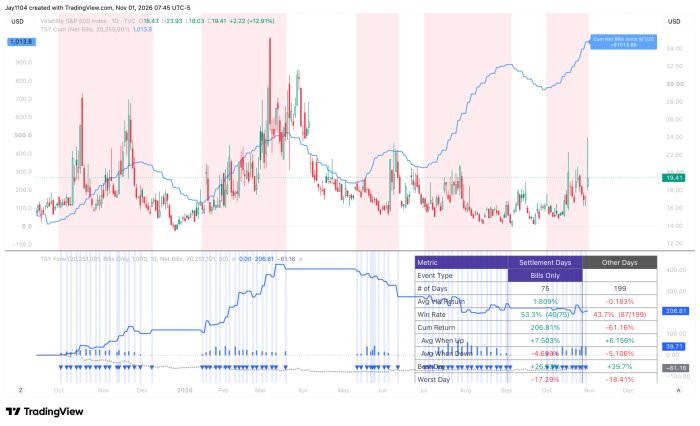
However, if I remember correctly, last year around Thanksgiving the market rallied because of the short trading days and the volatility crushes that helped offset issuance weakness. This year we will be better prepared for that type of scenario should the opportunity present itself. The VIX actually tends to rise during periods of heavy T-bill issuance, which makes sense, given that stock prices tend to move lower.
There is plenty of reason for volatility to rise this week even without T-bill issuance, with a ton of economic data, including the ISM PMI reports. The ISM manufacturing prices paid index on Monday is expected to come in at 77.1, down from 77.9, while services on Wednesday is expected to show 74.5, up from 74.0 last month. Then there are the midterm elections on Tuesday and the jobs report on Friday, with 62,000 jobs expected to have been created in October.
Meanwhile, the VIX, despite Friday’s spike, is about where it should be based on single-stock volatility and implied correlations. In fact, it is just a bit lower than its 20-day moving average. So don’t expect that to be any help. If volatility is crushed to start the week, it needs to come from the front of the volatility curve.
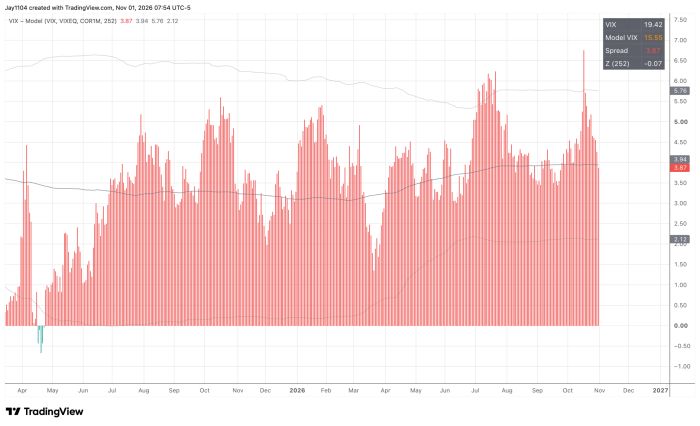
Yep, the liquidity drain continues, and volatility has plenty of reason to remain high. Monday is the best chance for the market to rally this week. After that, it may only grow harder.
Anyway.

Comments
Log in or sign up to join the conversation.