

Despite the headlines, American steel is booming. Prices are trading near a four-year high. But the boom isn’t paying everyone equally. Here’s who is meeting the moment and what you need to know.
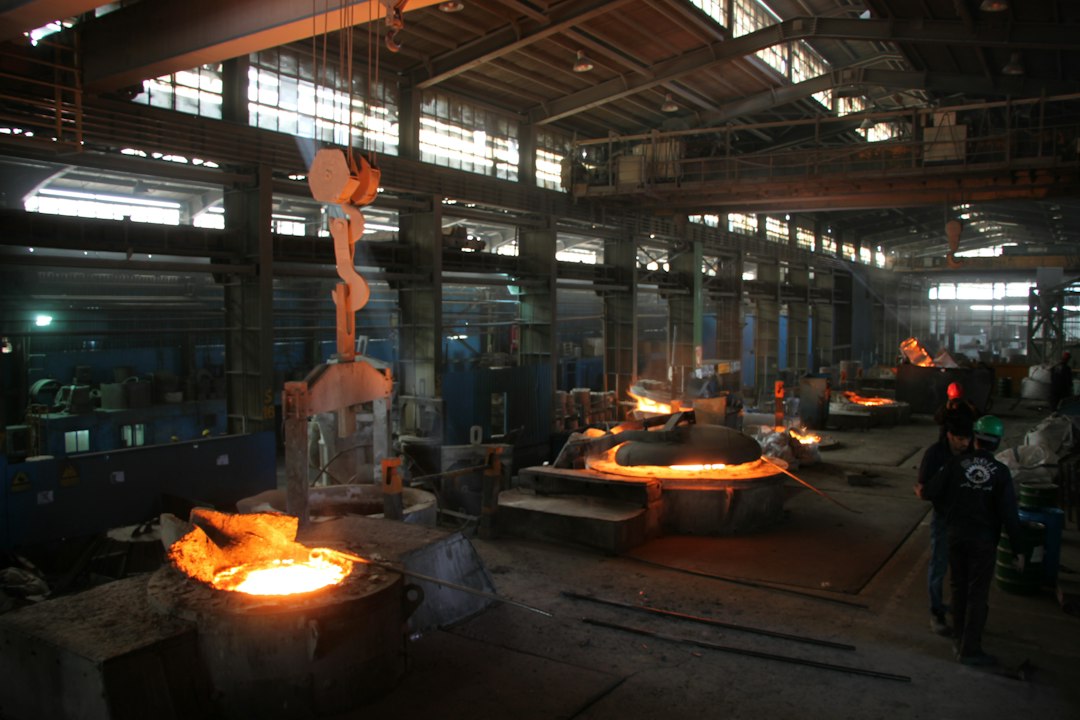
Close your eyes and picture an American steel mill.
Chances are you’ll envision something like U.S. Steel’s Homestead Works on the Monongahela River, outside Pittsburgh, in the 1950s. What I mean by that is the culmination of historical, maybe even cinematic imagery. That could include blast furnaces towering over the river, glowing iron pouring from a ladle, coal trains and ore boats outside, and thousands of men in hard hats walking in for their shift.
But that picture is about half a century out of date. In fact, Homestead shut down in 1986. Today the site is home to a generic shopping mall.
Plus, nearly three out of every four tons of American steel are now made a completely different way than they were back in those days. There are no blast furnaces or coke ovens. Mostly, there’s just scrap metal (old cars, washing machines, torn-down buildings) melted in a huge electric furnace, in a mill that looks more like a modern factory than an old foundry.
That level of detail is more than imagery, and it matters a great deal to investors today.
You see, despite any headlines you may have read to the contrary, American steel is booming. Prices are trading near a four-year high, and the big U.S. steelmakers are posting some of their best profits in years. But the boom isn’t paying them all equally.
Last month, two of the country’s biggest steelmakers reported their third-quarter results. They both sold into the same market, faced the same 50% tariff keeping imports out of U.S. borders, and the same customers running low on inventory. And yet the results couldn’t have been more different.
Ohio-based Cleveland-Cliffs, which makes most of its steel the old way, in blast furnaces, shipped about 4.2 million tons and earned $612 million in adjusted EBITDA (earnings before interest, taxes, depreciation and amortization), a rough measure of the cash a business generates from its operations. That figure works out to about $150 for every ton sold. And its adjusted EBITDA more than doubled from the quarter before.
On the other hand, Nucor, which makes all of its steel the new way, in electric furnaces, shipped about 7.5 million tons and earned $2.28 billion in EBITDA. That’s roughly $300 a ton. Twice as much, per ton, in the same market.
Of course, these are back-of-the-napkin numbers, since both companies sell more than just plain steel. Much of that gap comes down to the furnace.
Two Ways to Make Steel
That historic type of mill in your mind and old Hollywood movies still exists, but it faces significant cost problems.
Blast furnaces are built to burn around the clock for years. Idling one when orders slow is an expensive endeavor, and restarting it is even more costly. That’s why mills operating in that manner carry heavy fixed costs in good years and bad ones.
The newer methodology has the benefit of skipping the ore part. In that method, a minimill melts scrap in an electric arc furnace that is smaller, needs far fewer people per ton to operate, and can be throttled up or down with demand, which makes it more efficient.
Its biggest expense is the scrap material. But scrap prices generally move in tandem with steel prices, so when steel gets cheaper, the minimill’s main input also gets cheaper. Blast furnace costs don’t vary in that same manner.
That’s how Nucor makes all of its steel, and it’s far from alone.
Only a generation ago, minimills were the scrappy upstarts making rebar and wire rod. Now, they make most of the country’s steel. In 1991, electric arc furnaces made 38% of American steel. By 2010, that figure was 61% and today it’s about 72%.
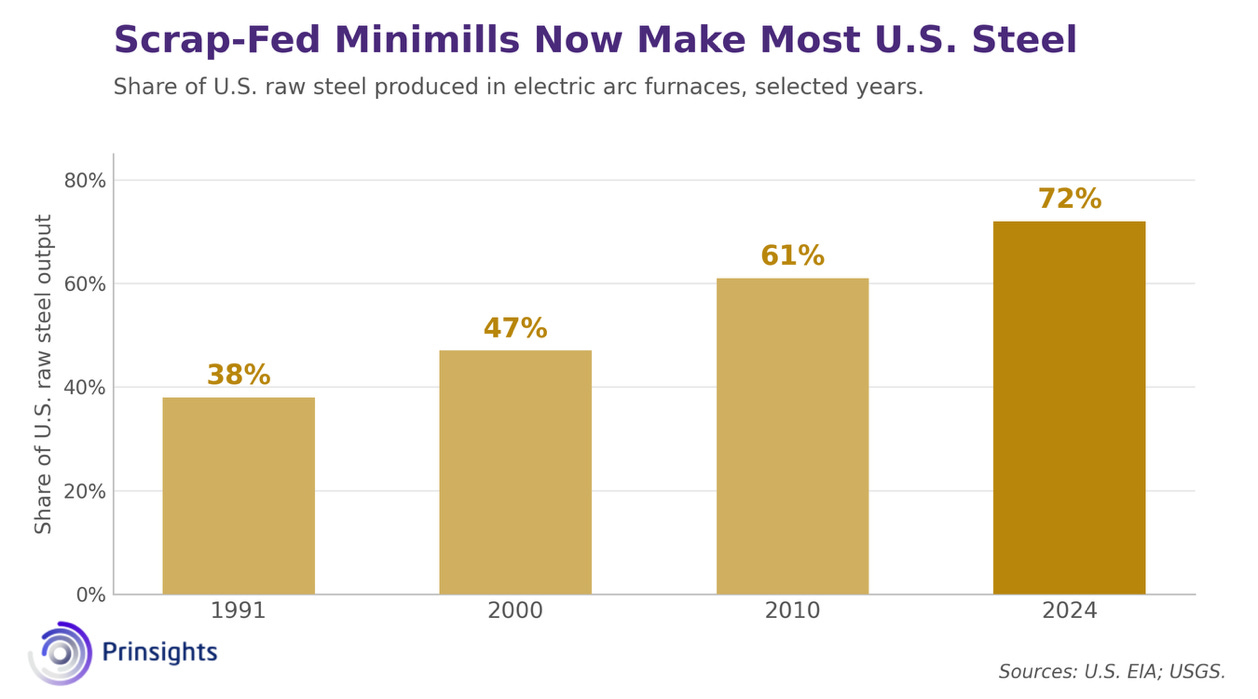
The other side of that chart depicts the same story. U.S. coke production has fallen 78% since 1980. And U.S. Steel, the company that operated Homestead and was once the largest company in the world, now belongs to Japanese steel giant, Nippon Steel.
It’s the Spread, Stupid!
When steel is in the news, the headline tends to center on the price. But the price alone is but one factor in determining who’s making money.
What matters to a steelmaker is the spread, in other words, what a ton sells for minus what it costs to make. For a minimill, that’s mostly the gap between steel and scrap. And this year, that gap has widened sharply.
In fact, one of the big minimill operators reported that its average selling price rose $102 a ton in the third quarter vs. the second one. Over that same period, the scrap it melted became $8 a ton cheaper. What that means is that its steel got more expensive while its main raw material got cheaper.
Most of that difference went straight to profit.
Now, I’ve witnessed investors make the same mistake through several steel cycles. They see these sorts of price fluctuations, but ignore what it costs to actually make the steel. In this market, that’s the number that matters most.
So you might think that a 50% tariff would help every American mill equally. And on pure price, it does.
But what that tariff didn’t change is what each mill spends to make a ton of steel. That’s where the two kinds of mill part ways.
Again, it’s important to note that a minimill’s main costs are scrap and electricity. This year, scrap prices have risen by far less than steel prices have. Yes, a blast furnace receives the same higher price. But it also must pay for the iron ore, coke, and big crews it takes to keep the furnace burning. Minimills can also operate flat out while demand is strong.
The Market Is Selling Them All the Same
The AI selloff that hit stocks on November 5, the S&P 500’s worst day since April 2025, resurged last week. Chip and AI stocks slid again, and the pressure bled into everything else, including metals and mining shares. Steel stocks were swept up in it too, even though their business has little to do with chips.
The bottom line is that the market is treating every steelmaker the same. But they aren’t the same. In fact, even among minimills, some are more efficient and effective than others.
And, of course, that’s where the opportunity is.
What makes a mill profitable comes down to a few things.
The best ones keep producing at full capacity even when weaker mills cut back or go idle. The industry operated its mills at about 80% of capacity last quarter, and the best operated well above that. They are the ones that control their own scrap supply, so their biggest cost stays in their own hands.
They also push more of their tons into higher-margin finished products. And they hand the cash back to shareholders, through buybacks as well as dividends.

Comments
Log in or sign up to join the conversation.