

Key Market Outlook(s) and Pick(s)
On Monday, I joined Joel Elconin on The Stock Trader Network to discuss markets, the economy, outlook, AI, tech, rotation, bonds, defensives, small caps, Baxter International (BAX), Pfizer (PFE), and the latest developments. Thanks to Joel and Zoltan Suranyi for having me on.
Crown Castle Update
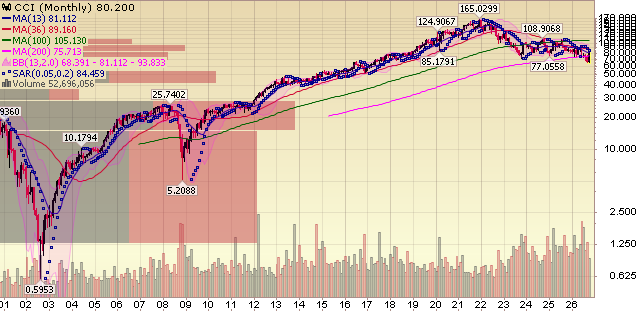
For newer readers, here’s a brief overview of the key drivers behind our Crown Castle (CCI) thesis, the only pure-play U.S. tower REIT and a high-yield income name that becomes increasingly hard to ignore as rates come down and capital rotates back into yield:
Company Overview
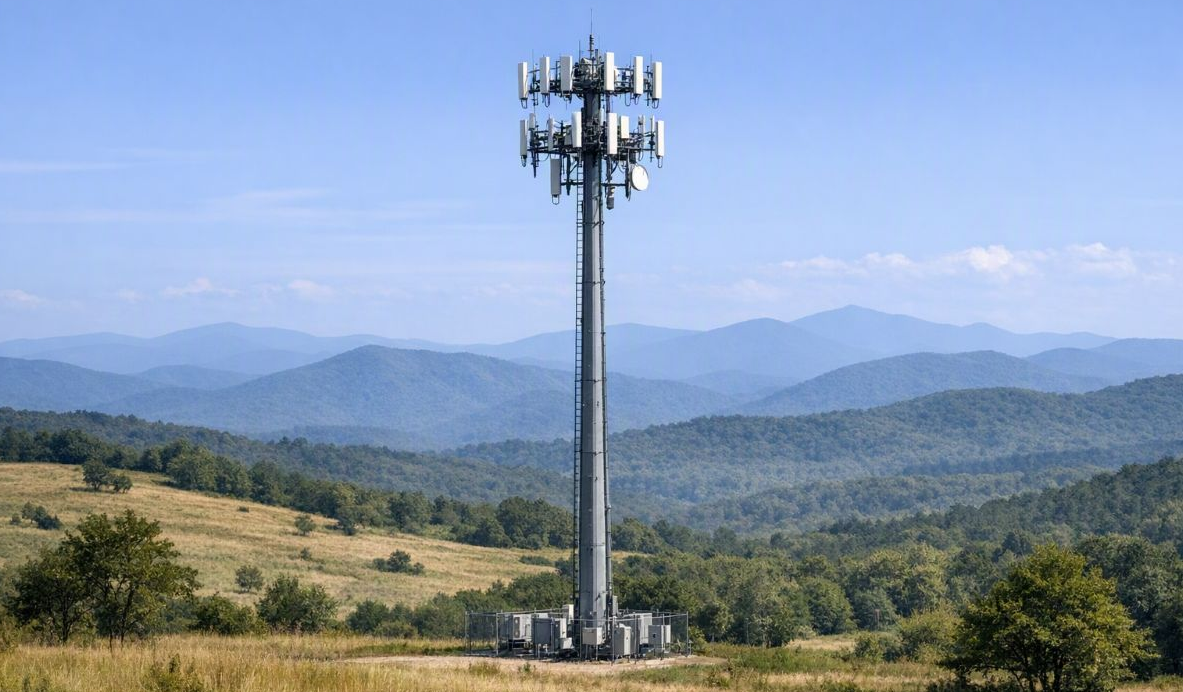
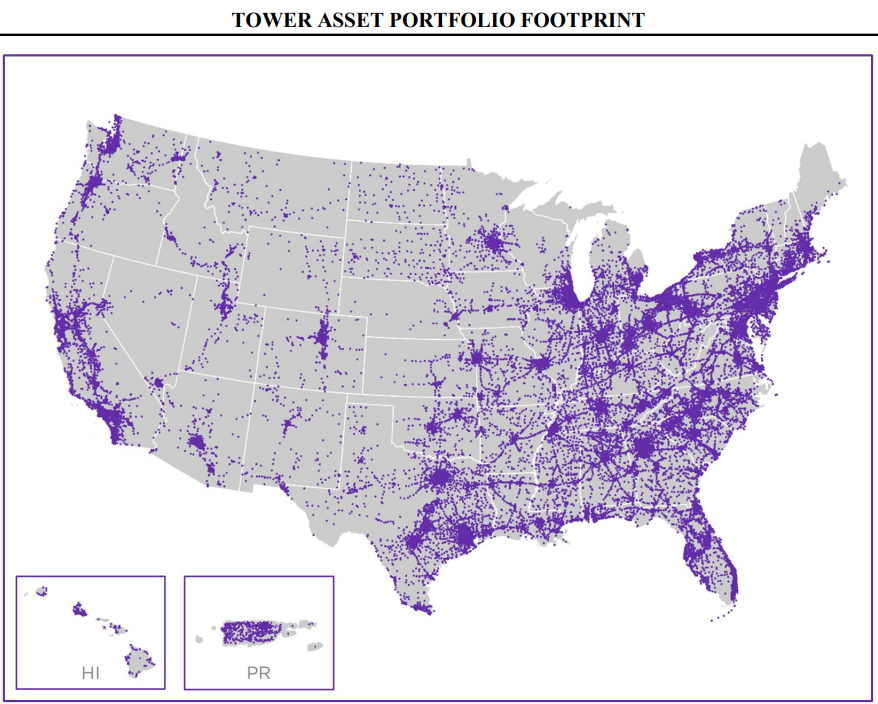
Founded in 1994. Leading pure-play U.S. tower REIT with ~40,000 wireless towers nationwide.
Leases space primarily to the Big Three carriers (T-Mobile 42%, AT&T (T) 28%, Verizon 23%), which account for 93% of revenue: durable, recurring demand.
Now the only publicly traded, U.S.-focused pure-play tower company following the close of the fiber/small cell sale on May 1, 2026.
Stock down ~60% from 2021 highs amid the rate selloff and self-inflicted wounds.
Now repositioned as a leaner, higher-margin tower operator focused on shareholder returns.
Q2 2026 site rental revenue of $967M (-4% Y/Y), ahead of the ~$942M consensus. Adjusted EBITDA of $675M (-4% Y/Y) vs. ~$659M consensus. AFFO of $488M or $1.13 per share (+11% Y/Y) vs. the ~$0.95 estimate.
FY25 site rental revenue of $4.05B (+$19M vs. guidance midpoint), with full-year AFFO of $1.90B or $4.36 per share (+$34M vs. midpoint).
Attractive Business Model
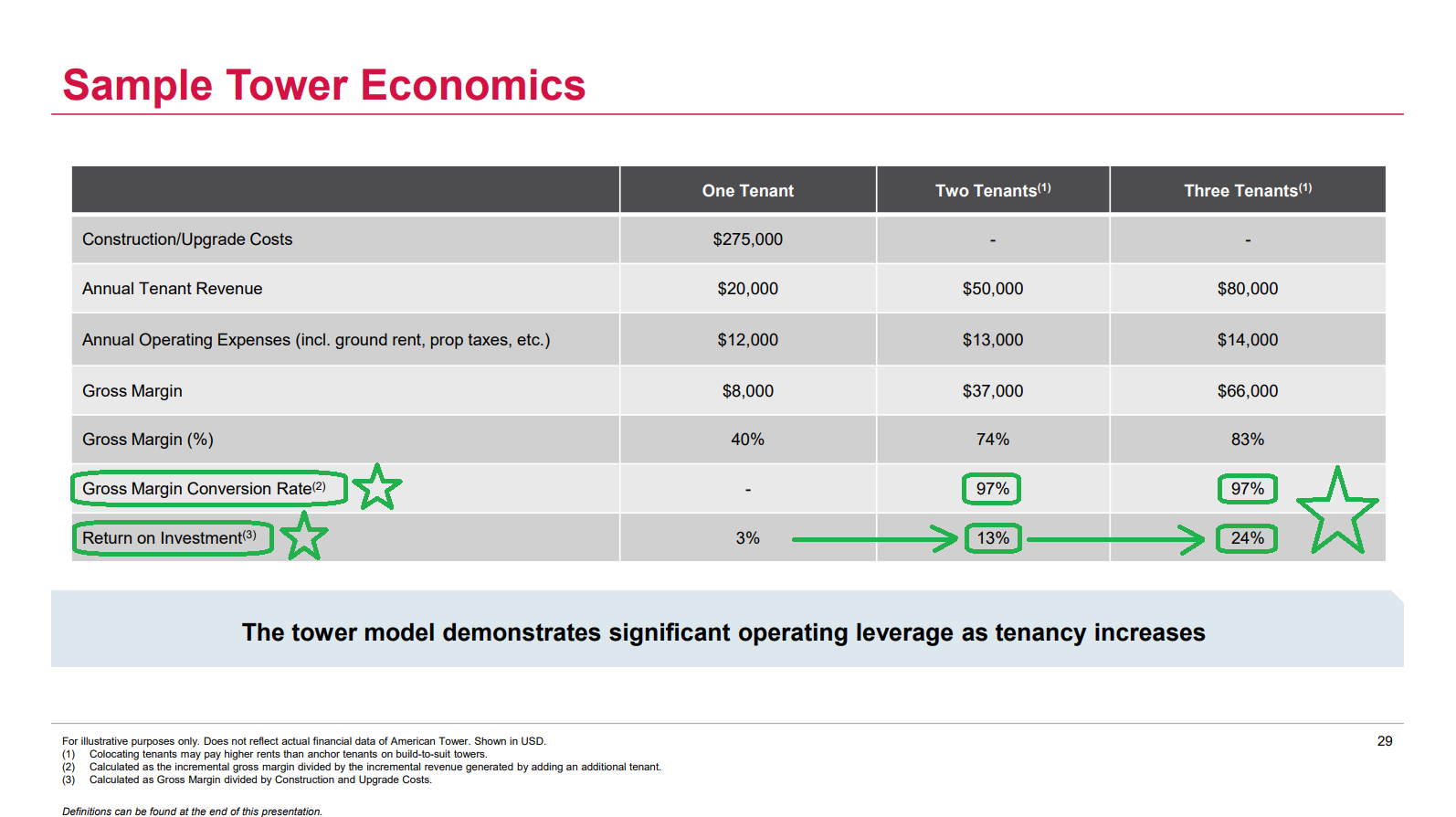
Highly attractive tower economics: ~3% annual rent escalators, minimal capex, and low annual churn (historically 1-2%). Incremental margins of 97% on new tenants, with returns on towers climbing from ~3% with one tenant to ~24% with three and ~35% with a fourth.
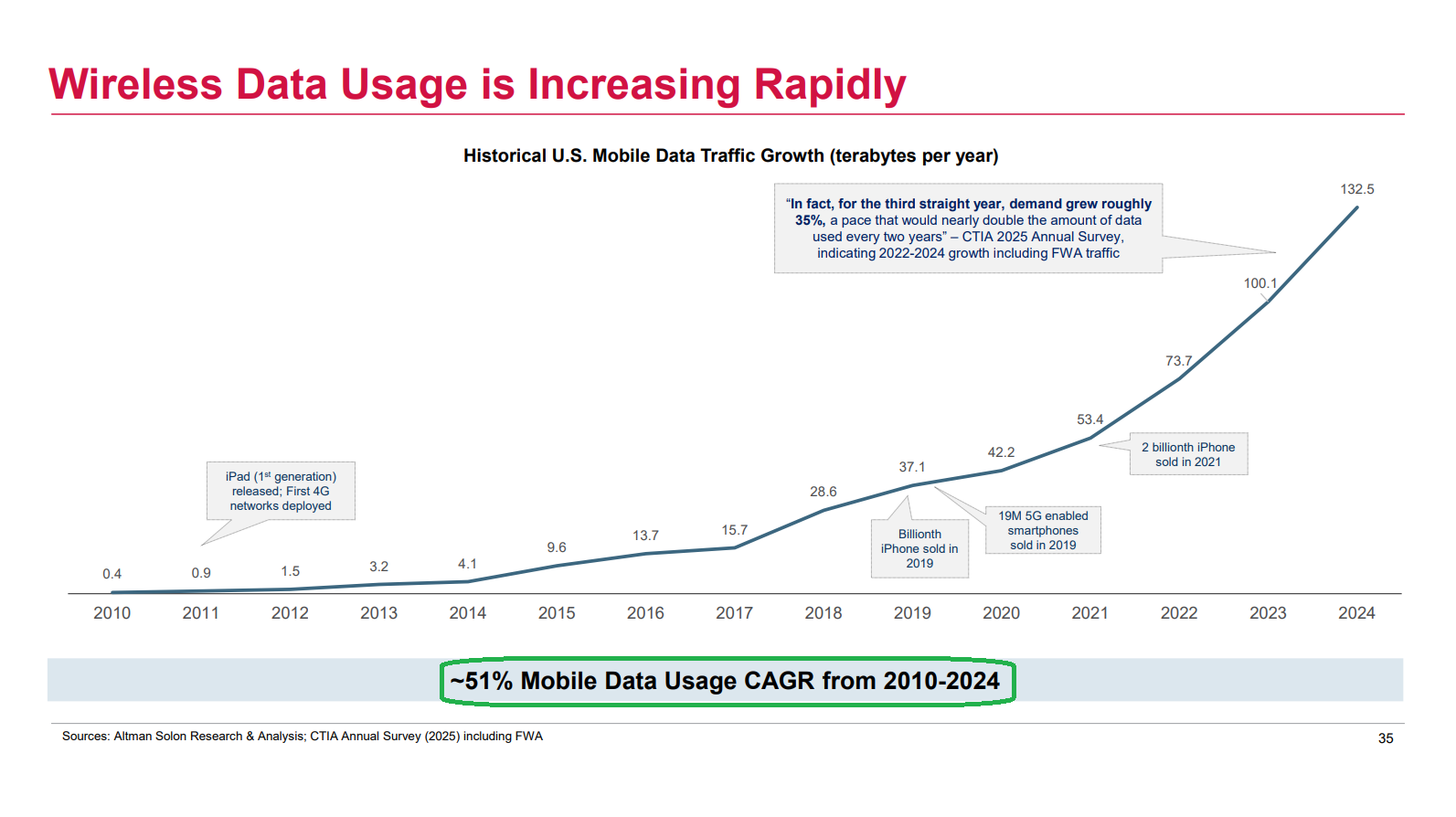
U.S. mobile data traffic has grown at a ~51% CAGR from 2010 to 2024, including ~35% annual growth over the last three years, with a projected ~15% CAGR through 2030. Secular tailwinds from 5G (early in a ~20-year cycle) and emerging AI-driven network requirements.
Per-smartphone U.S. data consumption projected to more than 2x over the next five years, from 25 to 52 gigabits per month, alongside a 3x increase in AI-driven uplink traffic.
Organic same-tower revenue growth of ~5% expected long-term.
AT&T committed to investing $250B over five years to expand fiber, 5G, and wireless networks across the U.S., directly benefiting CCI as AT&T’s largest tower landlord.
AT&T’s $23B EchoStar (SATS) spectrum purchase, including 600 MHz low-band spectrum, is a mid-term leasing catalyst, as deployment requires large new antennas on existing towers.
Emerging edge compute opportunity: CCI has initiated trials with edge data center providers to monetize its ~40,000 sites for deployments requiring less than 0.2 MW. Requires no capital investment on CCI’s part, using power and backhaul already in place, at a time when large data centers face multi-year construction and power delays.
FCC advancing the largest spectrum pipeline to date: at least 800 MHz slated for commercial use, with auctions beginning in 2027, plus another 165 MHz targeted between 2026 and 2027 and upper C-band ahead. Positions the U.S. for a leadership role in emerging 6G, with higher bands driving network densification.
Satellite & SpaceX
~90% of mobile usage occurs indoors or in vehicles where satellite signal is ~10,000x weaker and requires line of sight; satellite operators hold only tens of MHz vs. hundreds for each carrier, and terrestrial sites support ~30x more users per MHz.
More than 70% of CCI’s towers are located in the 100 largest U.S. markets, where satellite is weakest.
Management confirmed carriers have made no changes to rural coverage builds or renewals in response to recent satellite partnerships.
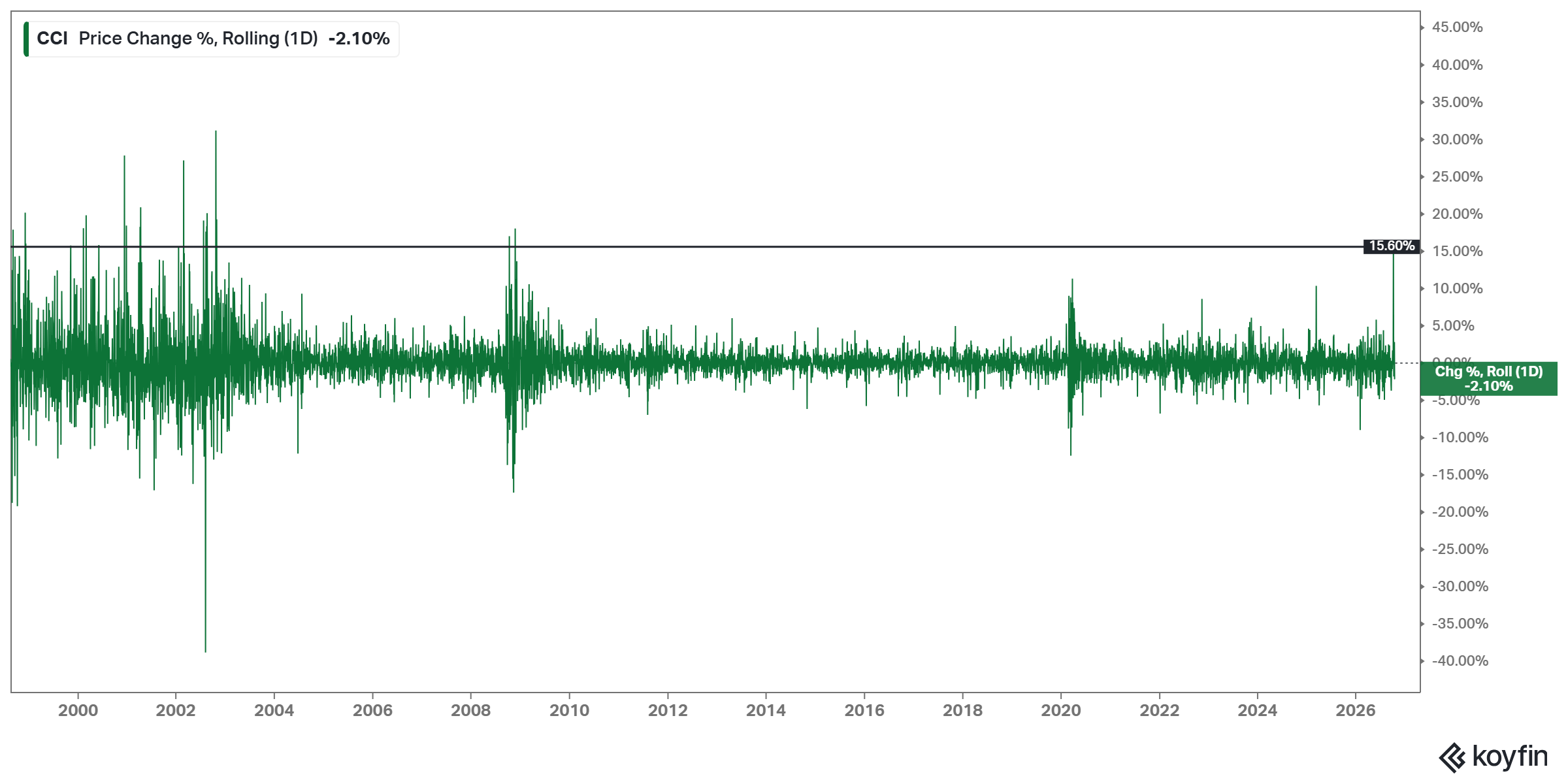
SpaceX agreed on Oct. 8 to acquire Grain Management’s nationwide 800 MHz spectrum portfolio (up to 14 MHz of paired low-band spectrum) for ~$8B in cash. CCI rose nearly 16% on the news, its best single-day gain since 2008.
800 MHz licenses tailored for wireless service from cell towers rather than satellites, with SpaceX planning “an advanced terrestrial deployment” to cover places satellite links can’t reach, including inside buildings.
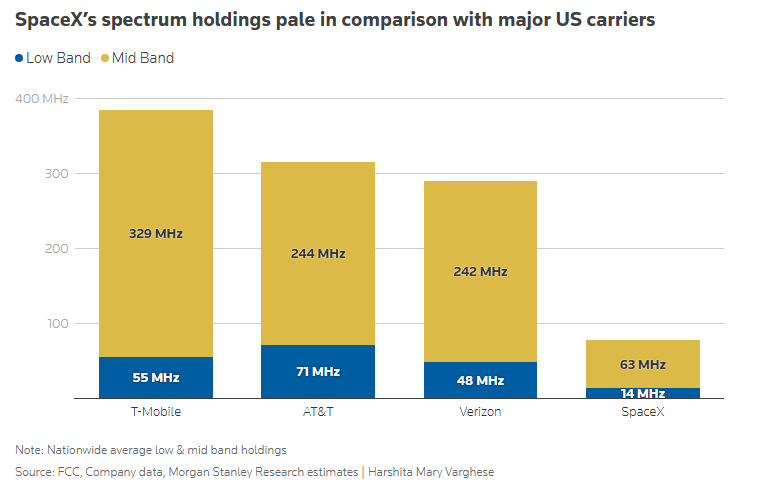
Starlink still needs terrestrial infrastructure to use the spectrum for mobile coverage, a buildout that could take years with billions in physical infrastructure required. Even with the deal, Starlink Mobile would hold ~80 MHz vs. T-Mobile’s nearly 400 MHz. SpaceX is targeting a service launch in late 2027 to early 2028.
SpaceX’s carrier ambitions present a new potential customer for the sector. Whether SpaceX builds its own hybrid network (with unused DISH equipment still on many CCI towers offering a potential head start) or partners with an existing carrier, both paths drive incremental tower demand, with CCI a major beneficiary as the only U.S. pure play.
Bernstein sees SpaceX’s strategy shifting toward traditional cell towers rather than smaller cellular equipment, with SpaceX potentially taking over some existing DISH tower leases.
2026 Trough Year & Margin Levers
Sprint contract churn (~$205M annual headwind) was largely complete by the end of 2025.
2026 is a trough year: DISH ($220M headwind) and Sprint ($20M headwind) churn mask healthy underlying core leasing growth of +3.4% ex-churn (3.6% ex-DISH from the prior-year base). Improvement expected thereafter.
Q2 organic growth came in at 3.9% (4.2% ex-DISH from the prior-year base), accelerating from 3.7% in Q2 2025 and running ahead of the full-year guide. Driven by +$15M core leasing (1.8%) and +$25M escalators (2.7%), less -$7M non-renewals (-0.7%).
Management reiterated FY26 as the trough year, with >90% of full-year organic growth now contracted vs. ~80% at the start of the year. New leasing guidance of $60M to $70M remains back-half weighted.
2026 guidance (raised): site rental revenues $3,855M midpoint (-5% Y/Y), adjusted EBITDA $2,690M midpoint (-6% Y/Y), AFFO $1,975M and AFFO/share $4.59 midpoint (+5% Y/Y). Services contribution cut $20M on softer carrier activity, offset by $15M of cost reductions.
Successfully executed the previously announced restructuring of the tower and corporate workforce during Q1, reducing headcount by ~20% and delivering ~$65M in annualized run-rate cost savings (~$55M realized in 2026, incremental $10M in 2027).
Management targeting another 200+ bps of EBITDA margin improvement, driven by ground lease buyouts (currently ~70% of the ground under CCI’s 40k towers sits with landlords) plus investment in systems, automation, and AI-enabled tools, with execution mapped out over the next ~24 months.
Land ownership is the primary margin lever: CCI owns the land under 43% of its towers (weighted by gross margin) and is stepping up buyouts to close an ~11% land-cost gap vs. American Tower and SBA over the next couple of years, on paybacks well above cost of capital.
Management: CEO Chris Hillabrant
Appointed President & CEO effective September 15, 2025.
30+ years of senior telecom experience across T-Mobile, Ericsson, and Samsung. Most recently CEO & Chairman of Vantage Towers (one of Europe’s largest tower operators; 86,000+ sites across 10 countries).
Proven track record driving profitable growth and operational excellence. Ends recent leadership uncertainty (revolving door with three CEOs since 2024).
Fiber Sale
Closed the $8.5B sale of the Small Cells and Fiber Solutions business on May 1, 2026, two months ahead of the prior June 30 assumption, with EQT taking small cells and Zayo taking fiber solutions. Net proceeds of $8.4B after ~$124M of preliminary purchase price adjustments.
Fiber was a highly capital-intensive drag: CCI invested >$19B with poor returns. In 2024, fiber accounted for ~90% of capex but only ~1/3 of revenue and <25% of operating profit.
Proceeds deployed as promised: >$7B to debt paydown and $1B to share buybacks, executed at an average price of $88.66, retiring >11M shares and lowering the annual dividend obligation by $47M.
Transforms CCI into a simpler, one-segment business: higher margins, capital-light, pure-play towers. Q2 was the first quarter reported as a standalone tower operator.
DISH Default
DISH owes >$3.5B in remaining contractual payments through 2036 and accounted for ~5% of CCI’s leasing revenue in 2025, or ~$220M. Drove a $49M Y/Y headwind to site rental billings in Q2 alone.
With DISH Wireless now in bankruptcy, CCI’s original lawsuit against DISH and EchoStar has been suspended and management is pursuing its $3.5B contractual claim through bankruptcy court. DISH is seeking to cap CCI’s claim at 15% under bankruptcy law, which CCI disputes given it terminated the contract and accelerated payments prior to the filing.
CCI has been appointed to the unsecured creditors committee and believes the bankruptcy path resolves faster than a traditional suit would have.
Second recovery avenue: the FCC made its May approval of the EchoStar spectrum sales to AT&T and SpaceX contingent on a $2.4B escrow account for vendors, which management views as a potential floor for recovery.
The account sits outside the normal bankruptcy waterfall and is earmarked for network-related and infrastructure claims, where CCI believes it holds one of the largest claims. Funding is tied to the AT&T transaction closing.
2026 guidance continues to exclude any contribution from DISH, so any recovery is upside to the model.
Play on Rates
Like all REITs, CCI trades closely with interest rates. The 10-year yield climbed ~100 bps from late June to a 5.35% intraday peak in October before easing to ~5.13%.
Lower yields = cheaper refinancing (~$17.1B net debt, ~$790M to $830M of guided 2026 interest expense, down from ~$970M in 2025). Lower rates also support carrier capex and improve tenant demand.
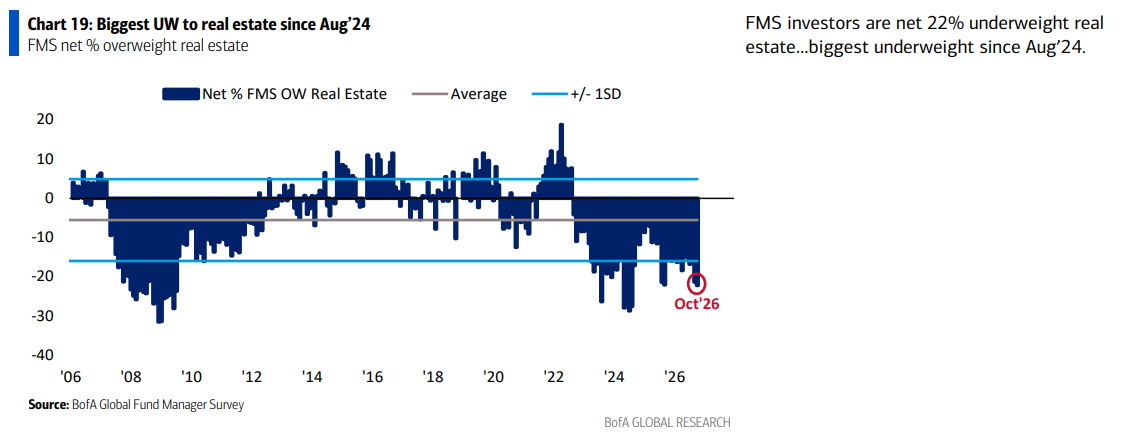
Fund managers are a net 22% underweight real estate (BofA Global Fund Manager Survey), the largest underweight since August 2024, leaving ample room for capital to rotate back into the sector.
Pure play on rate cuts + capital rotation back into income-oriented REITs.
Dividend & Balance Sheet
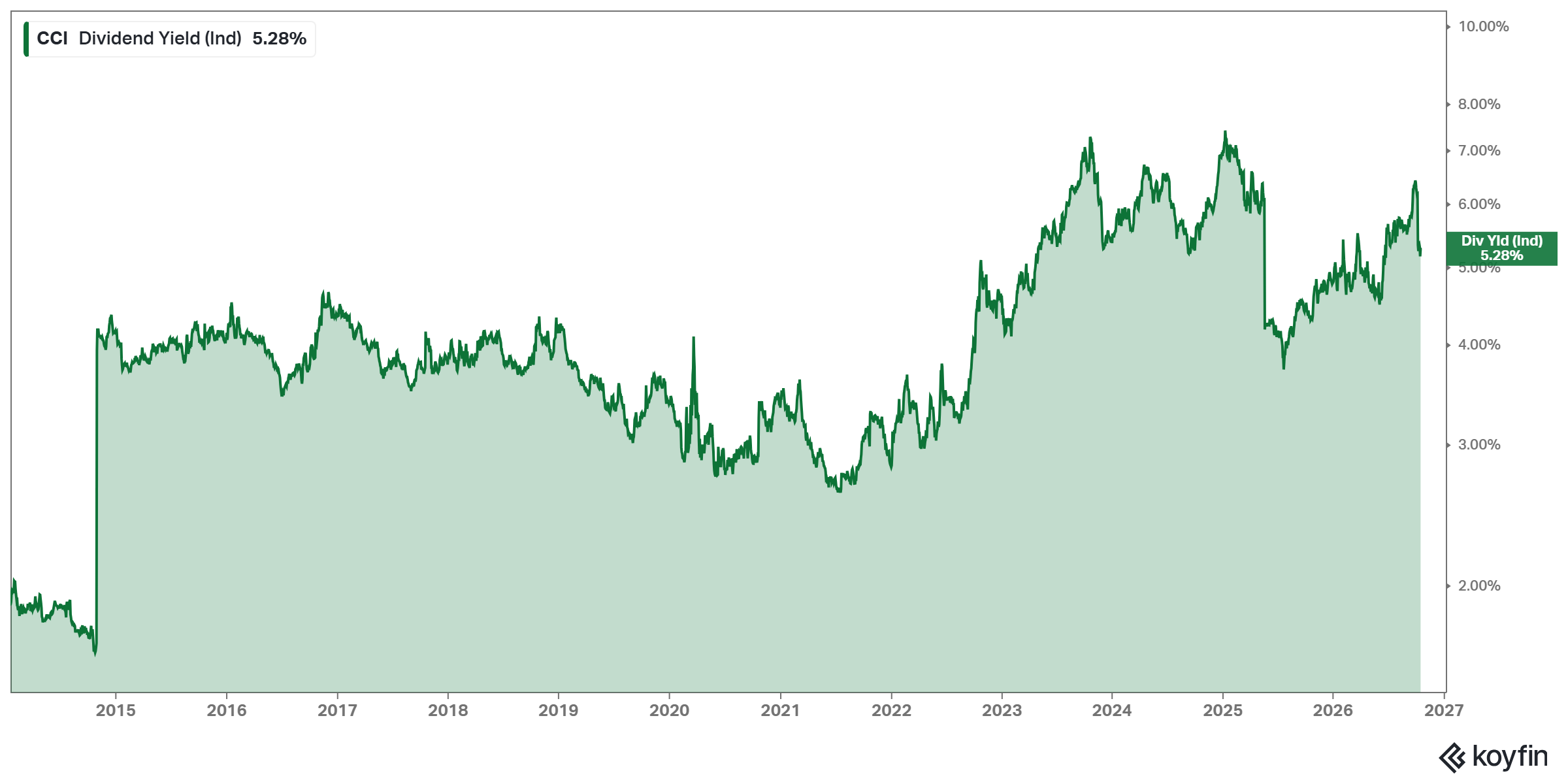
Q2 2026 dividend of $1.0625 per share, or ~$460M in aggregate, unchanged on a per share basis Y/Y, holding the annualized dividend at $4.25 per share (current yield ~5.2%).
Targeted payout ratio of 75-80% of AFFO, with dividend growth set to resume in line with AFFO growth once the payout ratio is within the target range.
Share repurchase program expected to drive 3-4% AFFO/share growth.
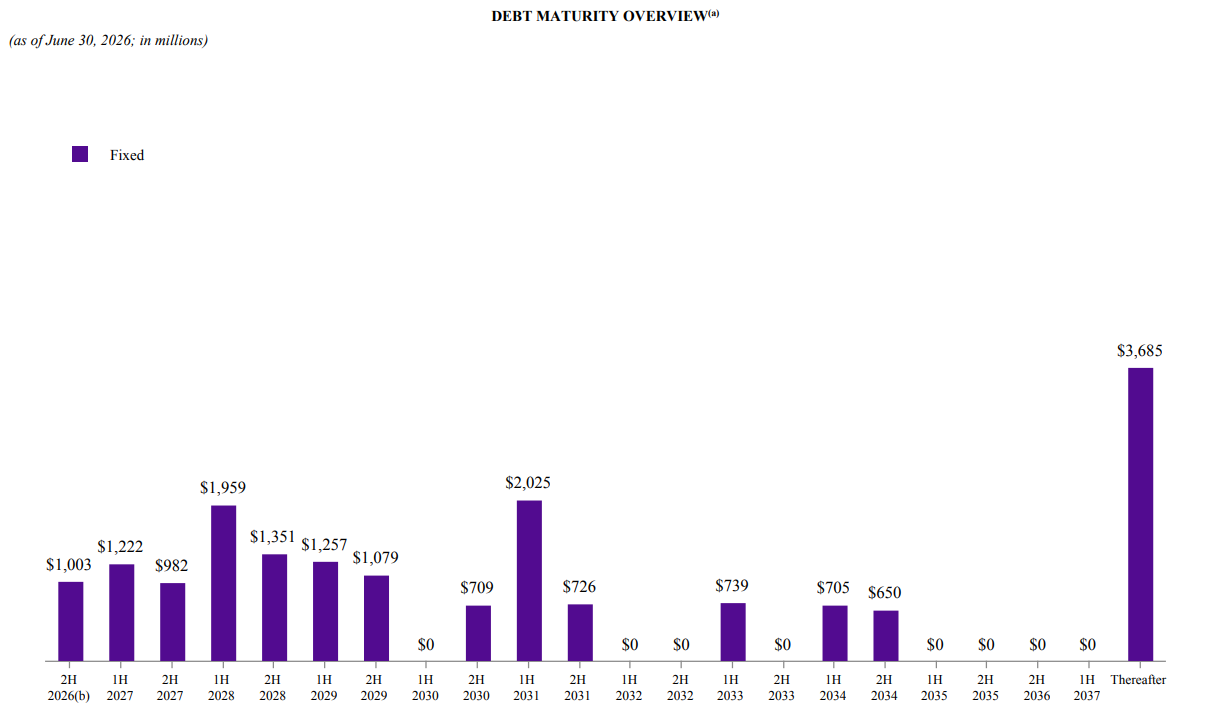
Investment-grade balance sheet: 100% fixed-rate debt, weighted average debt maturity of ~7 years, ~$4.5B of revolver availability, and ~$1.25B of cash. Revolver right-sized from $7B to $4.5B to fit the standalone business.
Leverage now at 6.3x net debt to EBITDA, inside the targeted 6x to 6.5x range, following ~$7.2B of debt repaid since last quarter, concentrated in the highest-cost obligations, including ~$5B of floating-rate debt across the CP program, revolver, and term loan.
Total shareholder yield (~5.2% dividend + buybacks) becomes increasingly attractive in an easing cycle.
Capex remains light at $59M in Q2 ($52M discretionary, $7M sustaining), up 48% Y/Y entirely on a $20M step-up in land purchases. FY26 discretionary capex guide unchanged at $150M to $250M.
Key Developments & Commentary
Crown Castle kicks off our Q3 earnings season today after the bell, in what should be a low-drama quarter for one of the most predictable businesses we own. More than 90% of CCI’s full-year organic growth was already contracted heading into the back half of the year, with management continuing to view 2026 as the trough year for organic growth at ~3.6%, leaving little room for surprises. How the stock trades after the print is anyone’s guess. What we do know is that the long-term case has only strengthened over the past few weeks, beginning with the removal of the single largest overhang on the stock.
For much of the past year, the satellite threat has hung like a dark cloud over the entire tower sector. The fear was that SpaceX’s direct-to-cell ambitions would eventually allow it to beam service straight to phones, disintermediating the towers in the process. Management spent every earnings call and investor conference this year pushing back on that narrative, making the simple case that satellite works great in a cornfield but not so much in a downtown office building, where signals have to get through concrete walls while network capacity is stretched across thousands of users. No matter how sound the argument, the market wasn’t in the mood to listen, choosing to shoot first and ask questions later. The satellite overhang, combined with a ~100 basis point climb in the 10-year yield from late June to its October peak, sent shares all the way back to 2017 levels near ~$65.
Earlier this month, the debate was settled by the company with the most to gain from proving management wrong. SpaceX agreed to acquire Grain Management’s nationwide 800 MHz spectrum portfolio for ~$8 billion in cash, addressing what it called “one of the key remaining technical gaps” standing between Starlink Mobile and becoming a major U.S. carrier. The transaction is expected to close in H1 2027, with Starlink Mobile service targeted to launch in early 2028.
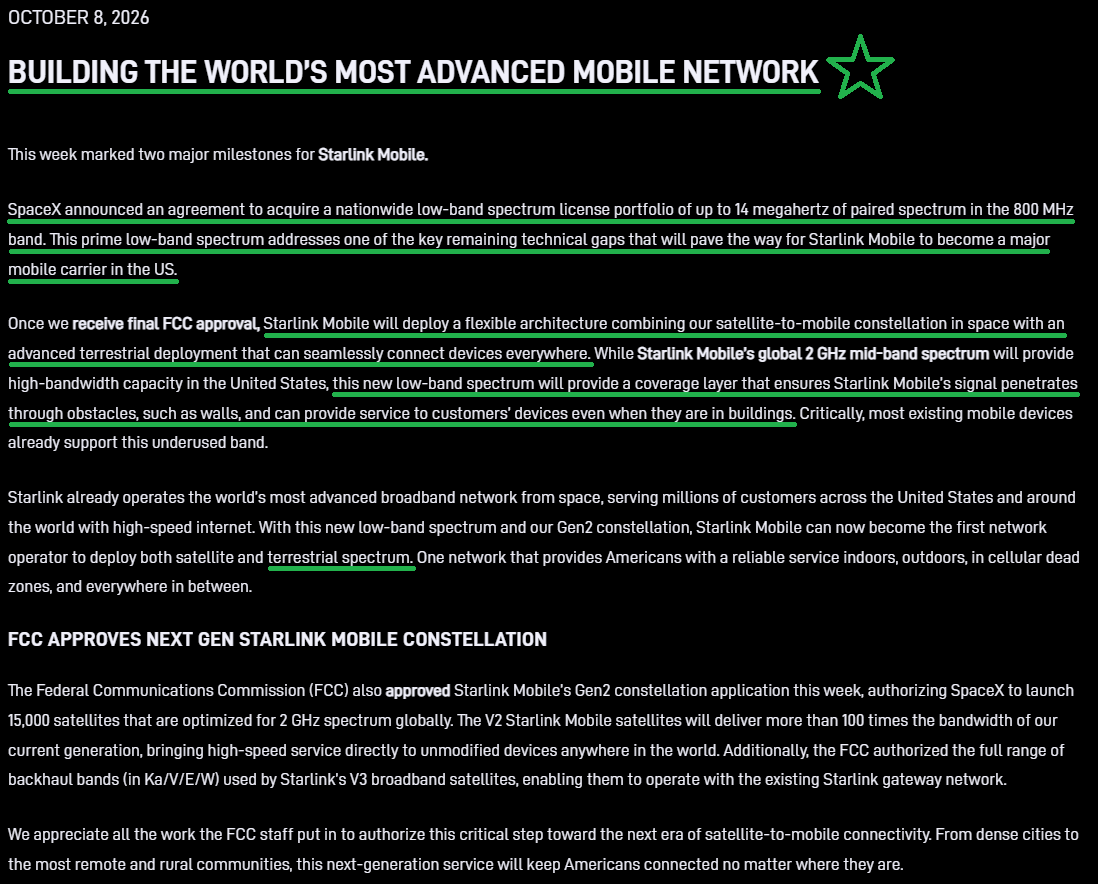
Its own announcement describes pairing its satellites with “an advanced terrestrial deployment,” requiring towers, rooftops, or other ground-based infrastructure. In other words, the company the market feared would make towers obsolete has agreed to spend ~$8 billion to fix a problem that only terrestrial infrastructure can solve. The announcement took the air out of the satellite bear case in a hurry, sending CCI up nearly 16% in its best single-day gain since 2008, with the stock now up more than 25% off its lows.
The reason SpaceX needs towers comes down to simple physics. A satellite signal travels hundreds of miles to reach a phone, arriving ~10,000x weaker than a signal from a nearby cell tower while struggling to get through walls, roofs, and car frames. That is a serious problem when ~90% of mobile usage happens indoors or in vehicles. Capacity is just as limiting. A single satellite beam covers 100 to 600 square miles, compared with 3 to 20 square miles for a typical cell site, forcing far more people to share the same signal. As a result, terrestrial networks can serve ~30x more users with the same amount of spectrum. That advantage is greatest in crowded cities and suburbs, exactly where CCI has built its portfolio, with more than 70% of its ~40,000 towers located in the 100 largest U.S. markets.
By no means does buying this spectrum lock SpaceX into building out its own network and becoming a major tower tenant. Even with the new licenses, Starlink Mobile would hold just ~77 MHz, about a fifth of T-Mobile’s ~384 MHz. However, the acquisition is an important first step, leaving SpaceX with two realistic paths to a terrestrial network, both of which work in CCI’s favor.
The first is to build its own network, most likely a hybrid in which satellites cover remote areas while SpaceX installs its own equipment on existing towers in the markets where most customers live, with unused DISH equipment still hanging on many of CCI’s towers offering a potential head start.
The second is to partner with an existing carrier, selling service under the Starlink brand while renting capacity on that carrier’s network. Even that path leads back to the towers, as millions of new subscribers could require the host carrier to add capacity while prompting rivals to invest more heavily to defend their customers.
As the only publicly traded pure-play U.S. tower company, CCI stands to be a major beneficiary regardless of which route SpaceX takes. More importantly, both paths reinforce the need for terrestrial infrastructure, putting to rest the question that weighed on the stock all year: whether towers would remain essential to the wireless networks of the future.
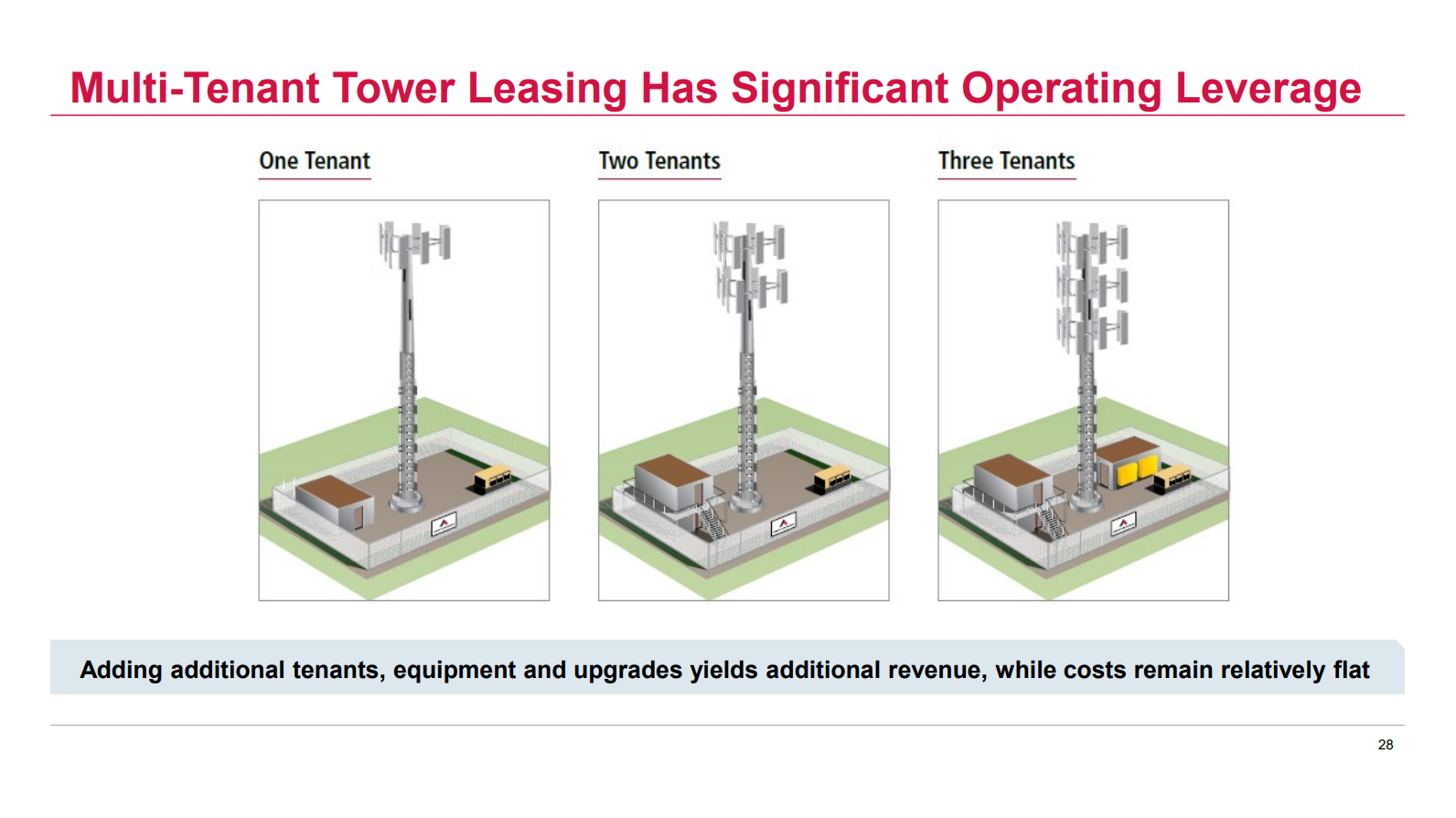
The reason each new tenant carries so much weight comes down to how towers make money. Once a tower is built, operating costs barely move as additional tenants are added, with ~97% of each new tenant’s revenue dropping straight to gross margin. Return on invested capital climbs from 3% with one tenant to 13% with two and 24% with three. A fourth tenant on the same terms lifts that return to ~35%, assuming no additional construction or upgrade costs. With CCI averaging 2.0 tenants per tower across ~40,000 sites, there is plenty of room to add tenants with little increase in operating costs.
Source: American Tower
Source: American Tower
As exciting as the SpaceX opportunity is, it is only one of several tailwinds working in CCI’s favor. U.S. mobile data traffic has grown at a ~51% CAGR from 2010 to 2024, including ~35% growth in each of the last three years, with per-smartphone usage projected to more than double over the next five years.
Source: American Tower
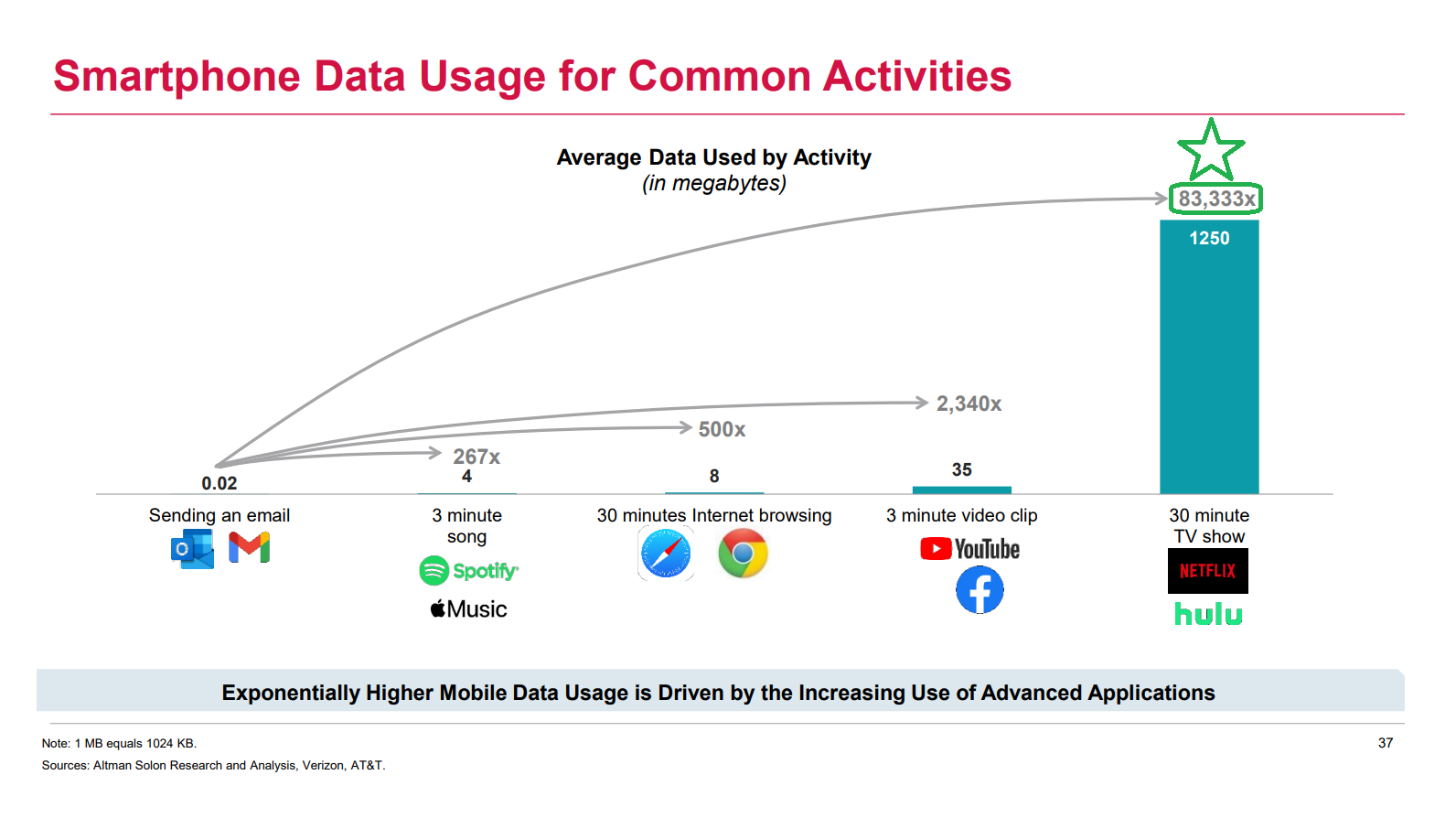
Growth is exponential by nature, as each new generation of applications consumes far more data than the last. For example, streaming a 30-minute TV show uses ~1,250 MB of data, or 83,333x more than sending an email. AI is set to push that curve even higher. Today’s networks were built primarily for downloading, with ~80% to 90% of traffic flowing down to the device. Carrier CTOs now expect that split to move toward 50/50 as AI assistants, agents, smart glasses, and other wearables continuously send video and data back to the cloud, with uplink traffic projected to triple. With mobile data usage continuing to grow and management viewing AI as another positive for demand, carriers will need more spectrum and equipment on towers to handle the additional traffic, supporting durable leasing demand for years to come.
Source: American Tower
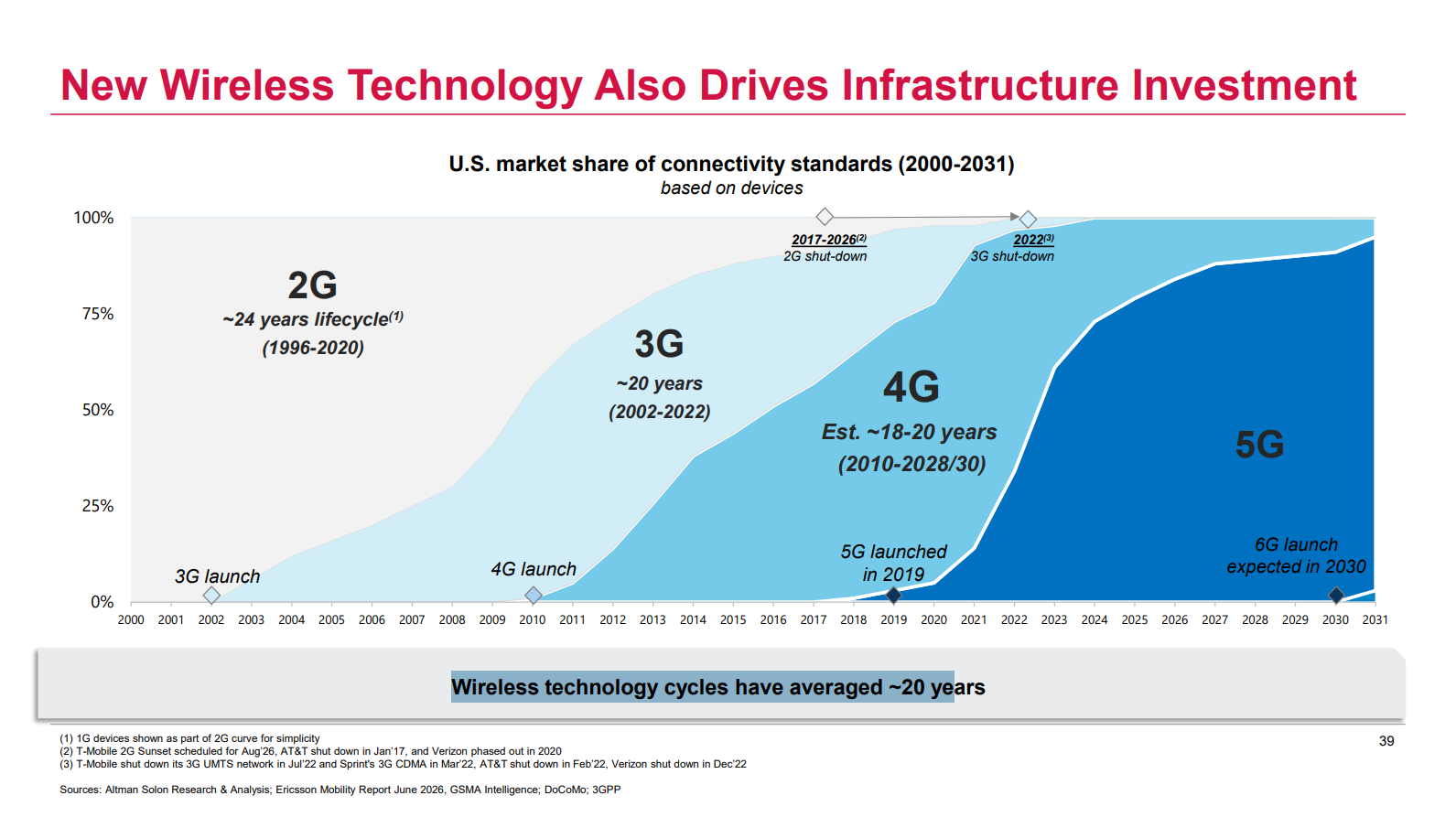
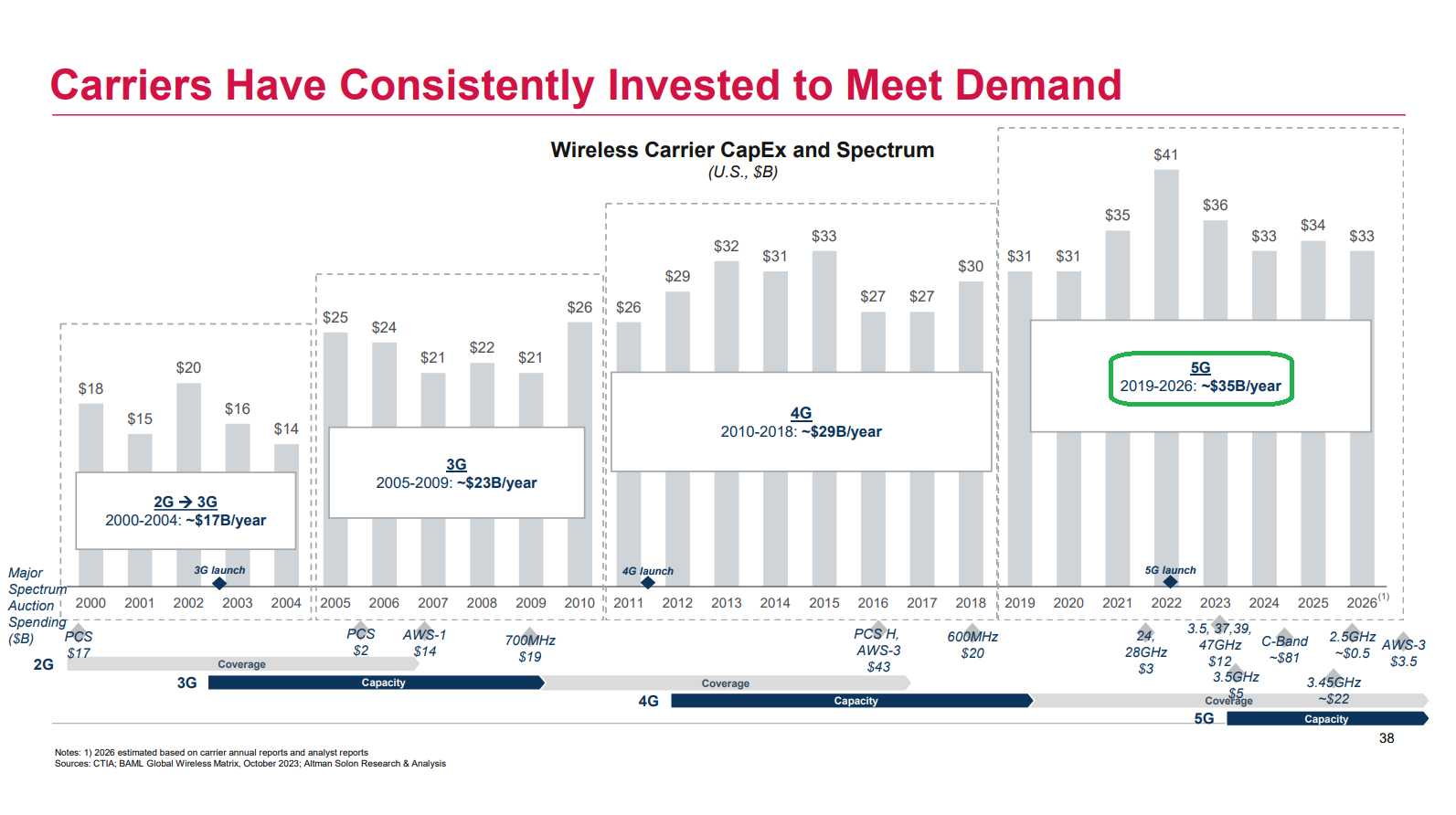
Carriers have no choice but to continue investing to keep pace, spending ~$35B per year on capex and spectrum through the 5G cycle. Wireless technology cycles have historically averaged ~20 years, leaving a long runway for 5G, which launched in 2019, with 6G coming down the pike around 2030. The FCC is also lining up at least 800 MHz of new spectrum for commercial use beginning with next year’s upper C-band auction, with every new band requiring additional equipment on existing sites. Throw in a new competitor with deep pockets forcing incumbents to invest even more heavily to protect their subscribers, and the long-term demand picture for CCI looks better today than it has in years.
Source: American Tower
Source: American Tower
What continues to keep a lid on the stock in the near term is interest rates. Higher yields raise borrowing costs for a debt-heavy business as lower-coupon debt rolls over at higher rates, increase yield competition from risk-free Treasuries, weigh on what investors are willing to pay for long-lived assets like towers, and can slow carrier capex on the networks that drive CCI’s leasing revenue. As a result, CCI, like other REITs, trades inversely with the 10-year Treasury yield. As the chart below shows, the stock has tracked the inverted yield almost perfectly over the past several years.
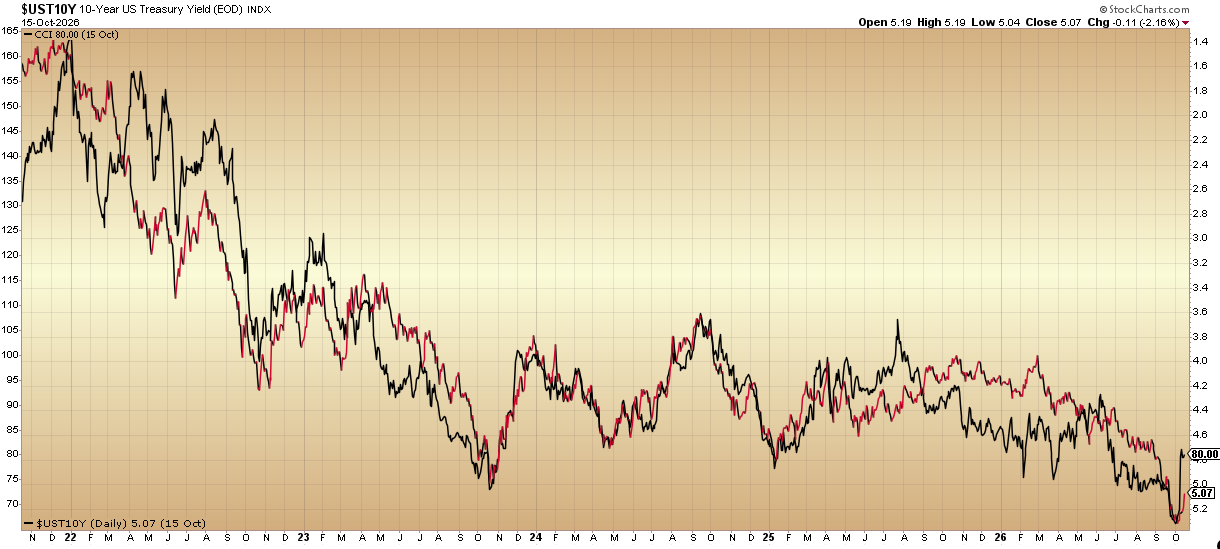
That relationship has weighed on sentiment across the entire sector, with fund managers now a net 22% underweight real estate, 1.6 standard deviations below the long-term average and the largest underweight since August 2024 (BofA October FMS).
The good news is that this headwind is already starting to lose its bite. The 10-year yield has pulled back to ~5.13% from its 5.35% intraday peak, with much of what drove the spike looking temporary to us. CCI’s balance sheet is also well insulated, with debt now 100% fixed-rate and a weighted average maturity of ~7 years.
In the meantime, shareholders collect a 5.24% dividend yield while they wait, with dividend growth set to resume once AFFO growth brings the payout ratio back into management’s 75% to 80% target range, all alongside what we see as massive equity appreciation upside as the story plays out.
That’s why the Q3 print is little more than a single data point in what we see as the first inning of CCI’s next growth cycle. What matters far more is 2027 and beyond, when the organic growth trough is in the rearview mirror, new spectrum is making its way onto towers, and SpaceX’s terrestrial plans begin to take shape. For a year, the market questioned whether towers would still matter. SpaceX just answered that question by agreeing to write an $8 billion check.
General Market
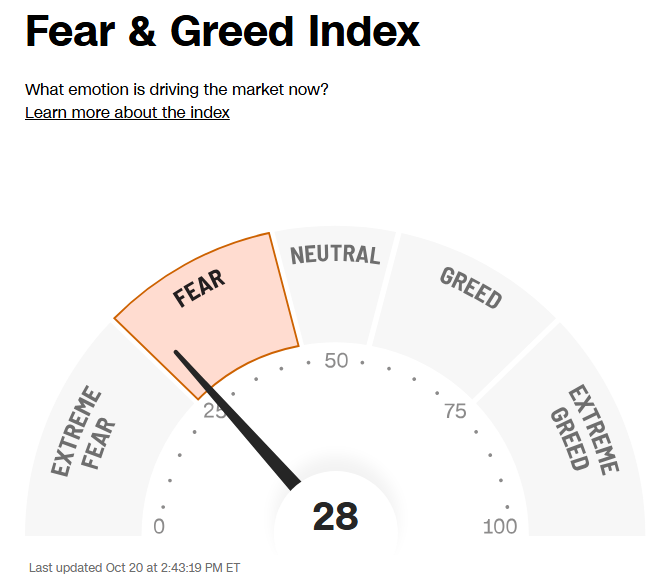
The CNN “Fear and Greed Index” ticked down to 28 this week from 37 last week. You can learn how this indicator is calculated and how it works here: (Video Explanation)
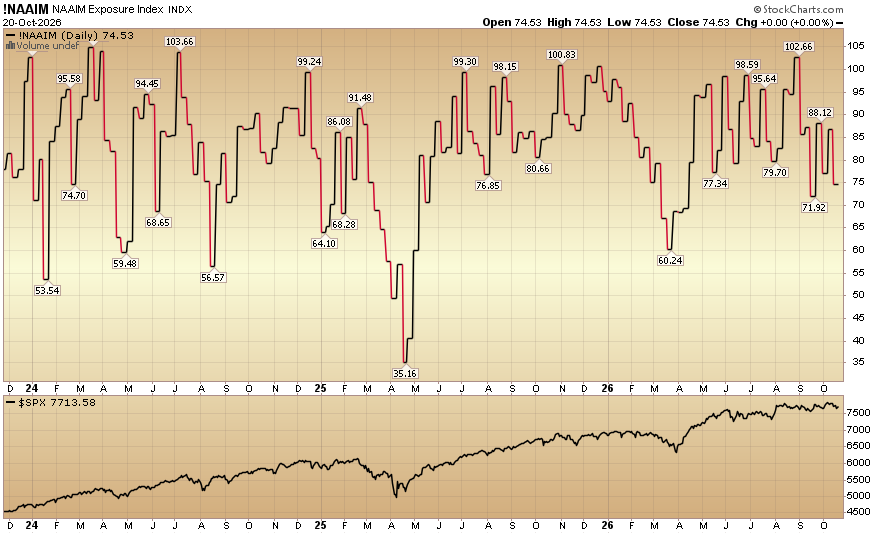
The NAAIM (National Association of Active Investment Managers Index) (Video Explanation) ticked down to 74.53% equity exposure this week from 86.76% last week.


Comments
Log in or sign up to join the conversation.