


There are two key dimensions of inflation risk, and both suggest that the recent upturn in prices may be on the cusp of becoming entrenched. Formal inflation gauges continue to exhibit an upward bias this year, but that is only part of the concern. Inflation sentiment is also beginning to rise. If both sides of this inflation coin continue to heat up, the Federal Reserve’s task of bringing inflation under control will become more difficult and may require a more aggressive policy stance for longer than currently anticipated.
The good news is that there is still room for debate about inflation’s upward momentum. Although prices have increased this year, largely because of the supply-side energy shock stemming from the Iran war, the move so far has been relatively moderate, leaving the outlook open to interpretation. By The Capital Spectator’s reading, however, the trend is approaching a tipping point, and any further acceleration would likely push inflation into territory that warrants heightened concern.
A key input into this analysis is inflation sentiment. Modeling this phenomenon is challenging because there are numerous ways to define and measure expectations and results can be noisy and open to interpretation. For a clearer view of how this component of inflation risk is evolving, I track several market- and survey-based indicators and combine them into a composite measure (see the list of components below).
Although measuring inflation expectations is inherently imprecise, aggregating data from multiple sources can help reveal the underlying trend. On that score, the recent rise in the Composite Index is beginning to look worrisome.
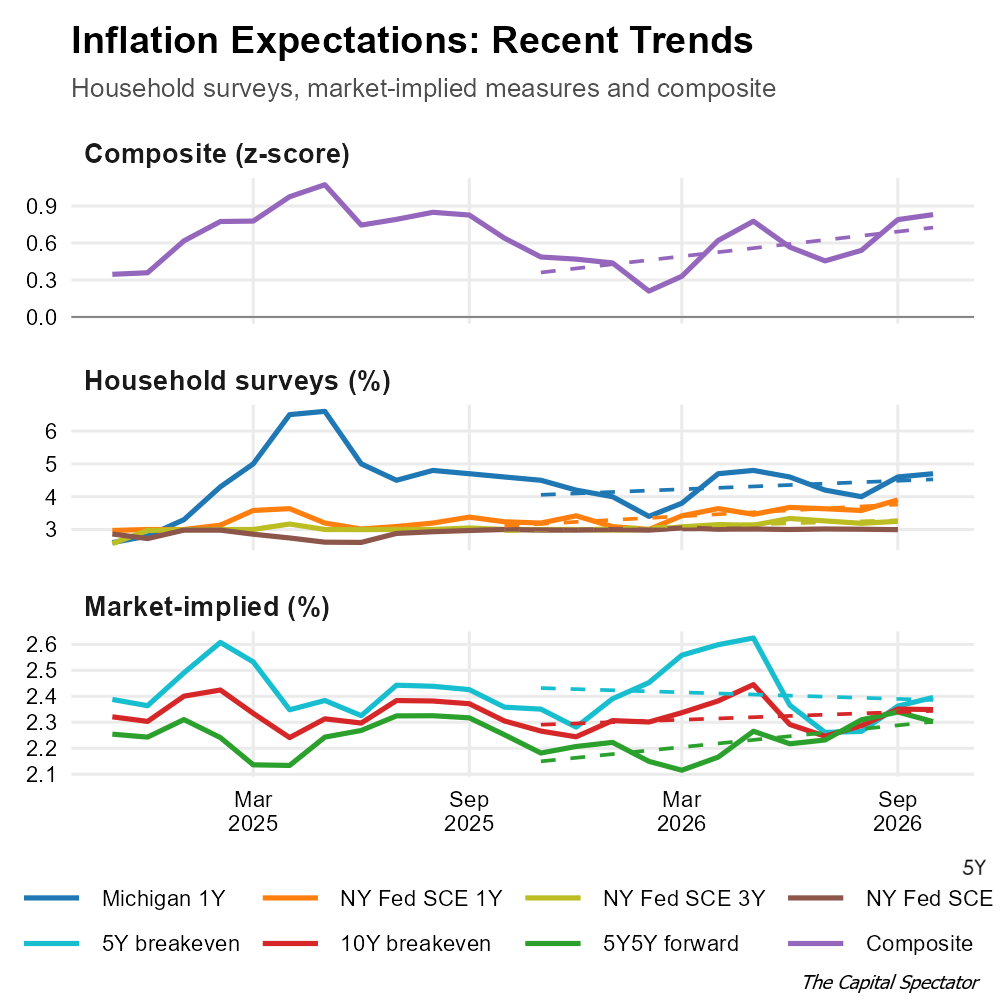
October data is still incomplete, but the figures available so far suggest that the Composite Index will reach its highest level in a year once the final updates are published. Absent the Middle East conflict, this trend would be less concerning and might even be dismissed as short-term noise. But with no end in sight to the Iran predicament, the recent increase in inflation expectations raises the possibility that higher prices could become embedded in household and business decision-making, creating a self-reinforcing cycle in which expectations of inflation help generate more inflation.
A key reason to monitor the Composite Index is that it incorporates measures of inflation expectations, which can influence economic behavior before they appear in official inflation data. If consumers, workers, and businesses increasingly expect higher inflation, they may spend sooner, demand larger wage increases, and become quicker to raise prices. As a result, a rising Composite Index may signal that inflation expectations are becoming embedded in the economy, increasing the risk that higher inflation ultimately shows up in formal price measures.
One reason to reserve judgment on the rise in the Composite Index: Much of the increase is related to sentiment date. The implied inflation forecasts from the Treasury market, by contrast, is still mild, although starting to tick higher. That makes the bond market an especially important indicator to watch in the weeks ahead, as a further rise in market-based inflation expectations would provide a stronger signal that investors are beginning to price in more persistent inflation pressures.
The rise in the Composite Index would be less concerning if actual inflation were stable. But as September’s update of the Federal Reserve’s preferred inflation gauge reminds us, the latest numbers continue to flash warning signs.
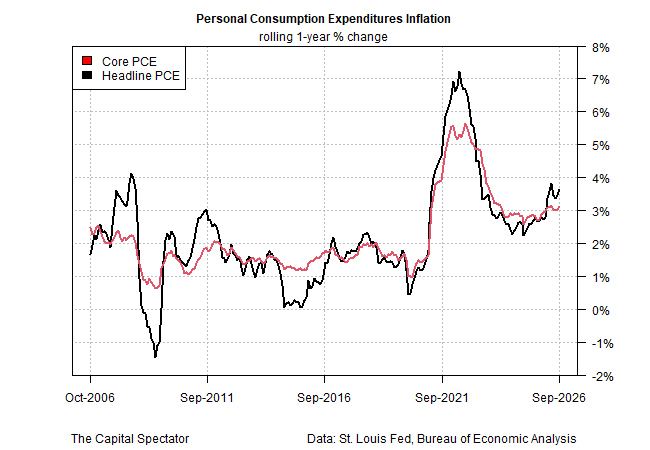
The personal consumption expenditures (PCE) price index rose 3.6% in September, the highest annual rate since May. Core PCE, which excludes food and energy and is widely viewed by Fed officials as a better gauge of underlying inflation pressures, also edged up to 3.1%, a four-month high. Both are well above the Fed’s 2% target and continue to show signs of moving further away from that objective.
Although the increase in prices remains relatively modest, the direction of travel is concerning in the current environment, especially as inflation expectations appear to be firming and disruption and risk for global energy supplies persists. Taken together, the trend in sentiment and the trend in actual inflation suggest that inflation risks are becoming increasingly difficult to dismiss.
The next several months will be critical in determining whether the recent pickup in inflation proves to be a temporary consequence of geopolitical turmoil or the start of a more persistent inflationary trend. The answer may also reveal whether the Fed’s decision to pause rate hikes earlier this week was a well-timed display of patience or the first step toward a policy mistake that ultimately requires a more hawkish response.
Comments
Log in or sign up to join the conversation.