


There’s more to inflation than oil prices, but the recent pullback in crude suggests that the inflationary pressure tied to the Iran conflict may be starting to ease. Even if energy prices continue to move lower, it’s unclear how quickly that relief will filter through to broader inflation measures. Still, the growing possibility of such an outcome offers a measure of encouragement. Maybe, just maybe, a light at the end of the tunnel is beginning to come into view.
Let’s start with the U.S. oil benchmark, West Texas Intermediate (WTI), which is trading near its lowest level since August at around $86 a barrel. A break lower from here would signal growing confidence that the market expects the Middle East supply shock to continue easing, at least relative to the worst days of the war.
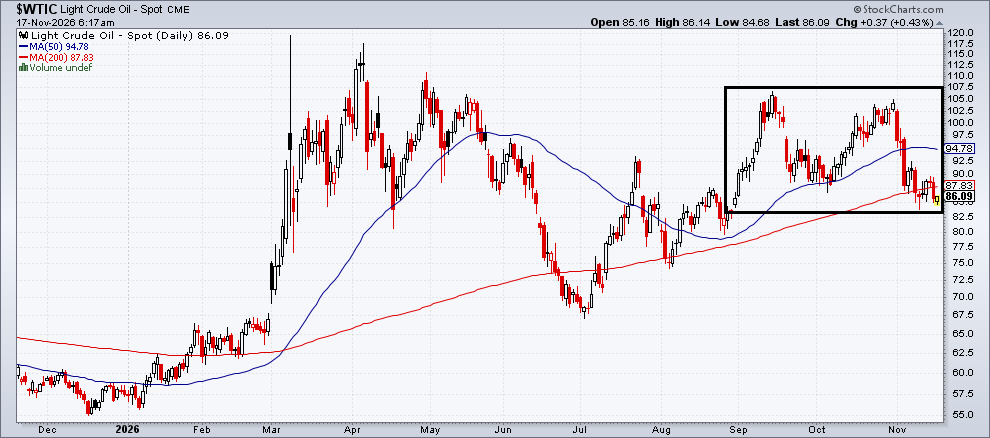
That confidence remains fragile, of course. In the blink of an eye, the U.S. or Iran could launch an attack that sends the optimists running for cover once again. It’s still premature to rule out that possibility, but the decline in oil prices suggests that optimism is gaining traction at the margin.
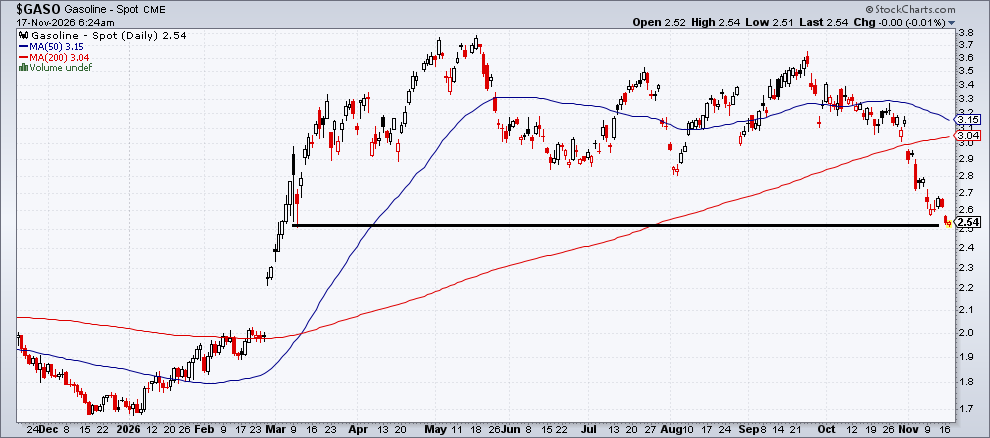
The price of gasoline is also feeding expectations for eventual disinflation. The spot price recently fell to its lowest level since mid-March.
More importantly, there are signs that diesel prices have peaked. As a key fuel for freight transportation and industrial activity, diesel exerts an outsized influence on costs across the economy. While the earlier surge in prices will continue to feed through to inflation in the near term, the recent downturn hints that the inflation shock is beginning to lose momentum.
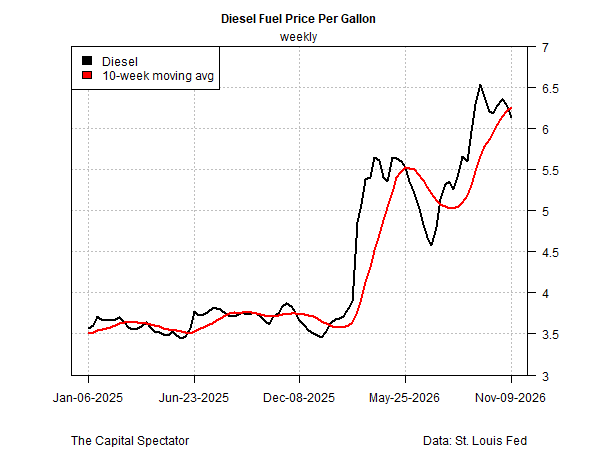
The pushback is that we’ve been here before, several times since the first attack on Feb. 28. It’s impossible to know whether we’re looking at another false dawn or a genuine inflection point in the inflation outlook. A key reason for caution is the unstable stalemate in the Middle East.
The arrival of a third U.S. aircraft carrier in the region is a notable sign that the risk of renewed military action against Iran may be rising once more. Although President Trump recently described the war as “militarily … over,” the expanding U.S. naval buildup, continuing tensions in the Strait of Hormuz, stalled nuclear negotiations, and Trump’s warnings that he would not hesitate to act if necessary suggest Washington is preserving a credible military option. The deployment does not signal an imminent attack, but it reinforces the view that the U.S. is positioning itself to escalate quickly if conditions deteriorate.
Iran is also sending signals that the conflict could quickly intensify. Recent drone attacks on Bahrain, home to the U.S. Navy’s Fifth Fleet, and continued threats from Iranian officials suggest Tehran is maintaining pressure even as direct fighting has eased. The message appears to be that Iran remains willing and able to escalate, raising the risk that a new provocation or miscalculation could reignite the conflict and send energy prices soaring again.
Another reason for caution on the near-term disinflation outlook is the recent acceleration in U.S. economic growth, which appears set to continue in the fourth quarter. The Atlanta Fed’s GDPNow model estimates that output will rise at a 3.5% annualized pace in Q4. If correct, the pickup in growth that began in Q3 will continue, marking the strongest back-to-back quarters in more than a year.
Stronger growth could keep inflation higher for longer by sustaining consumer demand and labor-market strength, limiting the economy’s ability to cool price pressures. That’s a meaningful concern with inflation still running well above the Fed’s 2% target, helping explain why markets expect another rate hike at next month’s FOMC meeting.
Another round of policy tightening appears reasonable based on the Cleveland Fed’s nowcast for November consumer inflation, which projects the year-over-year CPI at the headline level will move close to 4% again.
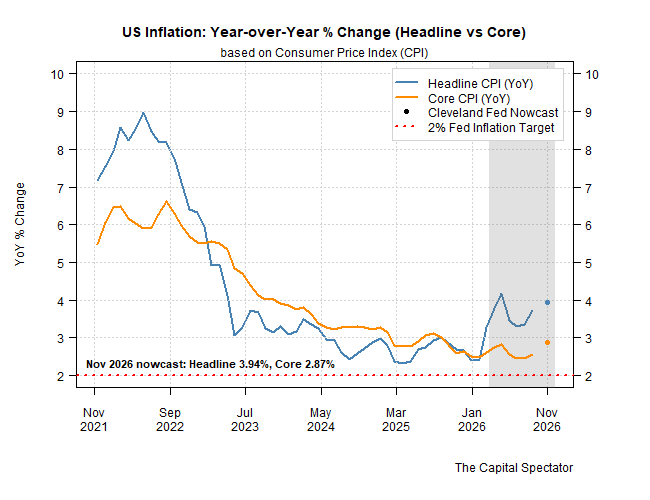
Higher inflation can help set the stage for its own decline. Rising prices squeeze household and business budgets, while higher interest rates increase borrowing costs. Together, those forces can cool demand, ease pressure on labor markets and supply chains, and ultimately slow the pace of price increases.
For now, however, the odds of meaningful near-term relief on the inflation front appear low. Encouraging signs are beginning to emerge, particularly in energy markets, but it would be premature to declare victory. If oil and diesel prices resume their climb due to a new phase of conflict in the Middle East, the inflation outlook could deteriorate quickly.

Comments
Log in or sign up to join the conversation.