

True to form, credit markets are the bell-weather to an economic crisis, and corporate bonds are the bell-weather to a credit market crisis. The credit market crisis we are witnessing today is best described as experiencing a “Minsky Moment”, after the late Hyman Minsky. Minsky believed that, intrinsically, “financial stability creates its own instability”. By that, he meant that a long bullish economic growth cycle would spur greater and greater market speculation which would ultimately lead to market instability and collapse. One of the most prescient signs of a future market calamity is the large amounts of debt issued in the corporate sector. The growth in the supply of credit has fuelled the equity markets as a corporation and after corporation issued debt, the proceeds of which went to satisfy shareholders with higher dividends and share buybacks.
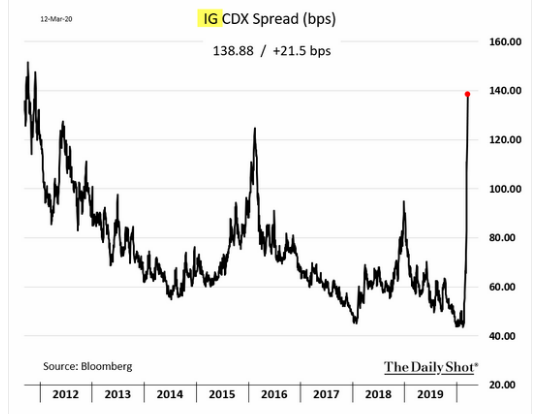
In terms of duration, the expansion since the 2008 crisis has been the longest on record in the post-WW2 era. The longer the build-up of speculative debt, the more damage is done at the time of a Minsky Moment. Today, the US corporate bond market is displaying all the characteristics that Minsky described. The accompany charts, one for investment-grade bonds and one for high-yield bonds, map out how the corporate spreads were very stable since 2012, with the one exception of a brief period in 2015. Overall, corporate spreads were narrowing, in particular over the last 12 months. As the stock market reached for new highs, the monetary authorities were accommodating equity and debt markets with declining interest rates and a modified form of quantitative easing. The economy was expanding, albeit at relatively low rates, and the unemployment rate remained a record low. Analysts kept reminding their clients that corporate profits were robust and corporations had a lot of room in which to add more debt to their balance sheets and still maintain strong profit performance. The stage was set for a ramp-up in corporate debt/equity ratios not seen in years.
(Click on image to enlarge)
(Click on image to enlarge)
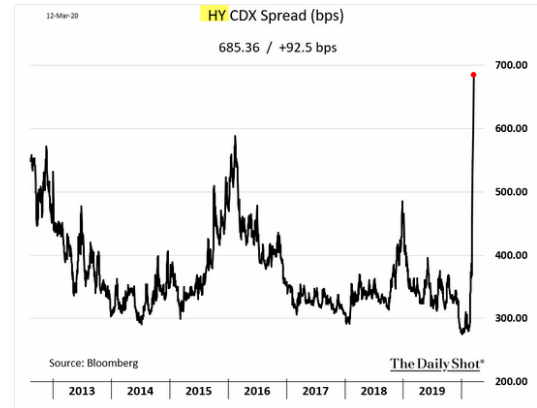
Then, the dual shocks of COVID-19 and the collapse in oil prices shook this complacency to a degree not seen in our lifetime. The equity markets fell by about 25% in less than 20 trading days. More significantly, the degree of volatility instilled fear in many asset classes that investors never knew what expect once the bell rang to start the trading day. The Treasury market had huge swings in prices as trading was dysfunctional along the yield curve. And, the corporate spreads widen exponentially. What made this Minsky Moment different this time was the speed with which markets cracked, much faster than experienced in 2008-09. How this will end will depend above all else on the duration of the public health crisis which remains a great unknown at this time.

Comments
Log in or sign up to join the conversation.