

Last year was a genuinely great year to be an investor.
The S&P 500 gained more than 16%. AI stocks and mega-caps soared. Precious metals had a strong run. If you were in the market, you were likely feeling pretty good about yourself going into 2026.
And that's exactly the problem.
Complacency Is Expensive
When markets deliver big returns, investors don't just accumulate profits, they accumulate confidence. Sometimes too much of it.
They start to assume that what happened last year will continue happening this year. They stop asking "what could go wrong?" and start asking "where should I put more in?"
That shift in attitude (from cautious to complacent) is one of the most dangerous things that can happen to an investor.
Because here's how it works on the way down: the same investors who rode last year's gains higher are now sitting on profits they don't want to lose. When markets start dropping, that "paper profit" mentality shifts to fear. And the more gains they've accumulated, the more fear they have to lose.
That's a lot of motivated sellers.
We've seen this play out before. And we're watching it happen again right now.
The Charts Don't Lie
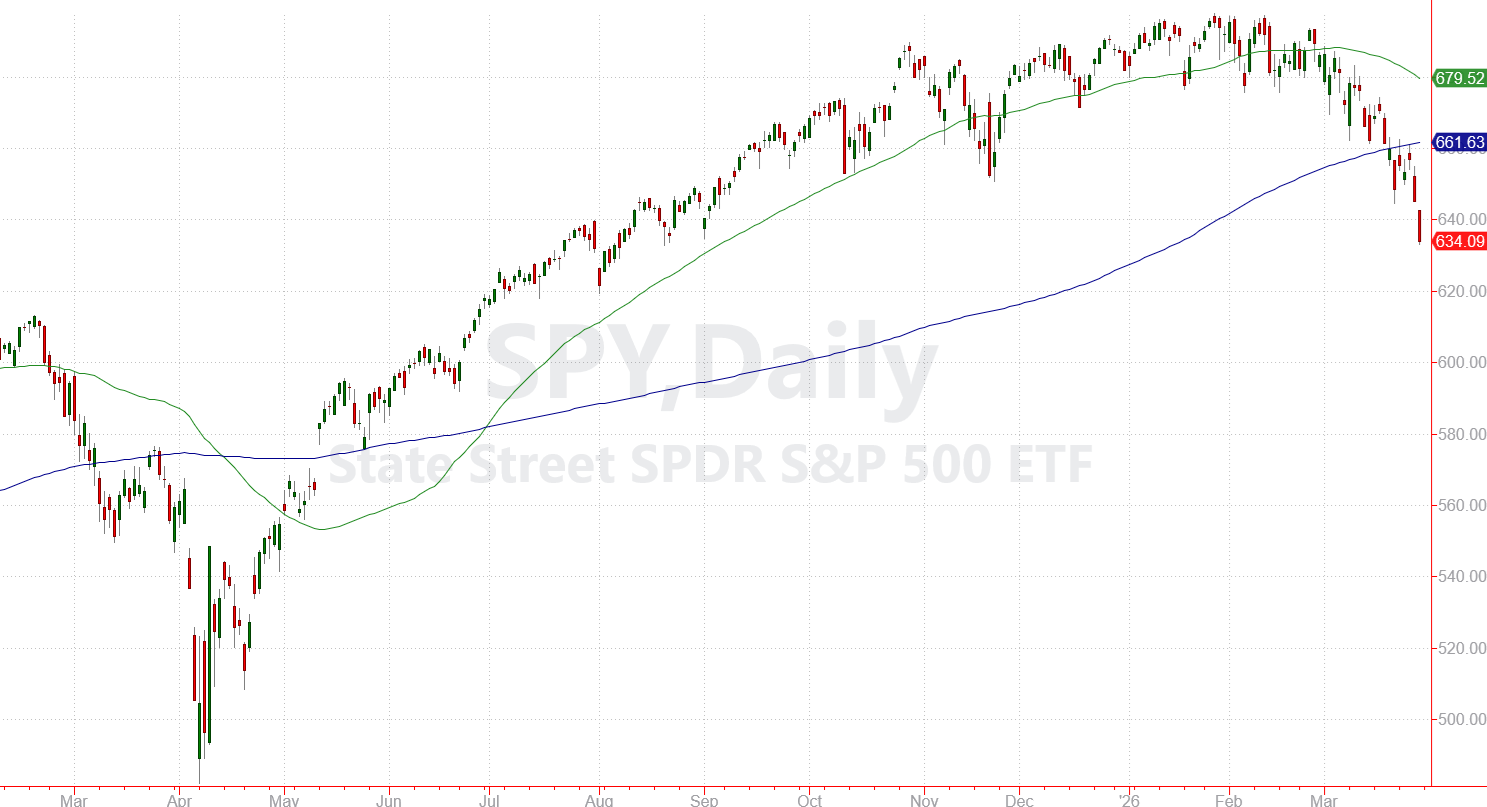
The S&P 500 posted its fifth straight weekly decline last week, closing at a seven-month low of 6,368. All three major indexes have broken below their 200-day moving averages -- a key technical line that traders consider the "ultimate trendsetter" for long-term direction.
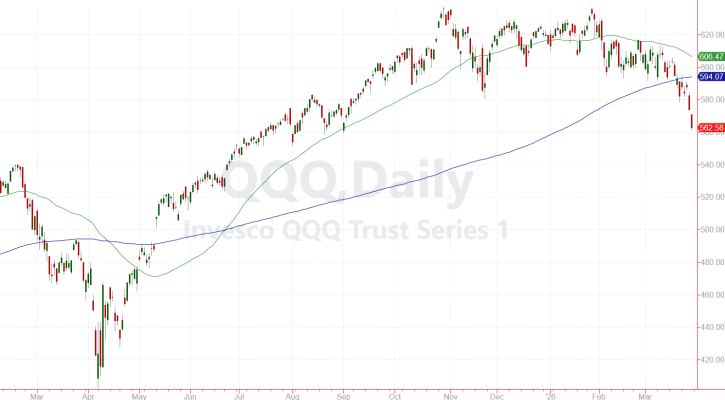
The Nasdaq 100, which led last year's rally, is now down more than 13% from its October high and has entered correction territory.
For many of the expensive, high-growth names that drove the bull run (think AI stocks and tech darlings) the selling has been even more severe.
Why This Isn't Over
Here's what I want you to understand about market breakdowns: they don't typically resolve cleanly. You don't get a big drop, a bounce, and a smooth recovery.
What usually happens is this: the initial breakdown triggers more selling, which triggers more fear, which triggers panic selling, which finally creates the kind of capitulation that marks a real bottom.
We haven't seen that yet.
The Fear & Greed Index has moved into extreme fear territory -- and yes, that's eventually a contrarian signal. But history shows you need to see meaningful damage in the market before fear becomes a reliable buy signal. We're not there.
Add to that:
Rising interest rates — the Fed is projecting just one rate cut for all of 2026 and some economists even expect the Fed to hike rates. Elevated rates act as a steady headwind for stocks.
Oil near $110/barrel — every U.S. recession since World War II, except the COVID downturn, was preceded by a spike in fuel prices. Higher energy costs drain consumer wallets and dampen spending.
The Iran war — U.S. military operations are now entering their fifth week, with Iran-backed Houthi militants joining the conflict and additional U.S. troops deployed to the region. This isn't resolving quickly.
Midterm election year — historically speaking, we're in the weakest part of the four-year presidential cycle for markets.
No one has a crystal ball. But the probabilities favor more selling before stocks find sustainable support.
You Can Profit From This
Here's the part most investors never hear: a falling market isn't a disaster... it's an opportunity if you're positioned correctly.
Some of my best trading periods have come during bear markets.
When investors panic, they sell fast. Stocks fall much faster than they rise. If you're holding put options on the most vulnerable names, you can capture significant gains in a short window.
One stock on my watch list is Palantir Technologies (PLTR).
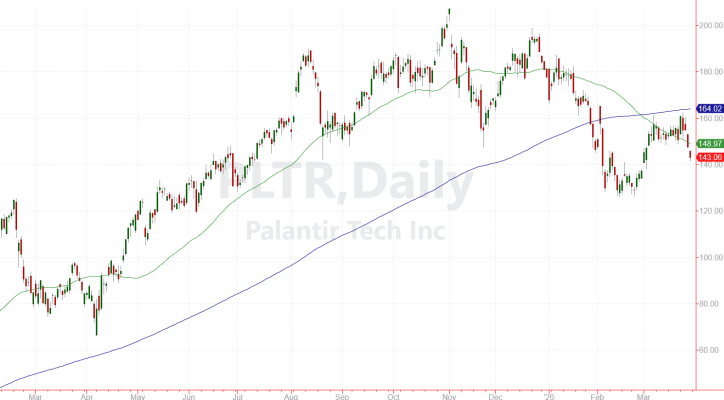
Palantir is a genuinely impressive company. It provides critical AI and data services to the U.S. government and major corporations.
But the stock is trading at roughly 77 times next year's expected earnings... and even after its recent decline, PLTR still trades at over 100 times this year's expected profits.
When investor sentiment turns bearish, the most expensive stocks have the farthest to fall. And PLTR is starting to crack.
That's just one of the 20 bearish stocks currently on my watch list

Comments
Log in or sign up to join the conversation.