


Image Source: Pixabay
MARKETS
US equities fell Thursday, S&P down 3.6%, unwinding Wednesday's rally. Weakness led by tech with NASDAQ down 5%, sharpest since June 2020. US 10yr treasury yields rose 10bps, ending the session at 3.04%.
As stocks tanked in jaw-dropping volatility it left a swath of carnage across the street. On second blush, investors en masse seemed to decide that the FOMC was still hawkish. However, they are also increasingly concluded that the Fed cannot arrest runaway inflation without avoiding a hard landing or an economic black hole.
There is a much greater sense of the Fed ultimately sticking to its mission of pulling inflation back down. March 2023 Eurodollars are more or less back to where they were pre-FOMC. What solace the market took after the Fed, it evaporated posthaste.
The equity market slide is a straight-line reaction to rising yields with the nominal 10-year back above 3%, but entirely on higher real rates: the ultimate nemesis of equity markets.
Indeed, there was a big turn in market sentiment Thursday compared to the period immediately after the FOMC Wednesday. The near-consensus view is that Powell's commentary was a head-fake
While I understand that US stocks might be the least bad asset at this point, I would call this recent bounce of the dead cat variety. It is an odd market that goes through periods of ignoring major disruptors despite most investors acknowledging that we are undoubtedly moving into the unhappiest of economic worlds with WW3 looming on the Eastern Front. The threat of double-digit inflation is not out of the question in parts of the developed world, while the Fed's "mission creep" is to risk a hard landing at the expense of nipping runaway prices in the bud.
If it can get much worse than that heady mix, for investors, the spectre of a reduction of liquidity from the Fed and its brethren should be genuinely horrifying for risk markets. In the past, risk assets have shown remarkable agility to climb the wall of worry in the face of many potential stressors; however, that was when the taps had been kept open, and the party has kept going. Things are about to change quickly.
OIL
OPEC+ agreed to stay the course. The relatively brief meeting suggests not much deliberation, possibly reflecting three factors: OPEC+ members are happy to point the finger at external variables while still benefiting from the high oil price; there is limited spare capacity within the group, with most (outside Saudi Arabia) still struggling to achieve existing quotas; and a cautious stance is warranted given demand impact of China mobility restrictions and growing concerns about a slowing global economy.
OPEC's inability to ramp up production when desperately needed by the market is compounding an already dangerous supply deficit
Hungary has reiterated its intention to veto a Russian oil embargo by the EU, at least in the form proposed by EC President Ursula von der Leyen earlier this week. The proposal being considered by the EU would phase out Russian oil within 6 months and Russian products within a year, and land-locked Hungary lacks the alternative supply routes that would allow it to reduce reliance on Russia within the required timeframe. Reuters has reported that the EU is considering temporary exemptions that will enable Hungary and others heavily reliant on Russia (e.g., Slovakia) to continue oil purchases until the end of 2023. Still, I think it's clear that individual EU member states even if an EU-wide embargo is not implemented will implement an immediate Russian oil ban
Indeed, this means geopolitical tensions will remain high, and while there are some demand-side risks at the moment, it seems likely that the threat of supply disruption will be the dominant driver at this time.
Despite the significant supply turmoil and the chance of more to come, OPEC continues to show little willingness to ramp up production, Whether this is because the group does not believe the Russia disruption risk is real (or because of concerns about potential demand weakness resulting from the latest covid surge in China and about the health of the global economy, OPEC increasingly looks like it is operating blindfolded with an unrealistic set of assumptions about the global oil market and utterly contrary to their mission statement which aspires to be" a fair price to both producers and consumers "
GOLD
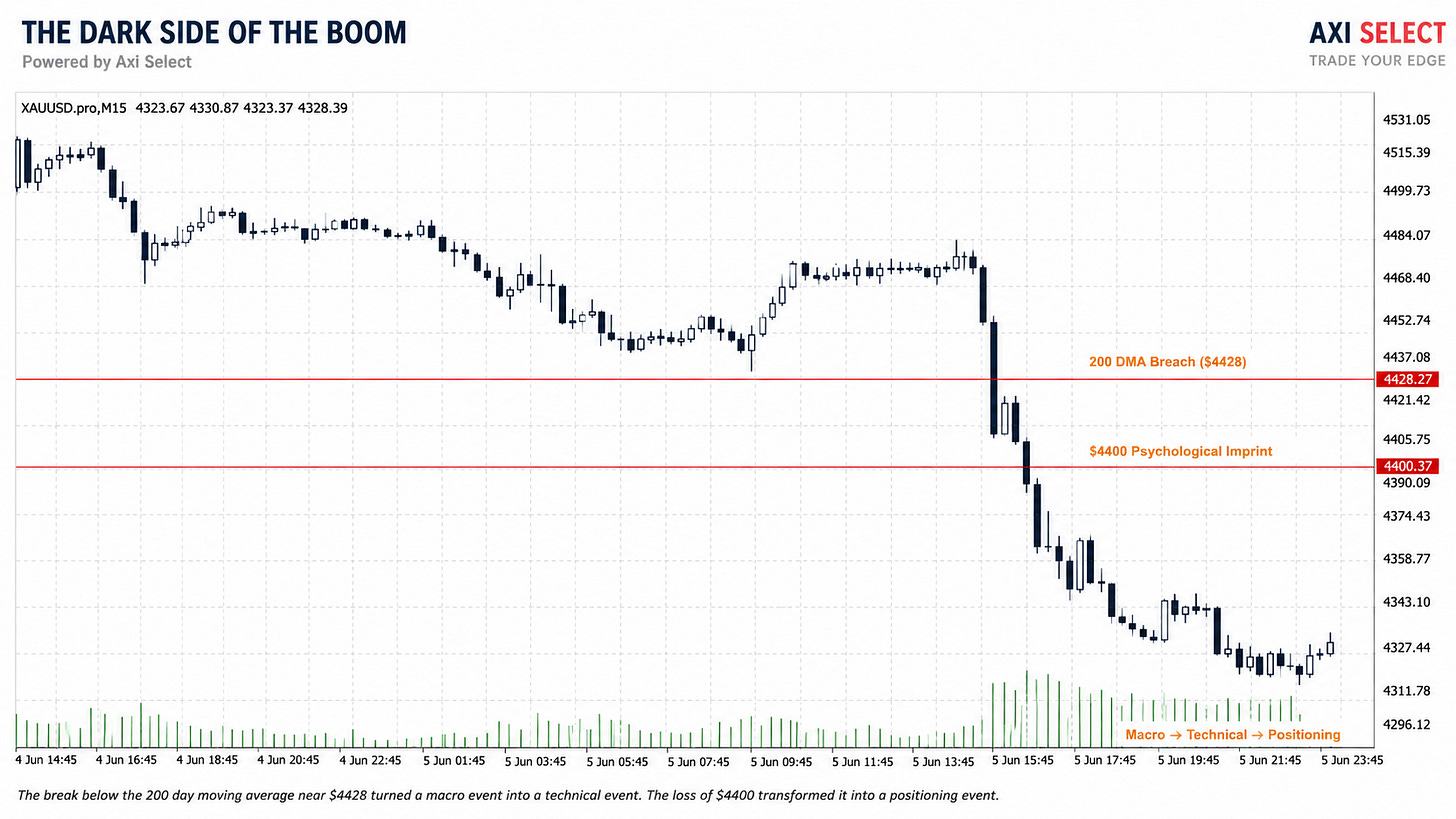
Tangible assets like Gold present a hedge to rampant inflation. The implications are that when the Fed finally ratchets up interest rates high enough to stem the growth of inflationary pressures, investors will no longer need those hedges. And given that most of the action is occurring on futures or paper gold, I guess that 'superficial' hedging demand has been a critical contributor to the continued price rise, not actual physical demand.
But until we reach that possible tipping point later in the year, dip support to $1850 should remain entrenched as there is still a good chance that the Fed is likely to become increasingly cautious the more it increases rates, as the risks to growth grow this year. Indeed, With the US economy seemingly late-cycle (judging by the labour market) and the market already pricing a sizeable Fed hiking cycle, the focus is back on recession risk.
FOREX
I agree that explicitly ruling out 75bp was certainly a dovish surprise. Still, the market reaction was more a function of positioning than anything else, and attention should soon shift to Average Hourly Earnings (AHE) data on today and next week's CPI data.
With all the front-end selling overnight, I think 75bp is not entirely off the table, but more substantial inflation inputs are needed for that to happen, so AHE and CPI could be the critical catalysts.
It is probable self-deception to think the FED can thread the policy through the eye of the needle without avoiding the dreaded economic sinkhole and hurting all commodity risk betas.
CAD
The Canadian dollar slid in line with all risk betas, which detracted from the fact that commodity exporter central banks are among the leaders of policy normalization accompanied by a high terminal rate. Unfortunately, when the market gets into the procession to the recession frame of mind, it immediately takes the wind out of the commodity bloc sails.
AUD
The housing sector did not warrant a mention in the RBA statement. Investors will watch this closely for any signs of slowing during the hiking cycle. Building approvals were -18.5% m/m in March vs. -12.0% consensus, +42% in February. These are extremely volatile data sets but will be one of the first parts of the housing data chain to weaken once the monetary policy is tightened. Hence, the A$ remains a burstable housing asset on top of an iron ore mine.
China's concerns may continue to linger as the miss on the PMI was strikingly well below even the worst estimates.


Comments
Log in or sign up to join the conversation.