

Gold Has Left The Cathedral
Gold has not lost its long-term religion, but the tape has stopped trading like a sermon.
That is the key shift. For most of the rally, gold lived inside the cathedral of the big macro story: central-bank accumulation, fiscal anxiety, currency debasement, geopolitical hedging, and the slow erosion of trust in paper promises. Buyers did not need much convincing. Every pullback felt like another chance to add to the pews. The long-term congregation was still there, the vault door was still open, and the metal had the aura of something bigger than a trade.
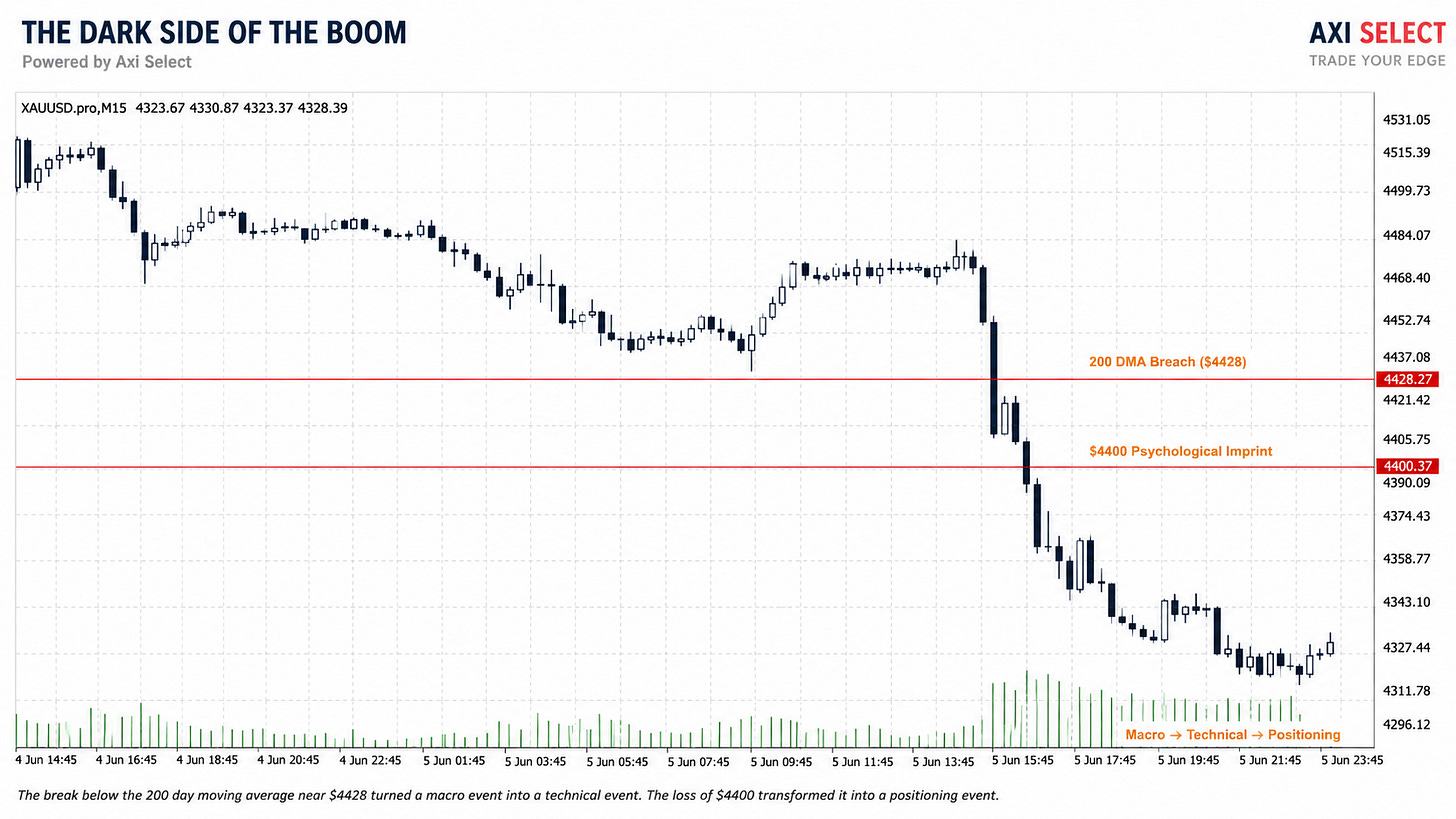
But when the 200-day moving average gave way, gold walked out of the cathedral and straight back onto the trading desk.
Gold : The First $60 Belonged To Economists. Everything Below $ 4,400 Belongs To Traders.
Gold’s Woodshed Moment ( June 6th)
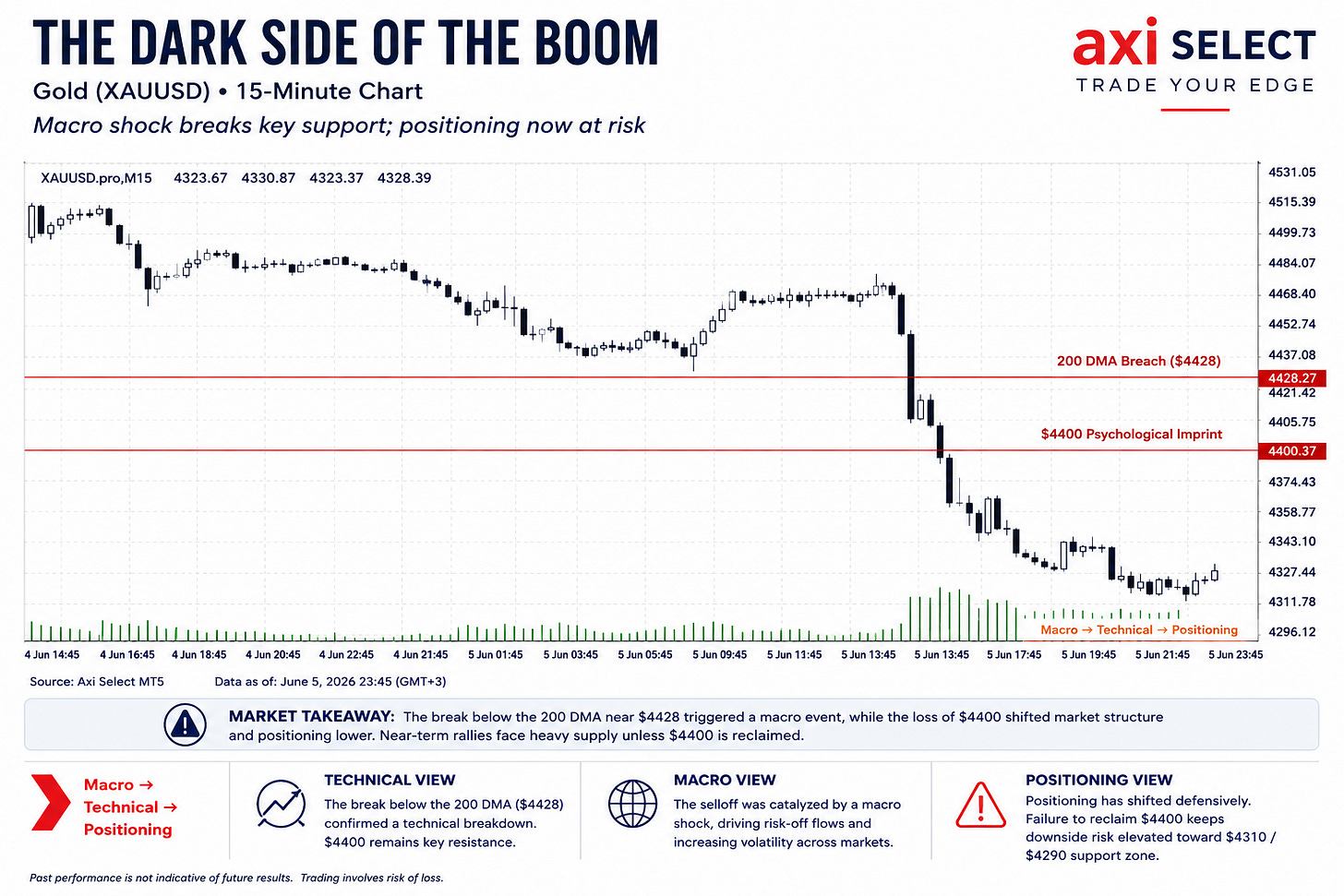
That line was not just a technical level. It was the market’s trend compass. Above it, weakness could be treated as noise inside a structural bull market. Below it, the tone changes. The same buyers who once stepped in automatically now sit back with their arms folded, waiting for proof. They are still interested, but they are not in a hurry. They are nibbling at levels, not diving in with both feet.
And why would they? The macro menu is messy. A hawkish Fed is back on the table, CPI still has to be digested, oil is stirring the inflation pot, and the unknown inflationary impact of geopolitical stress is hanging over the market like smoke after a fire. Not to mention the market might very well have the AI inflation story upside down. This is not the clean safe-haven script gold usually loves. It is not the classic panic where yields fall, the dollar weakens, and investors rush into bullion as the last lifeboat.
This version is more complicated. This is an inflationary shock.
When geopolitical stress pushes oil higher, feeds inflation expectations, supports the dollar, and keeps real yields sticky, gold does not get to wear the safe-haven crown without a fight. It gets dragged into the rate-hike courtroom. The bond market starts asking questions. The dollar sits there with the badge. And the Fed, instead of offering oxygen, reminds everyone that inflation is still the crime scene.
That is why gold feels different now. The long-term thesis is still locked in the vault, but the short-term trade has been handed back to the screens. CPI is the next trigger. Fed pricing is the referee. Oil is the wild card. And the 200-day moving average is the line on the floor where the market psychology changed.
If CPI comes in soft, gold gets breathing room. The rate-hike pressure eases, real yields may soften, the dollar may loosen its grip, and the market may start talking about a recovery toward the broken trend line.
But if CPI comes in hot, gold has a problem. The market will not hear “inflation hedge.” It will hear “higher for longer.” It will hear “Fed still trapped.” It will hear “rate-hike risk is not dead.” And in that world, gold stops trading like pristine insurance and starts trading like a non-yielding asset standing under the bond market’s floodlight.
AI Could Be The Next Inflation Shock, Warns Global Market Veteran Stephen Innes
That is the paradox. Inflation can help gold when it damages confidence in money. But inflation can hurt gold when it forces the Fed to keep the policy boot on the neck of the market. There is a big difference between monetary distrust and rate-hike fear. One is gold’s oxygen. The other is a clamp on the trade.
So the big buyer is waiting.
The central-bank story is still there, albeit at a slower pace than the past 2 years. The fiscal rot story is still there. The broader geopolitical hedge remains in place. The dollar-debasement story is still there. But big capital does not need to be heroic below the 200-day. It can let the fast-money crowd fight over technical levels. It can wait until the washout turns.
Until then, the buyer is not gone. The buyer is patient.
That is the trader regime. This is no longer “buy the dip and go for lunch.” This is “respect the level, respect the data, respect the Fed.” Every bounce is now a test. Every support shelf matters. Every CPI print can reset the board. Every Fed speaker can move the goalposts.
Gold has gone from sacred macro asset to tactical battleground. The long-term bull case is still alive, but the short-term tape has lost its automatic bid. The old buyer who used to charge into weakness has turned into a disciplined desk trader: smaller clips, cleaner levels, tighter risk, no hero trades
Until gold gets back above the 200-day and stays there, rallies are bounces, not resurrection.
The cathedral is still standing.
But for now, gold is trading from the fast-money desk.


Comments
Log in or sign up to join the conversation.