

The conventional thinking is that central bankers are about to embark on a series of interest rate hikes in response to the most recent surge in inflation. According to this wisdom, it is just a matter of when and by how much central banks will increase rates. The former head of the TD, Ed Clark, referred to Canadian monetary policy as been “too loose for too long”. He echoes the sentiment of Canadian bankers who have made no bones about their wish to see nominal and real rates of interest need to move up.
However, the great monetarist economist, Milton Friedman, has always taken the position that economists have it backwards when it comes to interpreting the question of just how “loose” is monetary policy. In a seminal article, (Friedman) stated:
As an empirical matter, low interest rates are a sign that monetary policy has been tight — in the sense that the quantity of money has grown slowly; high interest rates are a sign that monetary policy has been easy — in the sense that the quantity of money has grown rapidly. The broadest facts of experience run in precisely the opposite direction from that which the financial community and academic economists have all generally taken for granted.
He warned against allowing interest rates to get too low, but not because he feared an outburst of inflation. Rather, low interest rates are a sign that growth is weak, and eventually deflation sets in. This is precisely what has occurred in Japan since the early 1990s. An entire Japanese generation has experienced only deflation, zero interest rates, and stagnation. Now that we are experiencing inflation rates well beyond the targeted 2% why are long-term interest rates still so low?
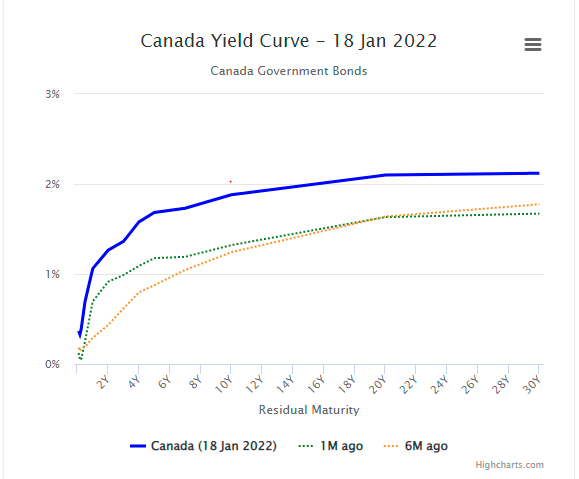
Even those economists who expect that central banks will raise their policy rate several times over the course of the next 18-24 months do not expect long term rates to increase significantly. In fact, the spreads between 10yr-2yr yields are expected to narrow because the Fed’s hiking strategy will coincide with long-term rates continuing to be relatively low.Long-term bond holders are anticipating rate hikes only serve to dampen growth prospects and ultimately ease inflation. The list of headwinds facing our economy include great uncertainty regarding the path of the coronavirus, softening growth in Asia, disruptions in the worldwide supply chains, resulting in sluggish aggregate demand. The real challenge to the central banks is not to raise short-term rates to the point of engineering a recession. Long-term bond participants are alert to that prospect.


Comments
Log in or sign up to join the conversation.