

Macro close up photograph of the US Treasury Building on the US Ten Dollar Bill
For nearly three years, the equity market appeared to absorb significant Treasury bill issuance with little visible cost to bank reserves. The Federal Reserve’s Reverse Repo (RRP) facility — at one point holding over $2 trillion in money market cash — drained roughly dollar-for-dollar against new bill issuance. Money market funds rotated out of RRP and into bills, which appears to have absorbed a financing burden that might otherwise have pressured liquidity-sensitive assets.
That dynamic shifted in late October 2025. RRP balances are now near zero — down from a $2.5 trillion peak — and the month-end usage pattern that has historically refreshed the facility has effectively ceased. The chart below breaks down S&P 500 returns into three regimes defined by RRP balance levels. During the drain phase (June 2023 – October 2025), days with bill issuance settlement coincided with cumulative compounded returns of approximately +10%. Since the RRP buffer reached functional zero, those same Treasury Bill issuance settlement days have been associated with cumulative returns of approximately -13% over the subsequent six months.
How the S&P’s return decomposes by Treasury Bill Issuance Regime
Each line is the compounded S&P return if you held the index only on those days (cash on other days). The three lines multiply: (1+S)(1+P)(1+Z) = (1+Total). The post-RRP regime (bottom) shows a dramatic divergence the prior regimes don’t.
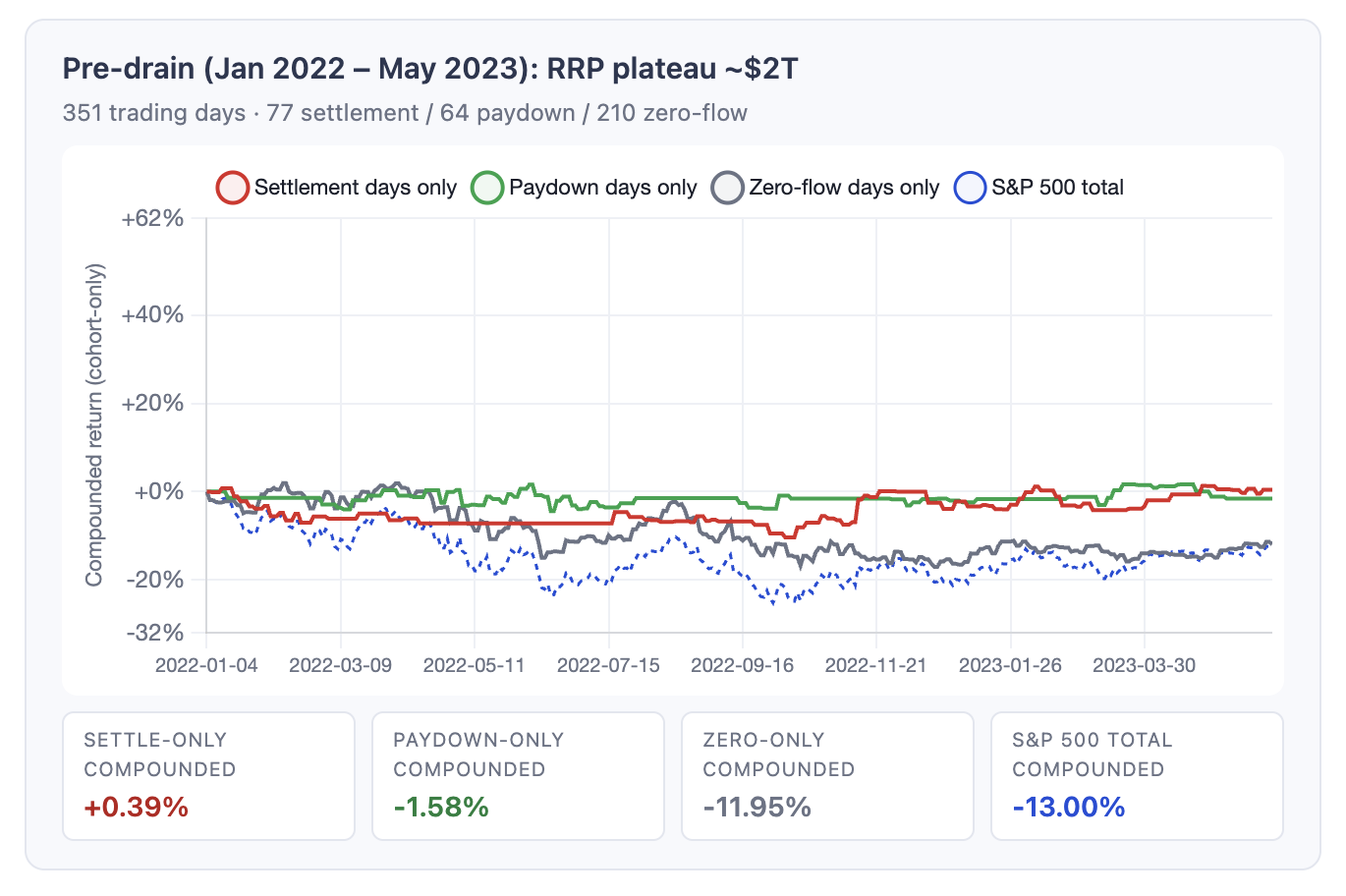
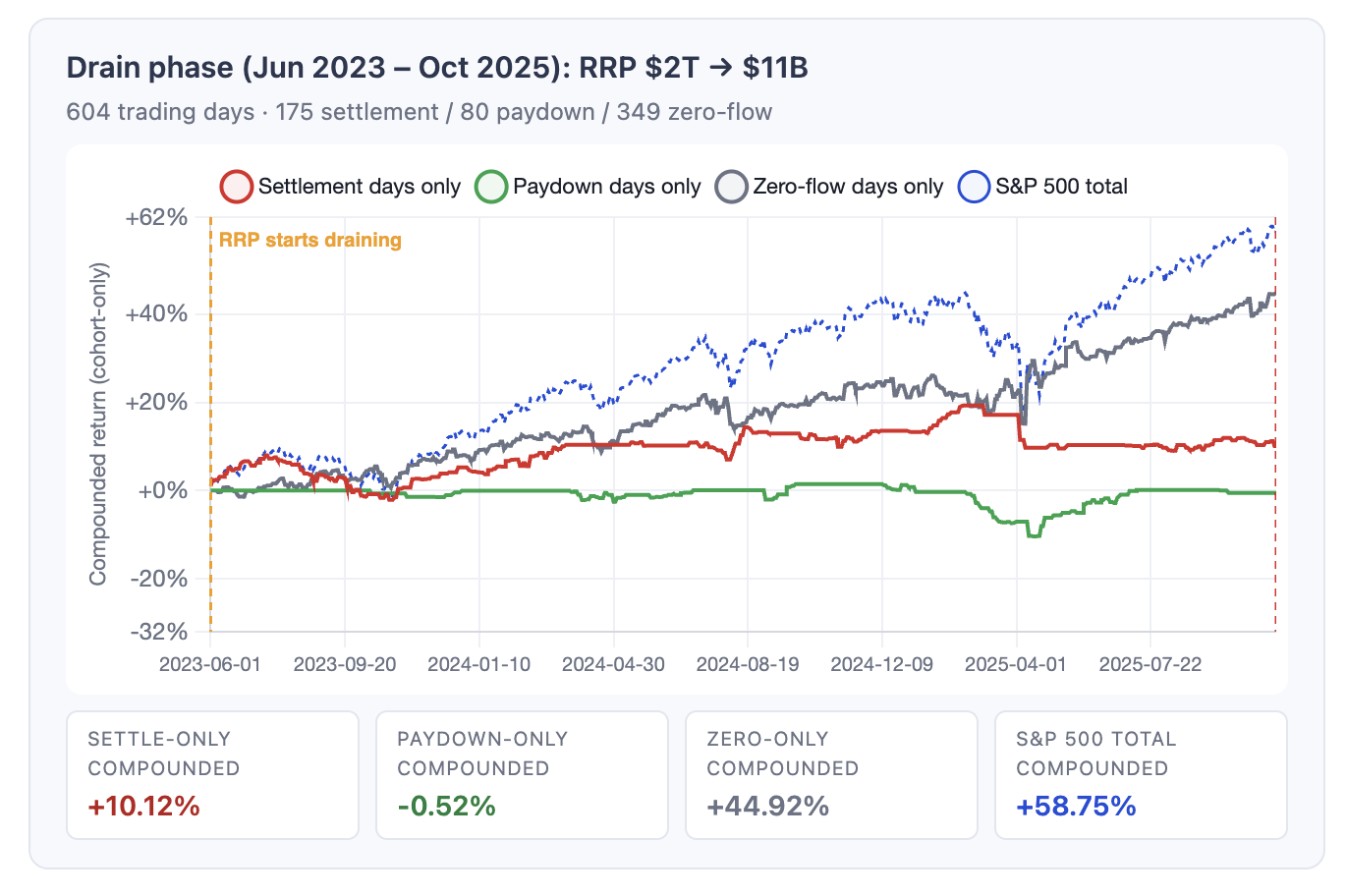
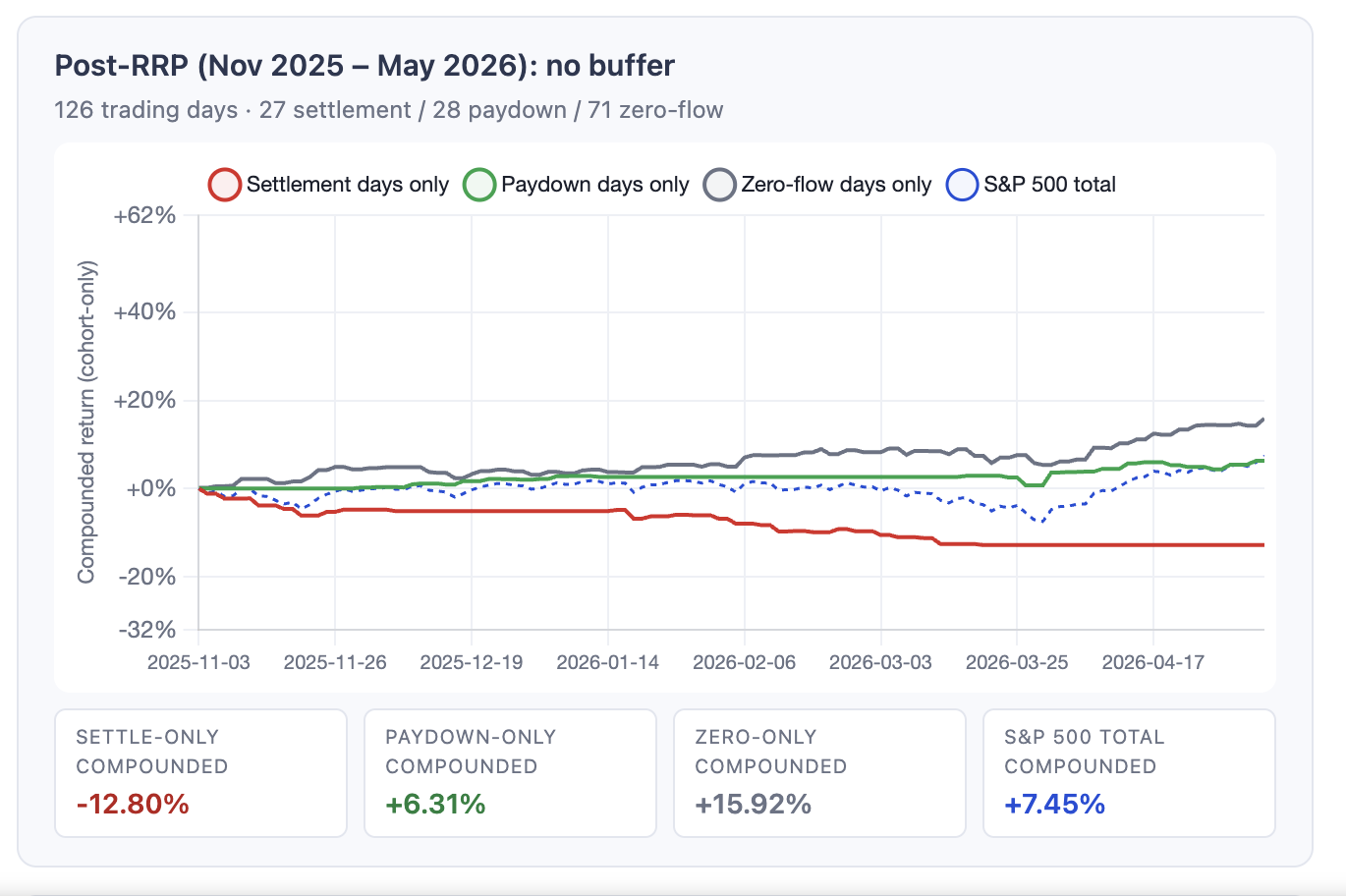
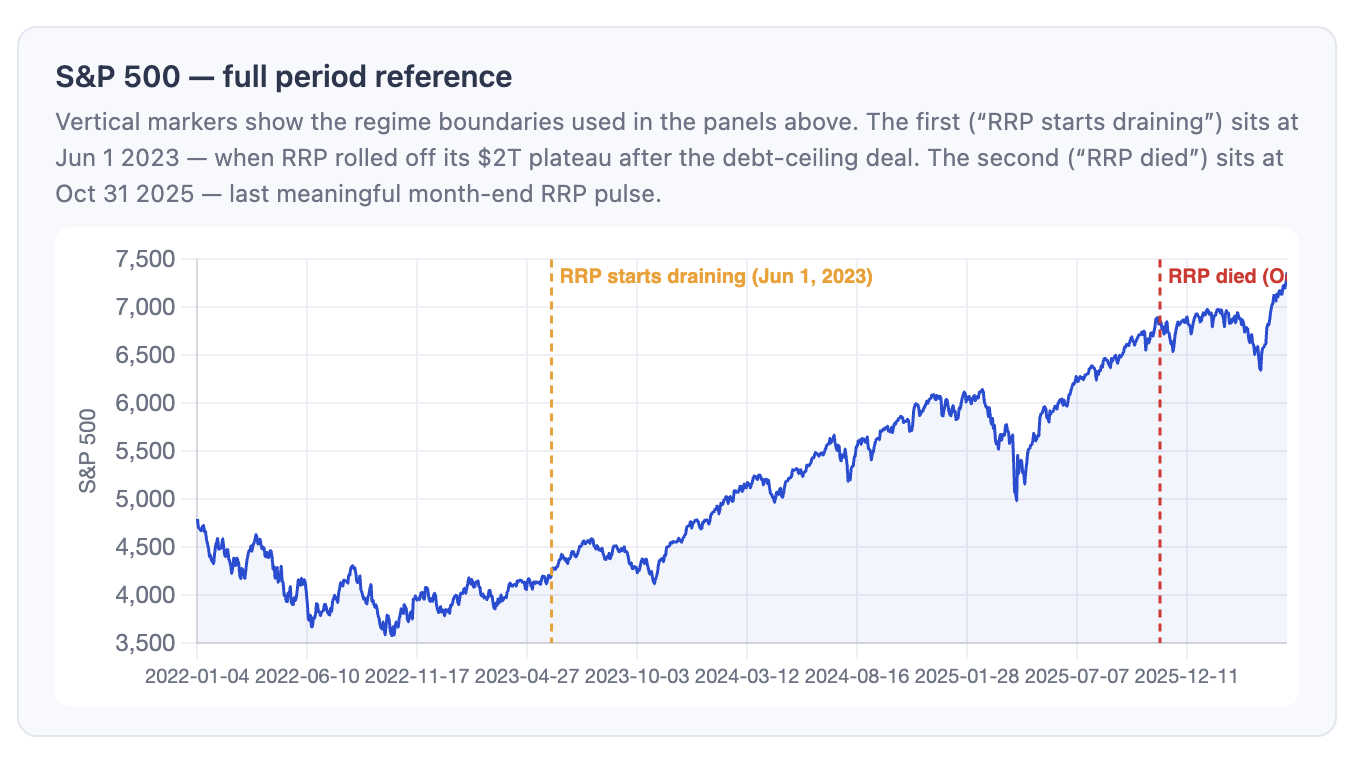
Method: each daily return is bucketed into settlement (Treasury bill net new cash > 0), paydown (< 0), or zero-flow. Each cohort line shows the geometric compounded return earned by holding S&P 500 only on those days (cash-equivalent on others). The three cohort returns multiply: (1+S)(1+P)(1+Z) = (1+Total). Sources: TreasuryDirect cash pay-down, FRED RRPONTSYD, Yahoo Finance ^GSPC.


Comments
Log in or sign up to join the conversation.