


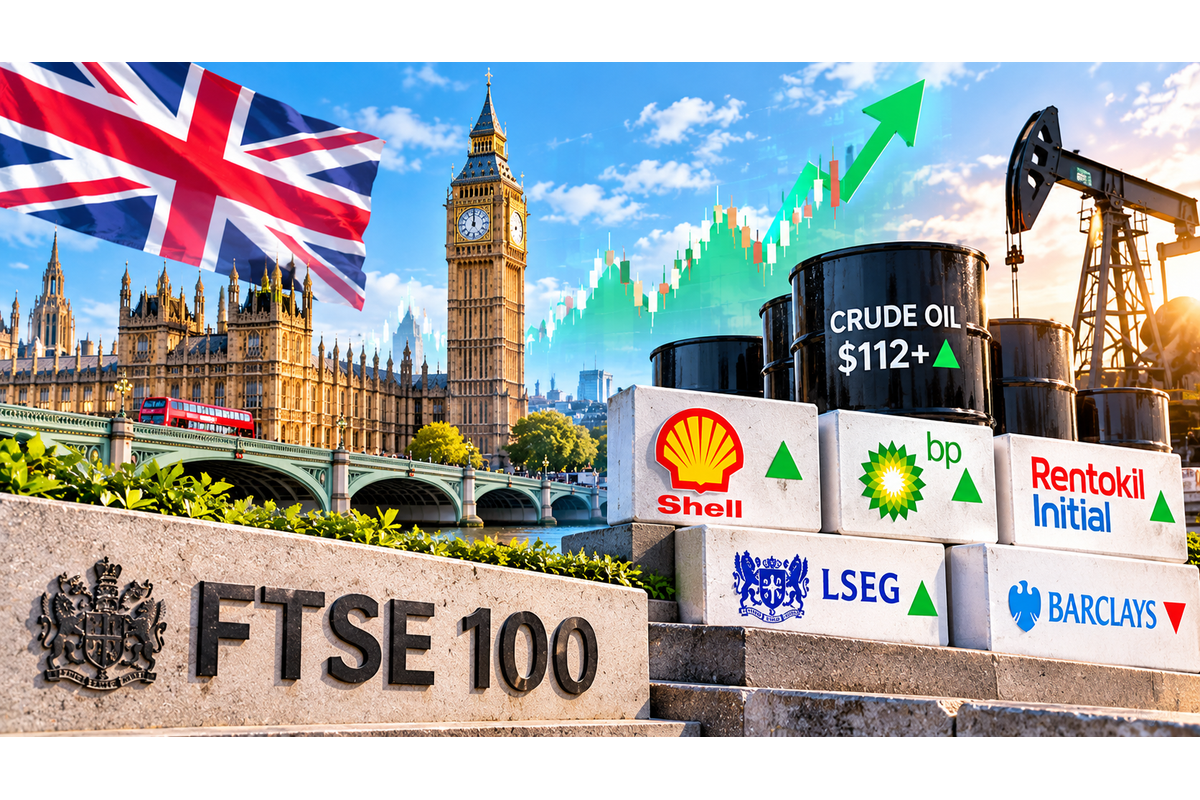
UK equities traded slightly lower on Friday, with the FTSE 100 down 0.13%, as investors paused after the recent run higher and continued to weigh geopolitical risk, energy-market uncertainty and the outlook for UK rates. The move was modest, but it reinforced the sense that the benchmark’s earlier momentum has started to cool after its winning streak was snapped in the previous session. The tone was not aggressively risk-off, but it was cautious. After several sessions in which softer rate expectations, defence strength and selective corporate updates helped lift the market, investors appeared less willing to chase the index higher into the weekend. The renewed focus on US-Iran tensions and the Strait of Hormuz kept a geopolitical risk premium in the background, while the gilt market remained an important constraint on broader confidence. The FTSE 100’s 0.13% decline suggested consolidation rather than a broad unwind. The index remained close to recent highs, but the loss of upward momentum was notable after the prior seven-session advance.
Earlier in the week, markets had been supported by hopes that tensions in the Middle East could ease, oil prices could stabilise, and the Bank of England might not need to push rates much further. But with the US and Iran again exchanging hostilities, investors have become more selective in their choices. The reopening of the Strait of Hormuz remains a key swing factor for energy prices, inflation expectations and global risk appetite. For UK equities, that leaves the market caught between two forces: relief that rate expectations have moderated, and concern that geopolitics could quickly reintroduce inflation pressure through oil and shipping costs.Energy and defence names have remained central to the market narrative. When Hormuz risk rises, investors tend to rotate toward companies exposed to oil supply security, military spending and geopolitical demand. That has kept support under parts of the FTSE even as the broader index has struggled to extend gains. Defence stocks continue to benefit from a durable structural theme: higher European security spending, tighter NATO coordination and improving visibility around government procurement. Aerospace and defence exposure remains one of the market’s preferred ways to express geopolitical risk without relying solely on commodity prices. Energy, meanwhile, remains more complicated. Higher geopolitical risk can support oil-linked names, but volatility around ceasefire talks and Hormuz reopening expectations has made the trade less straightforward. For the FTSE 100, where energy heavyweights carry meaningful index weight, that volatility remains a major driver of day-to-day direction.
The domestic macro backdrop remains a mixed support. Recent softer inflation signals, including easing grocery-price growth, have helped investors hope that the Bank of England may not need to deliver a more aggressive tightening cycle. That has been supportive for domestically exposed areas of the market, particularly midcaps, retailers and rate-sensitive sectors. But gilts continue to flash caution. Long-end UK yields remain elevated, reflecting not only global rate dynamics but also a domestic political and fiscal risk premium. Investors are still watching Westminster closely after Labour’s poor local election performance and the continued speculation around leadership and future fiscal direction. That matters because equities can tolerate modest rate expectations if growth holds up — but a persistent rise in the back end of the gilt curve tightens financial conditions, pressures valuations and keeps a lid on domestically focused cyclicals. That leaves the UK market in a familiar position: headline index performance looks stable, but leadership is narrow. Global earners, defence names, energy-linked stocks and special situations remain better supported than domestic beta. Banks, housebuilders, consumer discretionary names and other rate-sensitive areas remain more exposed to the twin risks of higher gilt yields and weaker confidence.
Finish Line: The FTSE 100 drifted 0.13% lower on Friday, more a sign of rally fatigue than outright risk aversion. After the recent winning streak broke, investors were reluctant to push the index higher into the weekend with US-Iran tensions, Hormuz uncertainty and elevated gilt yields still hanging over the tape. The market still has pockets of strength, especially in defence, energy and stock-specific stories, but the broader rally needs a cleaner macro backdrop before it can regain its footing.
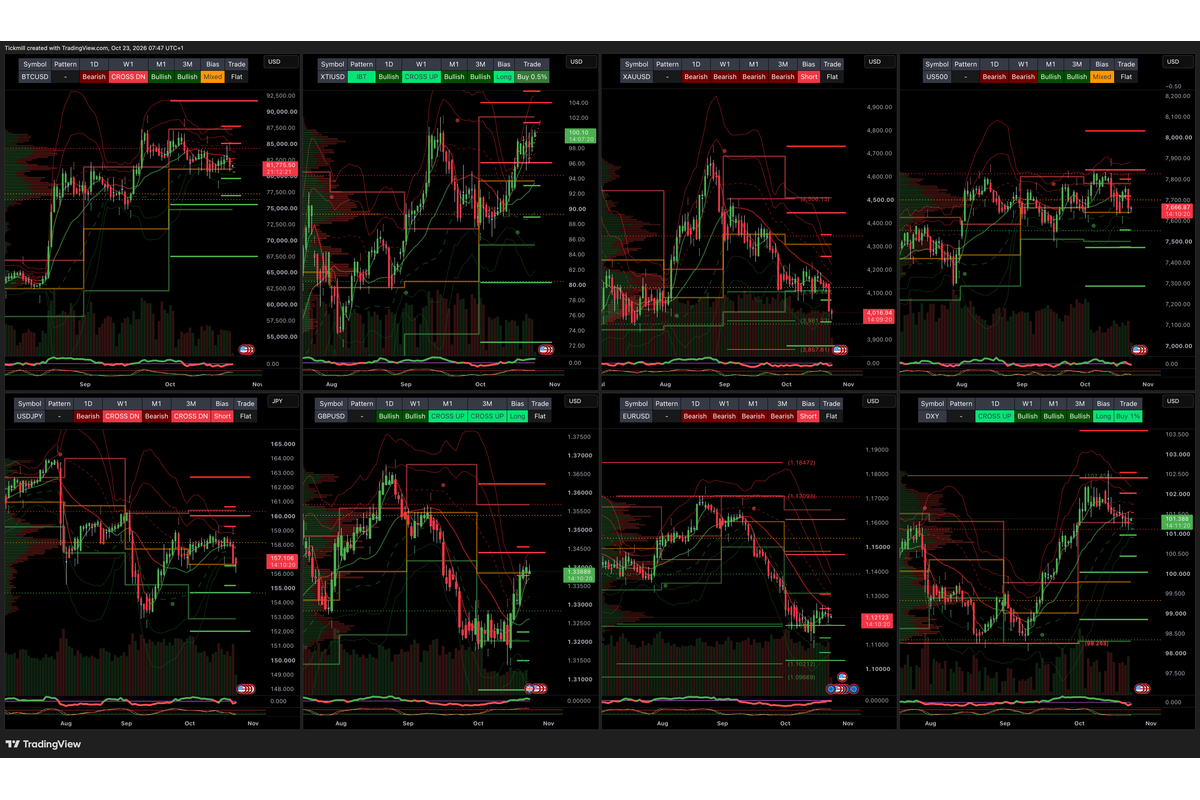
TECHNICAL & TRADE VIEW – FTSE100
Daily VWAP Bearish
Weekly VWAP Bullish
Above 10500 Target 11000
Below 10100 Target 9469
Comments
Log in or sign up to join the conversation.