


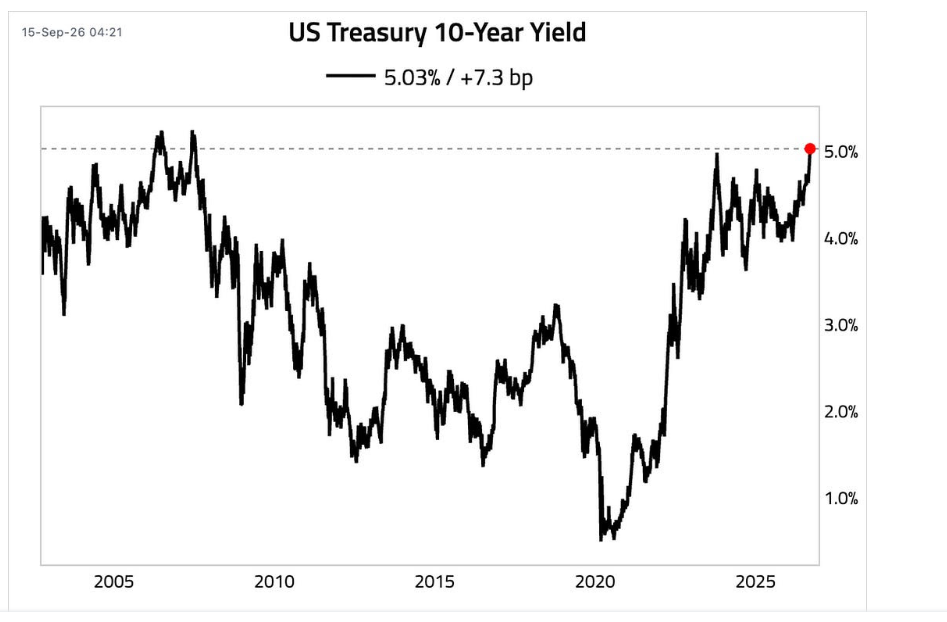
The arrogance of Trump officials reached new heights when the Secretary of the Treasury, Scott Bessent boasted last week that “ I am the house”, warning that no one should bet against him in currency or interest rate markets. Yet the “ house” continues to lose in the bond market. The US 10-yr yield just topped 5%, a level last seen twenty years ago, as investors are undaunted by the Secretary’s bravado.
Just what is meant by the “ I am the house” in today's bond market? It is a fundamental belief that the US government has virtually the legal powers, unlimited financial clout, and the information advantage to control interest rates to the detriment of the private participants who will want to take the other side of the bet. Where does this conviction that he has extraordinary leverage come from?
The Treasury Secretary commands many tools that can be used to intervene actively in bond trades. For example, he can order that the Treasury buy back long-dated US debt in the expectation this will suppress yields; he becomes another participant in the marketplace, save that he has virtually an unlimited balance sheet to take on any opponent. He did just that last week, and he fell flat on his face. The Treasury’s purchase of $6 billion in the long end of the market had no impact, given the outstanding debt for 20-30yr debt exceeds $5 trillion. The 10-yr bond broke through 5% easily, and continues at the level. What was he thinking ?That a $6 billion buyback would have influenced a trillion-dollar-a day market? That a bond market supporting over $40 trillion of US debt, can be moved by this meagre intervention? Now, traders sense his weakness, and further buyback efforts will likely meet the same resistance. His prior experience in a hedge fund had him react to policy decisions by taking certain positions to take advantage of other traders’ weaknesses. But as one setting policy it is an entirely different game altogether.
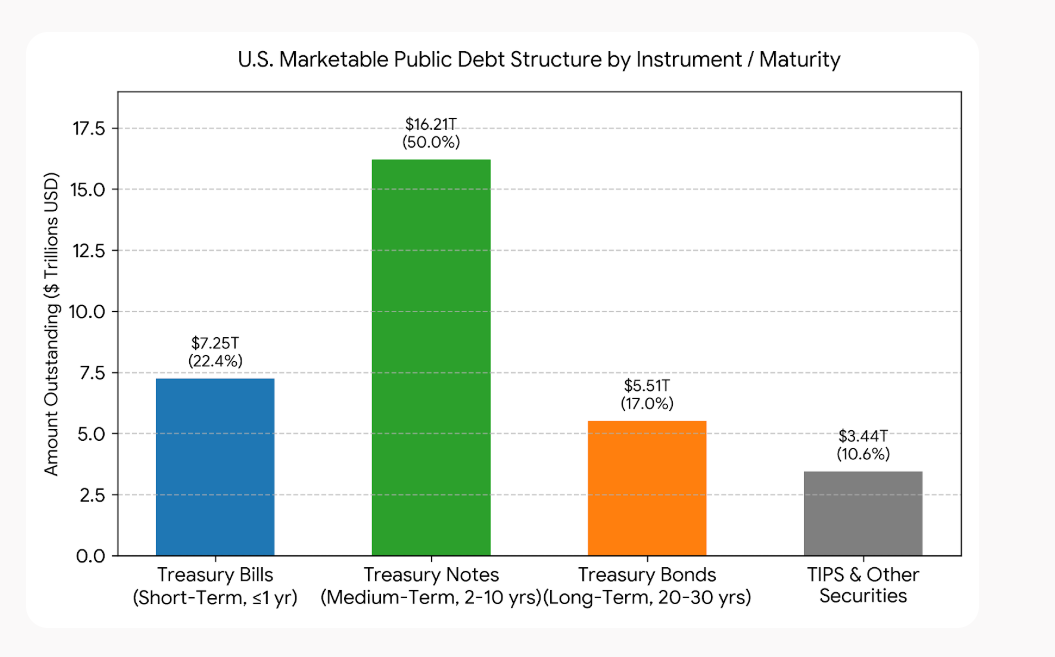
Bessent must contend with a bond market increasingly involving private and other non-traditional investors. Large hedge funds alone hold over 8% of privately held US Treasuries; foreign private investors hold about another 25% of US public debt. Foreign central banks, especially in Asia, have been selling US debt, but nonetheless, hold approximately another 15%. Standard mutual funds and money market funds carry an additional 15% of public debt. The risks in the private sector come from its highly leveraged positions relying on Treasuries. These are holders with the least attachment to the bond market, and will sell even when spreads are tiny and going against them.
Meanwhile, Bessent’s credibility is waning rapidly. His tool box is not as well stocked as he thinks. His strength as the “ house” is overblown. And, long term rates are doing their own thing.



Comments
Log in or sign up to join the conversation.