

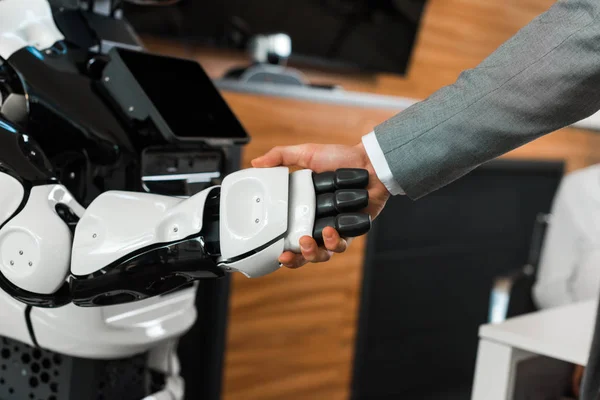
The AI Swiss Army Knife Person
There’s a new species flooding finance, sales, macro, and even trying their hand in quant trading circles right now: the AI Swiss Army Knife person. The person who opens five agentic AI tabs in the morning and, by lunch, suddenly thinks they’re a macro strategist, quant trader, geopolitical expert, hedge fund CIO, elite sales assassin, and veteran voice trader, all rolled into one.
The problem is not the technology. The problem is confusing synthesized information with lived domain expertise.
Agentic AI is extraordinarily powerful at compressing knowledge, organizing frameworks, generating polished language, and creating the illusion of mastery. It can explain carry trades, summarize FOMC minutes, build a sales funnel, generate a market thesis, write Python code, and even produce convincing trader jargon in seconds. To an outsider, the output often sounds indistinguishable from expertise itself.
But markets are not won by sounding intelligent. They are survived through pattern recognition forged over years of pain, uncertainty, risk, positioning errors, liquidity squeezes, false narratives, and emotional discipline under pressure.
That distinction matters enormously.
A person using AI to generate macro commentary may understand the words “term premium,” “gamma exposure,” or “dollar liquidity cycle,” but that does not mean they understand how those forces behave when real money starts moving through the system during stress. Reading about a liquidity event is not the same thing as trading through one while your book is bleeding and every instinct in your body is telling you to hit the eject button.
The same applies to sales. AI can generate the perfect cold outreach script, negotiation framework, or leadership philosophy, but it cannot teach instinctive human calibration built from years of reading body language, managing clients, surviving bad quarters, or understanding the politics inside an organization. Real sales professionals know that timing, emotional intelligence, and trust often matter more than the “perfect script.”
The danger is that AI creates intellectual cosplay on an industrial scale.
The modern AI generalist can now speak confidently about almost any topic for 30 minutes because the models provide surface fluency across nearly every domain. But surface fluency is not depth. It is often just probabilistic mimicry wrapped in polished language. The person begins mistaking generated coherence for genuine understanding.
In markets, this becomes especially dangerous because finance is one of the few industries where reality settles accounts quickly. You can fake expertise on social media for a long time. You cannot fake P&L indefinitely.
The veteran trader understands things AI alone cannot teach: when positioning feels wrong despite the data, when markets stop responding to “good news,” when liquidity vanishes beneath the surface, or when a crowded consensus starts smelling unstable before the charts show it. Those instincts are usually built from decades of accumulated scar tissue, not prompt engineering.
Every office will soon have one of these people perched somewhere in the organization. The AI Swiss Army Knife person will produce research, write sales copy, build dashboards, create strategy decks, generate market ideas, and sound incredibly convincing while doing it. Management will initially mistake speed and fluency for mastery because the output looks polished, efficient, and scalable.
But eventually the gap appears.
Because the real edge in business has never come from access to information alone. It comes from judgment under uncertainty. From knowing what matters and, more importantly, what does not. From understanding how humans behave when money is at risk. From recognizing when the market narrative is changing beneath the headlines. And that kind of instinct is still earned the slow way.
AI absolutely can make exceptional domain experts more dangerous. In fact, that is where the real revolution is happening. A genuine quant trader using agentic AI becomes faster, broader, and more efficient. A seasoned trader can test scenarios more quickly. A strong sales manager can sharpen communication and operational flow. AI becomes a lever.
But leverage amplifies whatever already exists beneath the surface.
If the foundation is weak, AI simply scales the illusion of competence. The person becomes a walking Swiss Army knife filled with every tool imaginable, yet lacking the judgment to know which tool actually matters in the moment.
And in markets especially, judgment is the only edge that survives once everyone has access to the same machine.

Comments
Log in or sign up to join the conversation.