


Bond Markets Revolt
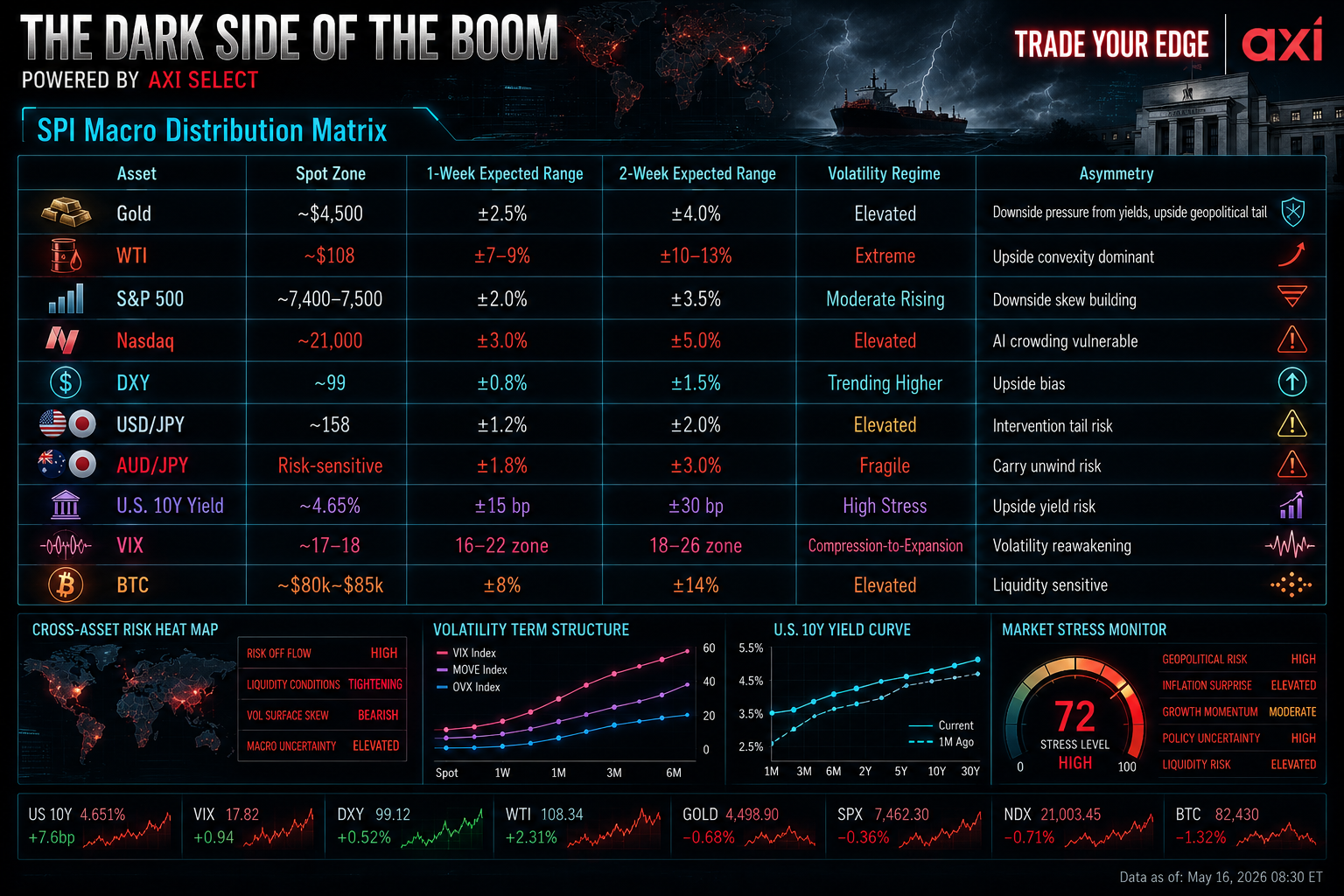
The U.S. stock market gave back more of its record-setting rally Tuesday as bond markets, rattled by resurgent inflation fears, finally turned up the pressure on an equity tape that had been floating almost weightlessly on AI euphoria. The S&P 500 (SPY) fell 0.7% for its third straight decline after printing yet another all time high, while the Dow Jones Industrial Average (DIA) shed more than 322 points and the Nasdaq (QQQ) slipped 0.8% as traders started confronting the uncomfortable reality that soaring bond yields and war driven energy inflation may be dragging the Federal Reserve back toward a tightening bias instead of the rate cut fantasy Wall Street had been happily pricing for months. The market spent most of the past year behaving like a casino running on free drinks and artificial light, where nobody notices the exits because the music is too loud and the chips keep stacking higher. But today the bond market finally flipped the breaker switch. Treasury yields surged toward levels not seen since the shadows of 2007, oil refused to back away from the fireline above $105, and suddenly the entire “Fed cuts are inevitable” narrative started looking like a script left behind in a previous cycle.
What cracked the mood was not simply higher yields. It was the realization that the inflation threat stalking this market is no longer theoretical. It is physical. It moves through oil tankers, shipping lanes, petrochemical shortages, depleted emergency inventories, and geopolitical risk premiums that cannot be solved with a few soothing words from central bankers. The AI melt up that has carried equities into the stratosphere briefly lost altitude as the acceleration in US Treasury yields broke the spell of the capex fantasy. . Traders are desperately trying to keep the dream alive for one more day into Nvidia (NVDA) earnings, just as they would for a blockbuster SpaceX IPO, but the glow from the AI supercycle is starting to flicker under the weight of macro gravity.
The deeper problem is that the market is now being forced to price two conflicting realities at the same time. On one side sits the AI boom, still powered by dreams of infinite demand, hyperscaler spending, and another blockbuster Nvidia print that could levitate the entire Nasdaq for one more session. On the other side sits the bond market screaming that inflation is reaccelerating and that the Federal Reserve may have badly underestimated how sticky a war-driven supply shock can become. That tension is now starting to tear through cross-asset correlations. Stocks are still trading as they live in a frictionless digital universe, while bonds are trading like the global economy just rediscovered gravity. Oil and rates remain chained together like two heavyweight fighters dragging each other across the ring, while equities continue acting as though the ropes holding up the tent can never snap. But they can. And the pressure building underneath the surface is becoming harder to ignore.
The oil market itself has become a geopolitical seismograph. Every headline from President Donald Trump now hits crude prices like a hammer against sheet metal. Yesterday’s late collapse in oil after the temporary strike delay quickly reversed as Trump openly floated the possibility of renewed attacks against Iran within days. Traders initially tried to dismiss the rhetoric as another round of TACO trade theater from Trump, assuming the threats would once again stop short of actual escalation, but the problem is that every week without normalization tightens the physical supply backdrop further. Deferred crude prices have exploded higher because the market increasingly understands that time itself has become inflationary. Every delayed barrel adds tension to the system. Dated Brent holding near $115 tells the real story here. The market is no longer simply pricing current disruption. It is pricing the fear that the disruption becomes embedded. Even traders who once faded every Middle East headline are starting to realize the supply shock is not disappearing on command. The longer inventories bleed lower, the more the entire inflation complex starts behaving like a pressure cooker with the valve welded shut.
That is why the bond market cracked first. Long-duration debt has become the sacrificial animal in this cycle because it sits directly in the blast radius between inflation fears and fiscal exhaustion. Thirty-year Treasury yields surging above 5.18% effectively tells you investors no longer trust the old central bank playbook. Massive liquidation flows tore through the Treasury market during the US session, with selling pressure intensifying into the European close as investors across Europe confronted the ugly reality that their economies are even more vulnerable to an energy shock. The curve steepened aggressively, and that is where the message became dangerous. Bear steepening at this stage of the cycle increasingly smells like policy error risk. Markets are beginning to whisper that the Fed could end up trapped between slowing growth and resurgent inflation, which is exactly the sort of environment where financial accidents emerge from seemingly stable conditions.
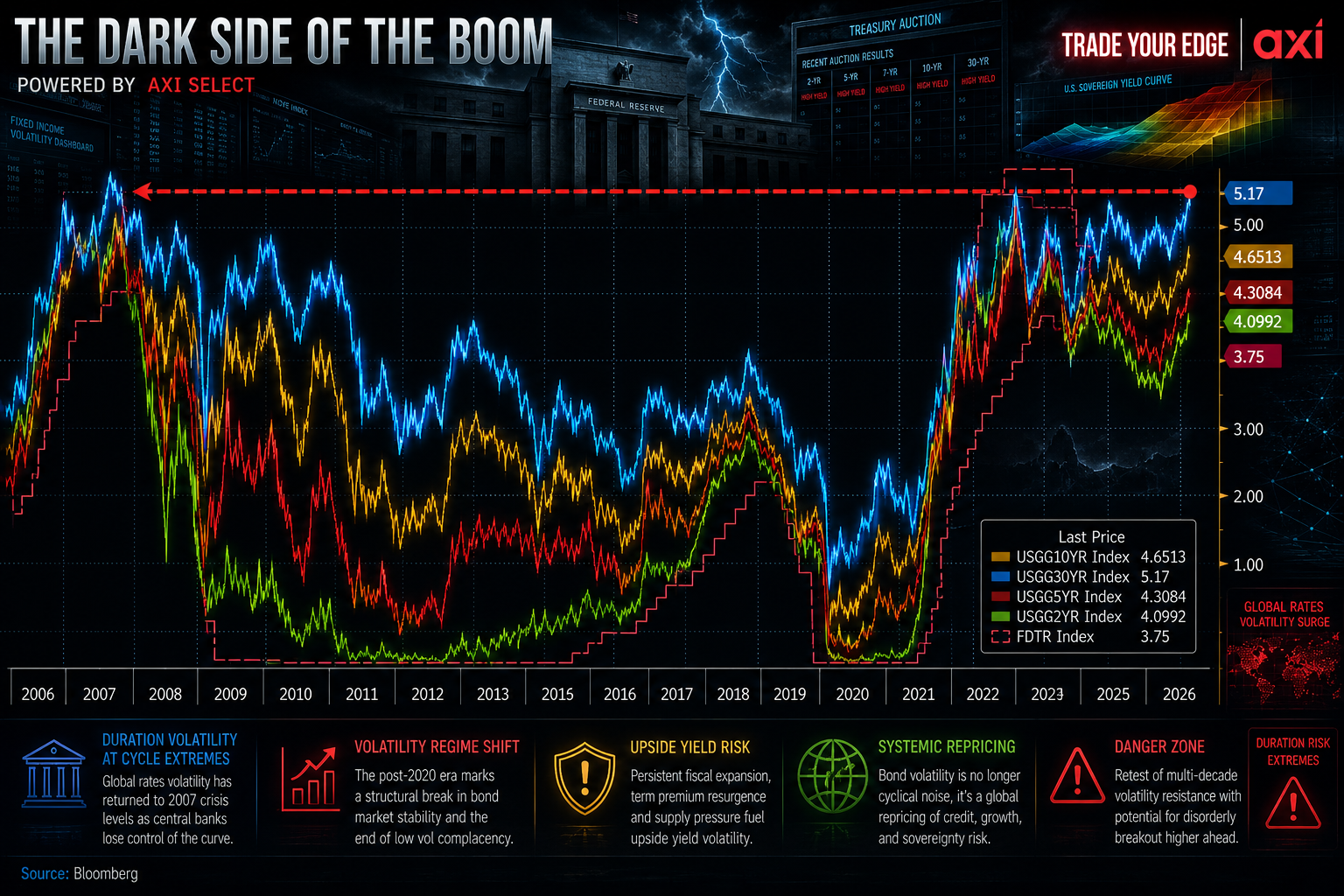
The most important shift underway is that inflation expectations are now being rebuilt from both sides of the equation simultaneously. Supply-side inflation is obvious through oil, petrochemicals, and energy transportation stress. But financial conditions and economic resilience are also keeping demand hotter than policymakers expected. That combination is toxic because it reopens the door to the one scenario equity markets spent all year refusing to price: no cuts at all and potentially even renewed hikes. Odds of a rate increase in 2026 surged above 80% today, and suddenly, the market that once celebrated every soft inflation print is being forced to imagine a world where central banks cannot rescue risk assets on demand. Bond volatility is now the real heartbeat of the system. As long as rates continue to violently reprice higher, equities remain vulnerable to sudden air pockets beneath the surface.
Beneath the surface, the nature of the AI debate is changing. For the past year, the story was pure demand acceleration. Now the market is starting to ask whether the infrastructure supporting the boom can actually scale fast enough without crushing margins. Demand for compute is expanding at software speed while data centers, power grids, networking systems, cooling infrastructure, and semiconductor fabrication capacity expand at industrial speed. Those are two completely different clocks ticking inside the same story. Rising token costs are now exposing the tension. Inference pricing is climbing sharply as the market runs into real-world bottlenecks. That matters because eventually, end users start rationing usage, delaying deployments, or shifting toward smaller and cheaper models. Suddenly, the AI narrative shifts from a limitless-growth fantasy to a discussion of marginal discipline. NVIDIA earnings, therefore, become less about whether demand is strong and more about whether the ecosystem's economics still justify the valuation structure atop it. The easy-money phase of the AI boom may be ending, even if the long-term secular story remains intact.
At the same time, market makers themselves appear increasingly reluctant to warehouse risk in the most toxic corners of the options complex. That matters enormously because liquidity always feels infinite until it suddenly vanishes. The combination of VIX options expiry, Nvidia earnings, elevated bond volatility, and macro-driven inflation stress has begun to widen the market’s implied price distribution again. In plain English, the market is beginning to recognize that crash risk has not disappeared. It has merely been sedated by liquidity and positioning. Once volatility starts escaping containment, the same reflexive machinery that lifted stocks relentlessly higher can rapidly operate in reverse.
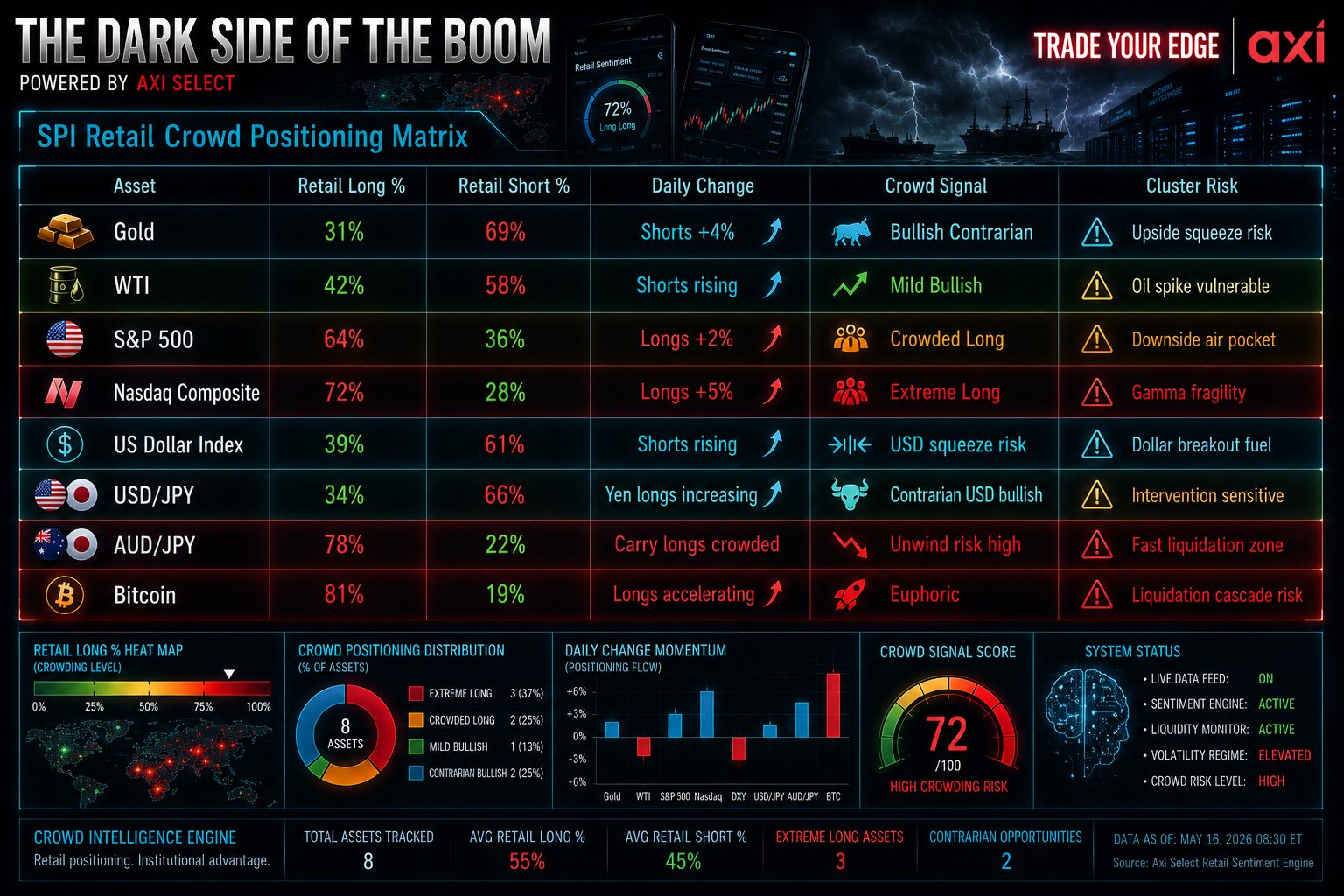
Still, a powerful tactical bullish case remains, preventing a full unwind. Retail flows have returned. Corporate buybacks are restarting. Macro data has not collapsed. Economic momentum remains firm enough to keep earnings expectations alive. That is why every pullback continues feeling shallow and temporary. The market still wants to believe that growth can outrun inflation long enough for the AI supercycle to carry everything higher. But the margin for error is narrowing. Upcoming PMIs, PCE inflation, ISM data, payrolls, and major tech earnings now sit directly in the crossfire between macro inflation fears and positioning excess. Any renewed escalation in the Middle East, a further surge in bond yields, or disappointment from AI leadership could quickly destabilize the entire structure.
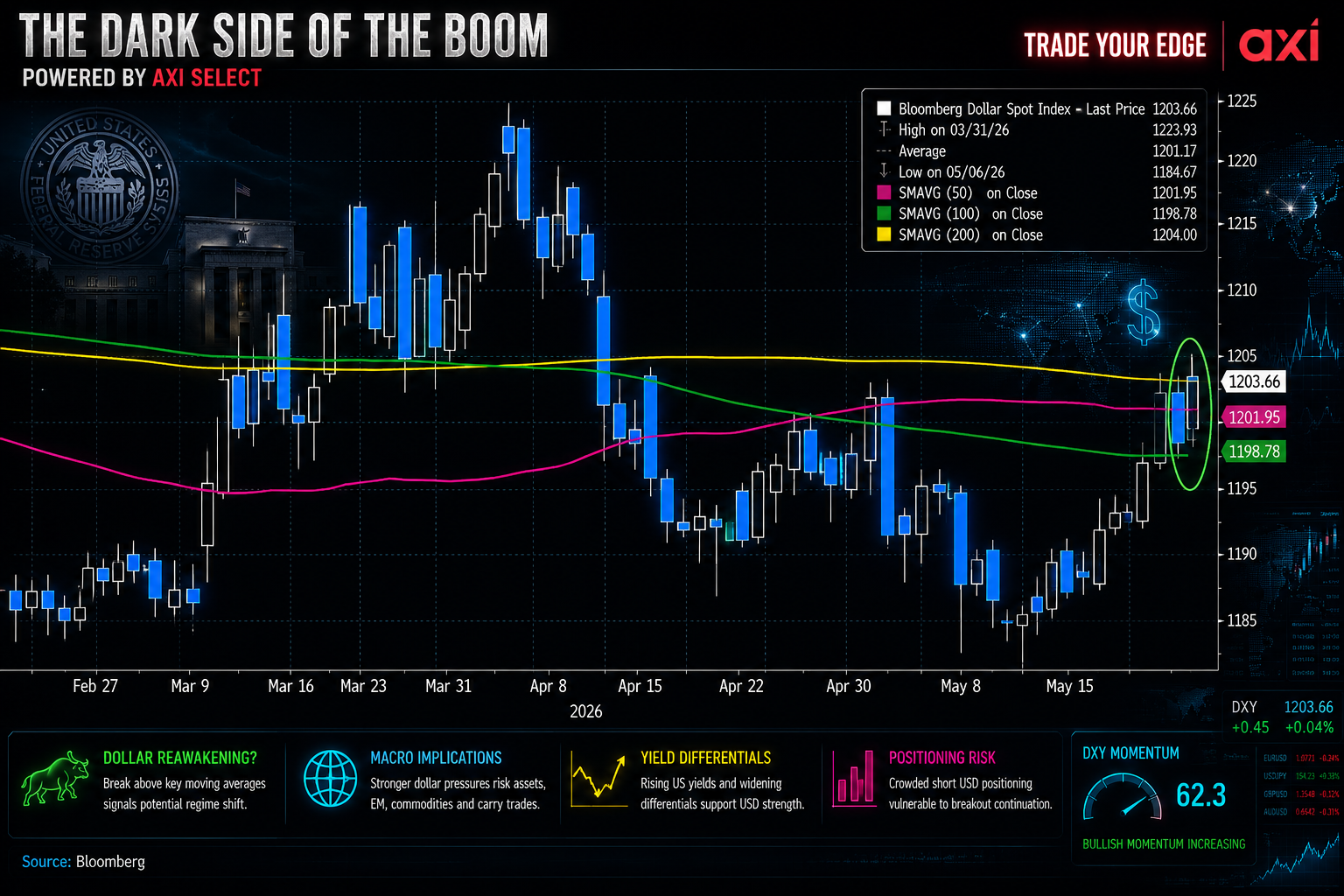
Elsewhere, the dollar ripped back above its 200-day moving average for the first time in more than six weeks as rising yields reasserted the Greenback's interest rate advantage.
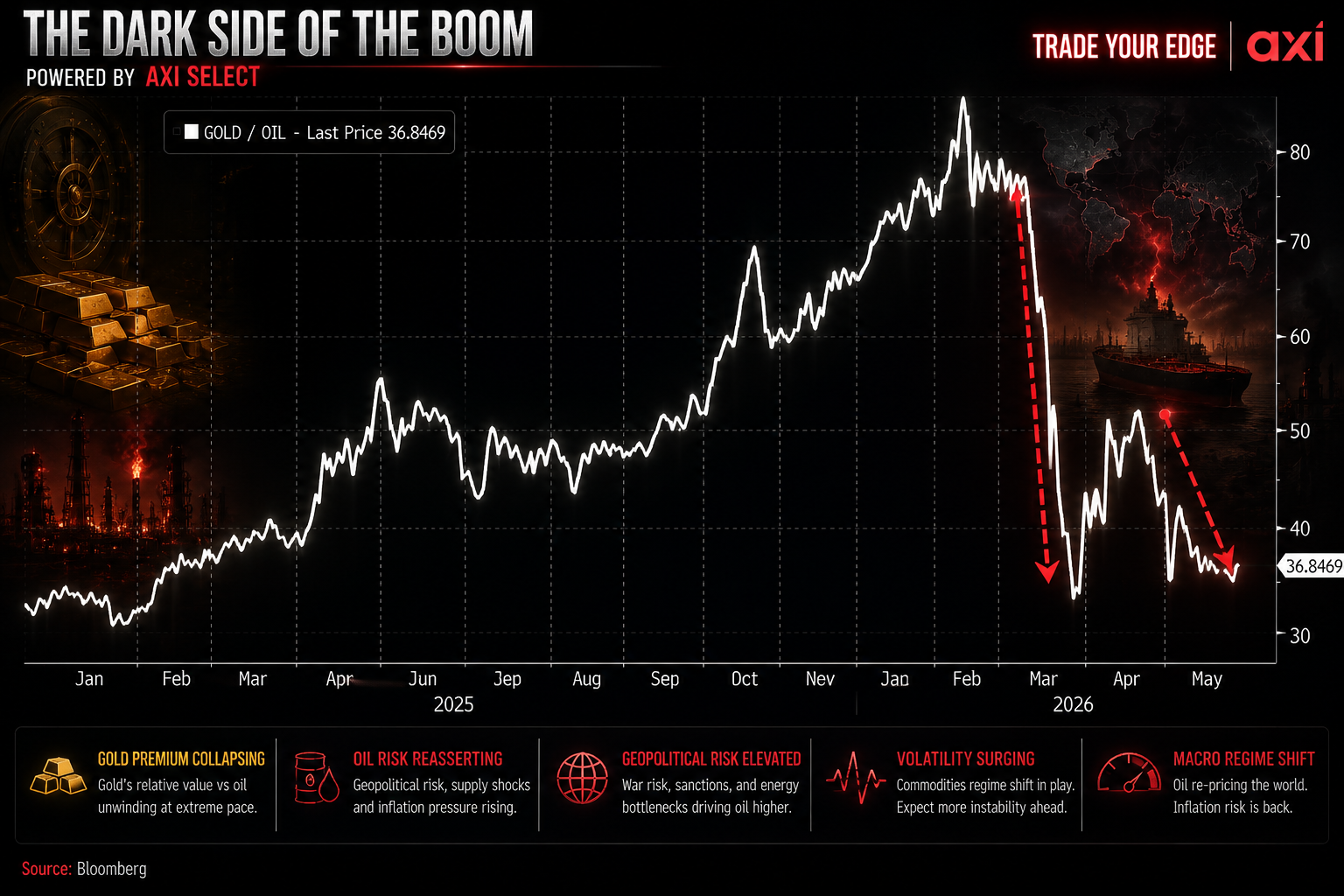
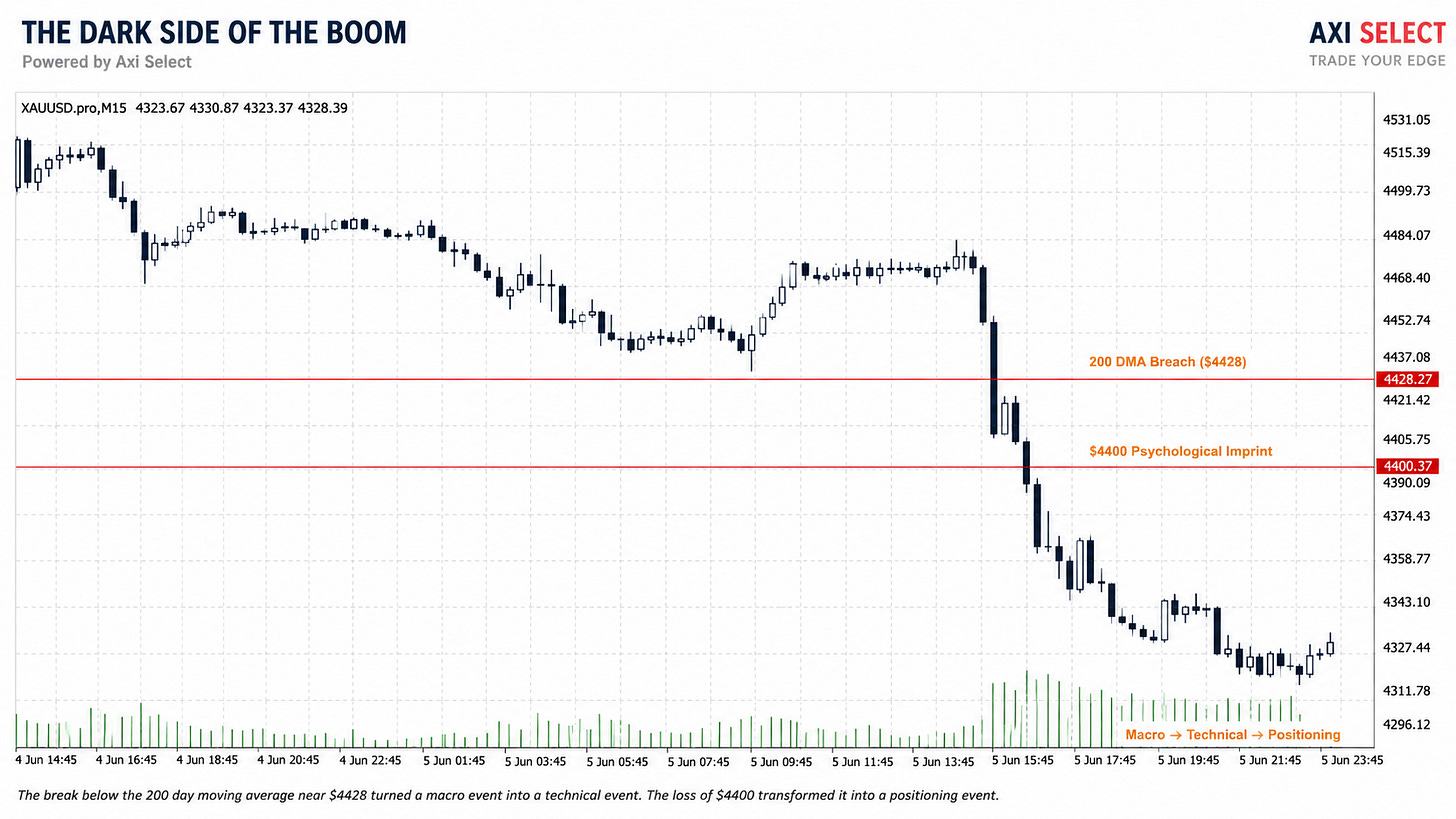
Gold (GLD) took a hit from the combination of higher real yields and a stronger dollar, while Bitcoin (BTC.X) traded like a nervous tech proxy trapped between optimism and tightening liquidity. One of the more revealing signals sits in the gold-to-oil ratio, which has collapsed back toward the lows seen during the early phase of the Iran war. Before the conflict, one ounce of gold could buy roughly 75 barrels of oil. Now it buys less than half that amount. That collapse tells you energy inflation is rapidly overpowering traditional monetary hedges.
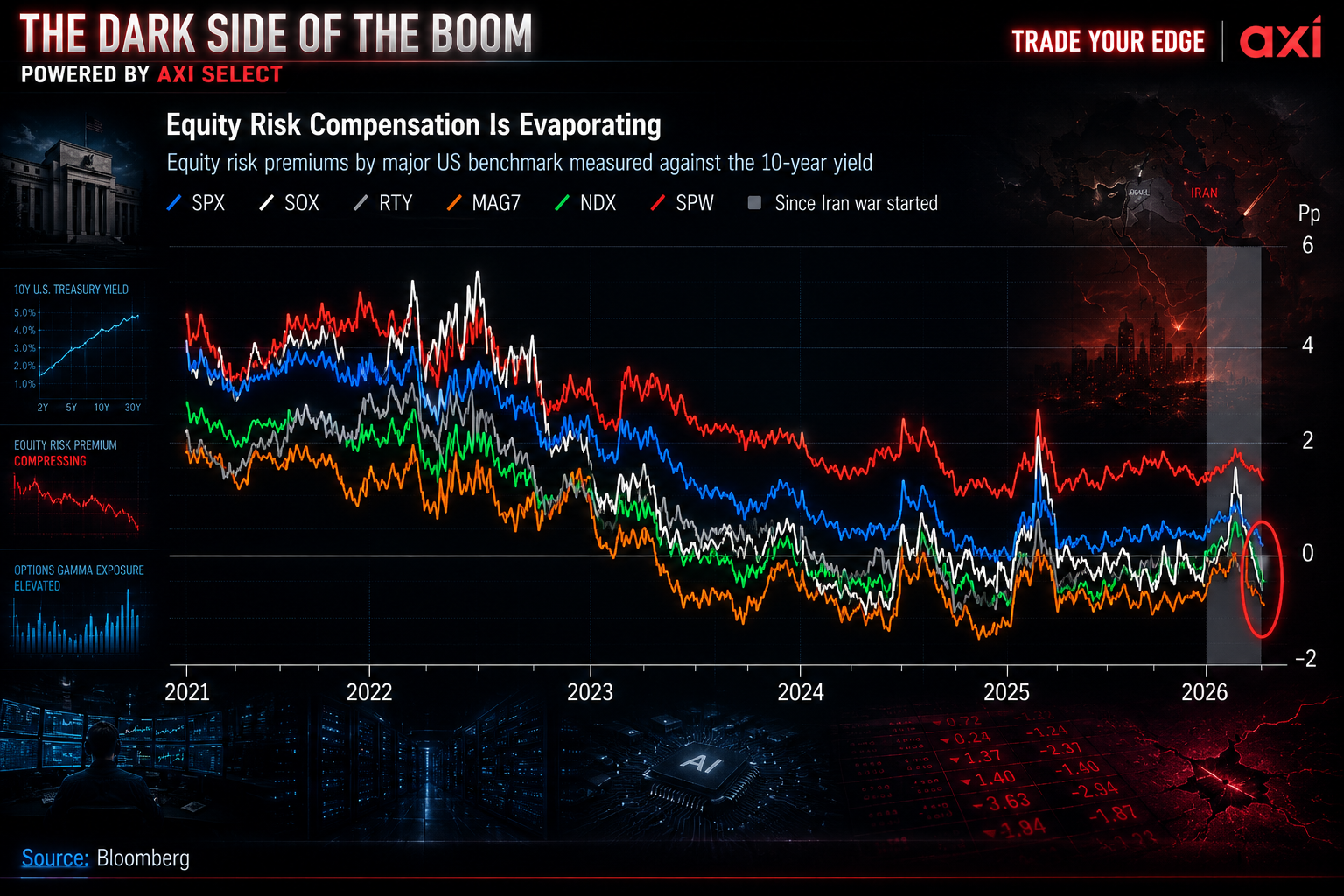
Meanwhile, the equity risk premium continues evaporating beneath the surface. Rising Treasury yields are now compressing the compensation investors receive for owning stocks relative to bonds to levels that increasingly resemble a late-cycle balancing act without a safety net. Equities are still expensive. The difference now is that investors can no longer pretend that bonds offer no alternative. That psychological shift matters more than most people realize. When term premiums rise, and cash suddenly starts offering meaningful yield again, the gravitational pull beneath speculative assets strengthens dramatically.
The market still wants one more euphoric act from Nvidia. One more burst higher. One more clean escape route from the inflation storm gathering offshore. But the bond market is no longer applauding the performance. It sits quietly in the back row, checking the building's structural integrity while everyone else keeps dancing.
SPI Macro Risk Dashboard
SPI Retail Positioning Dashboard
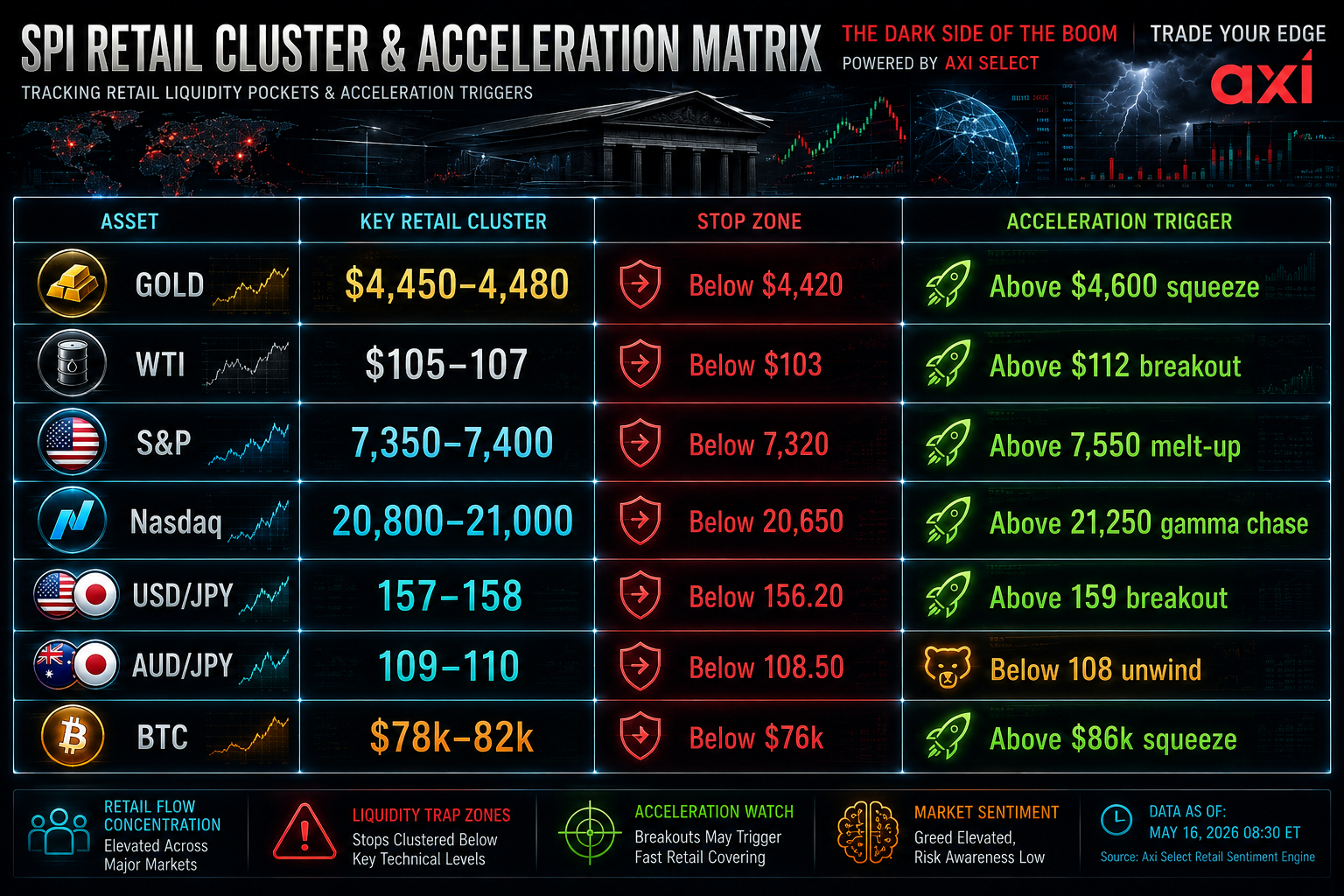
SPI Cluster Map

Comments
Log in or sign up to join the conversation.