

Markets
US equities were little changed again Wednesday, S&P up 0.1% though that, once again, was enough to set yet another fresh record high. US10Y yields little changed at 1.47%.
The modest beat on US ADP employment in June, up to 692k against the consensus at 600k, is unlikely large enough to move expectations for Friday's payrolls, with the whisper number coming in just above +700k. However, the top end of the estimates comes in just north of 1 million. The latter could be a negative shock for equities as the timescales shrink on a "full employment" trajectory. On the other hand, another lower print could be discounted given jobless supports structures may be holding back the desire to return to work until the back end of summer. But with US stocks at all-time highs, there is a chance investors could start to position for NFP by paring back bullish bets.

Image Source: Unsplash
Since last August, the S&P 500 secured its most significant monthly gain, rallying 14%, while Treasuries rose with 10y yields below 1.44. US stocks traded higher into quarter-end after some early weakness, as the macro backdrop remained essentially unchanged. The general tilt to the tape was pro-cyclical, with Energy, Industrials, Staples topping the charts at the expense of traditional defensives REITs and Utilities finishing in the red.
US nonfarm payrolls (July 2) and CPI (July 13) are the two most important data releases in the upcoming weeks before the Fed's decision in July. UBS Economics and Big Data call for 711k and 700k payrolls, respectively, versus 711k in the Bloomberg survey. UBS Economics sees the average hourly earnings remaining high at 0.3% m/m and the participation average housing rate up to 61.8% from 61.6%. Meanwhile, the FOMC minutes on July 7 will give more information about the Fed's tapering schedule.
European markets are a tad higher following the late rally in US markets Wednesday. US sector performance contrasted that of the European session with Energy/Banks/Oils outperforming Tech/Healthcare. Trading was rangebound in Asia with light volumes. US rates see some relief in the bid to long the long end and the curve flattening seen into month-/quarter-/half-year-end Wednesday. Fed's Kaplan reiterated his hawkish views overnight regarding tapering expectations and saw a broadening in inflationary pressures; again, supportive for the USD, which held onto recent gains.
Forex
Dollar outperformance on the back of the more hawkish than expected Fed meeting means that the S&P 500 has also outperformed peers (+2%). As a result, the month-end models pointed to USD downside as portfolio managers hedge their currency exposure but didn't materialize on Wednesday. EURUSD continued to trade soft, slipping through 1.1850, which was the base since the last FOMC. Whether the euro will come under renewed pressure or if it was month-end related needs to be seen, but the risk remains for further downside towards 1.1700 as the market is likely to continue adjusting USD positions. The first intraday resistance is at 1.1875. Watch ECB President Lagarde's comments and Eurozone manufacturing PMI later today.
AUDUSD remains under pressure, posting sequential lower highs since the rejection above 0.7610 last week, and heading lower overnight on broad USD demand, domestic lockdowns, and rising delta variants against a backdrop of a comparatively lower vaccination rate, and perhaps some paring down of RBA hawkish assumptions
Despite ongoing COVID-related mobility restrictions, South Korea's manufacturing exports remain chipper. Exports rose a stronger-than-expected 39.7% y/y in June, down from May's 45.6%, but base effects from last year's slowdown are massive. Risks around the 'buy EM' trade, including a more hawkish Fed, a China slowdown, and higher domestic inflation, suggest currencies that will piggyback to the recovery in the US reopening will benefit. The KRW is part of this group and should outperform its regional peers.
In G-10, the Canadian Dollar is not an exception to this rule, especially with oil blooming. The Loonie is typically a direct beneficiary of more robust US growth, and Biden's infrastructure splurge will flow into Canada via commodities, construction, and other building services. While commodity prices continued to perform strongly through Q2, concerns over the rally's sustainability have increased in recent weeks. Fundamentals generally remain strong: US demand should remain above trend over the next 12 months following recessionary conditions in 2019/20,
Ontario has just entered Step Two of the Roadmap to Reopen several days ahead of schedule, national mobility is trending higher and near the Sep 2020 high, and April GDP data showed the start of Ontario's third state of emergency to be less damaging than expected. In addition, Canada has made good on hopes of an increase in the June pace of vaccinations after a poor start earlier in the year. The prioritization of first doses means Canada now leads the G10 on this measure and is catching up on the share of fully vaccinated individuals. However, while Canada has been doing a good job playing catch-up in the vaccination game, which assists the reopening process, this will likely have to be seen as impacting Bank of Canada policy before translating into anything of significance for the Loonie.
Oil Markets
According to Bloomberg, OPEC+ is debating whether to hike output from August or September, citing the Kazakhstan government. If this is all OPEC+ is discussing and additional hikes are not imminent, it is a green light for higher crude prices. The OPEC+ JMMC meeting was postponed until Thursday, so it would not be surprising if there is no complete clarity on the outcome until Friday.
With Brent having challenged and broken USD 70/bbl at the start of June and now the USD 75/bbl level, I believe fundamental strength is likely to support further gains. The market moves beyond normalization into undersupply, indicated by the substantial deficit in OECD liquids inventory, along with curve backwardation nearing levels last seen in 2014.
Gold Markets
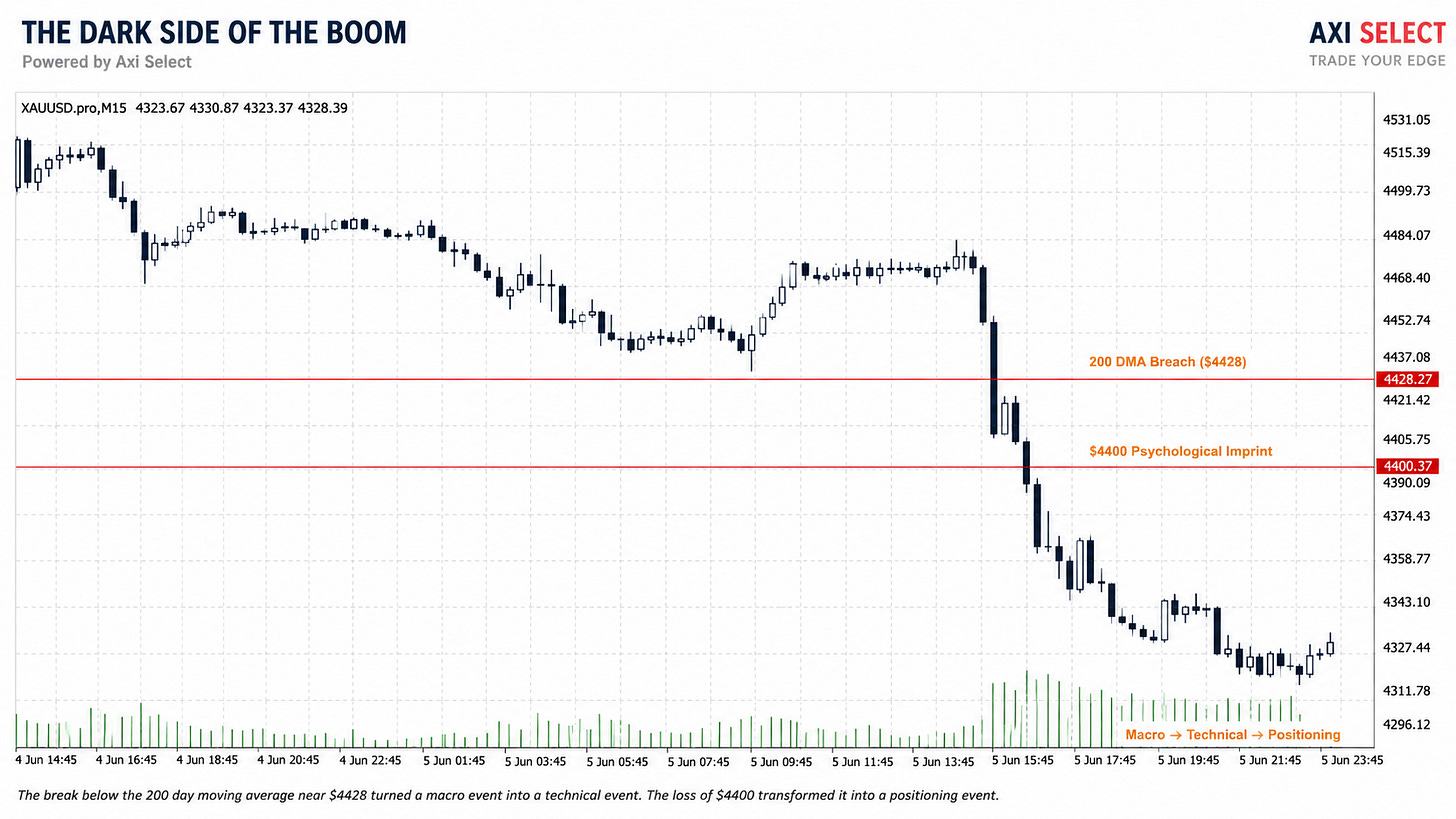
For Gold, I think a more vocal discussion on tapering and the possibility of rate increases in 2022 opens the door to further frangibility in the gold price. However, the relentless demand for Treasury bonds and a consistently low neutral interest rate may moderate Gold's downside in this cycle, mainly as the "Delta "variant works its way through the developed markets. Gold held onto moderate gains overnight on some short-covering, mostly from retail names and CFD brokers, according to one of my Interbank Contacts in Singapore and who went on to say on an e-mailed commentary, "Gains were, however, limited by the firmer US dollar and higher-than-expected ADP employment data. CTAs are looking to establish shorts on a break of $1730. A break there would expose the next support toward $1700. XAUUSD vols are a touch lower but should turn around on a break of $1750. Otherwise, expect quiet market conditions to persist. Separately, Kazakhstan's gold holdings rose to 13.05m oz, valued at $24.69 bn as of May vs $22.77 bn at the end of April.


Comments
Log in or sign up to join the conversation.