


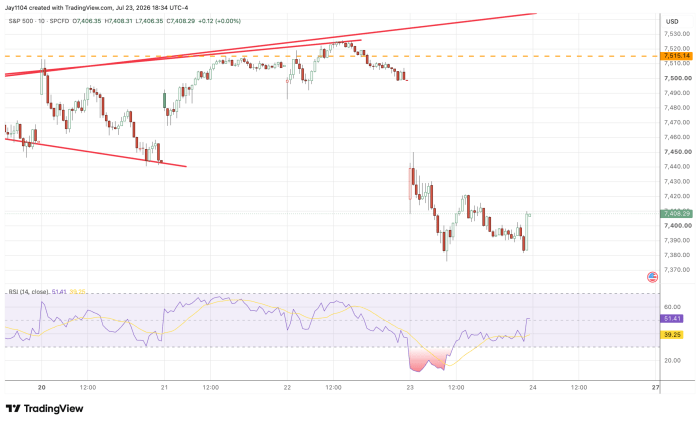
Stocks finished the day lower, with the S&P 500 falling more than 1.2%. The losses were concentrated in the megacap technology stocks and Tesla (TSLA). It could have been worse, however, had it not been for a roughly 30-basis-point rally in the final 10 minutes of trading. Those types of late-day rallies are often reversed the following morning, raising the possibility that the market could gap lower at the open, tomorrow.
Credit spreads continued to widen today, with Nvidia's (NVDA) 5-year CDS spread increasing to 69 basis points from 65. What is interesting is that the stock has continued to hold up despite the steady widening in credit spreads.
Of course, I am simply reporting what I see in the market. I have no special insight into what is happening behind the scenes or whether this widening reflects investors hedging existing positions or making outright bearish bets. Still, it is worth noting that, historically, sustained widening in CDS spreads has often coincided with weakness in the underlying stock price. The current divergence between Nvidia’s credit and Nvidia’s stock is therefore notable.
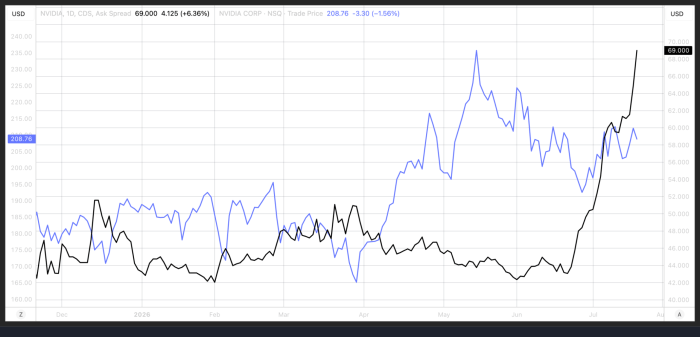
(LSEG)
For illustrative purposes, Oracle's (ORCL) stock performance is more in line with what I would typically expect to see when CDS spreads widen.
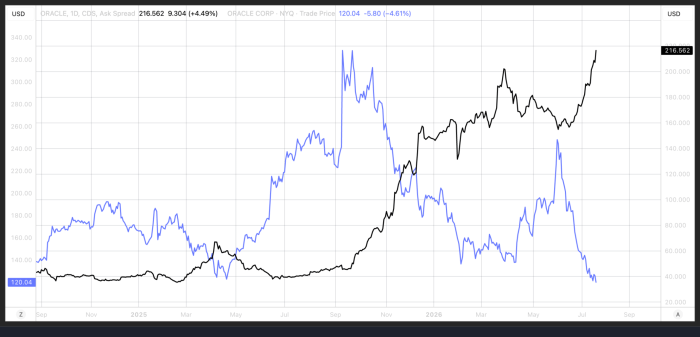
(LSEG)
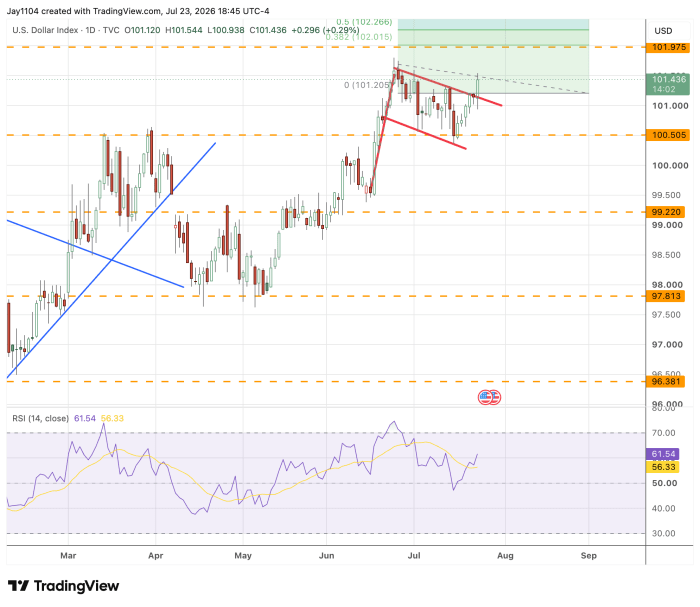
In the meantime, the Dollar Index appears to have broken out of the bull flag pattern mentioned yesterday. While the ECB did not rule out further rate hikes, the surge in oil prices appears to have been enough to help lift the dollar above the top of the pattern.
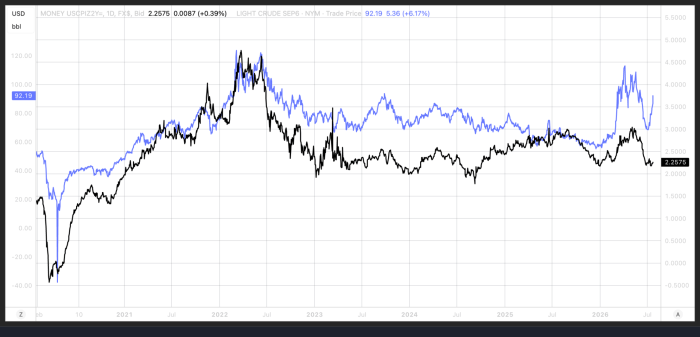
The other oddity is that, despite the surge in oil prices, 2-year inflation swaps have hardly moved. That is not something we have seen very often.
It raises an interesting question: does the market really believe Kevin Warsh is more committed to bringing inflation down than it did Jay Powell? Based on current pricing, it certainly appears that way.
(LSEG)
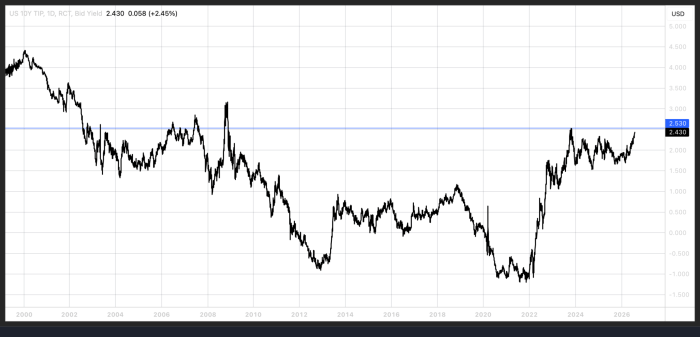
Whatever the case, real yields continue to surge higher, with the 10-year TIPS yield rising to 2.43%, just 10 basis points below its cycle high reached in late 2023.
(LSEG)
At this point, the market appears to be doing the tightening for the Fed. If financial conditions continue to tighten enough to slow growth and bring inflation lower, the Fed may not need to raise rates further because the market will have effectively done the job for it.


Comments
Log in or sign up to join the conversation.