

Source: Shutterstock
Government policies absorb some of energy shock
South Korea’s consumer price inflation accelerated to 2.6% year-on-year in April from 2.2% in March, matching market consensus but below our estimate of 2.8%. The downside surprise was mainly due to a larger-than-expected drop in food prices.
Tough inflation reached a 21-month high in April, government measures such as food vouchers, a gasoline price cap, and freezing utility prices helped limit increases in food and energy. Inflation excluding food and energy stayed at 2.2% for the second month.
As expected, energy prices rose the most. Oil and petroleum prices increased by 21.9% YoY, adding 0.84 ppt to overall inflation. Fuel price cap measures reduced energy price hikes, keeping them lower than in other major economies. Also, utility prices, including electricity bills, have now stayed at 0.2% for three months in a row. Meanwhile, fresh food prices dropped 6.1% thanks to shopping vouchers and a high base last year. With recent price surges in chip prices, prices of information processing equipment – such as computers and data storage devices - jumped to 14.5% from 9.6% in March, indicating “chipflation” strengthening.
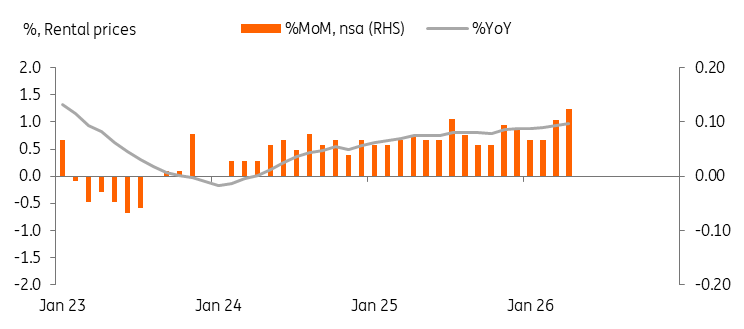
Among services, housing rental prices edged up 1.0%, showing a gradual hike since Jan 2024 (-0.2%). Due to Korea's unique Jeonse rental system, it hasn’t moved quickly. But prices are expected to continue rising in the coming months based on recent market price movements. On top of energy prices, this is a key dynamic to watch. Although the price rise has been gradual, rent has the largest weight among service items and this is closely related to real estate prices. Public service prices rose 1.4%, with international airfare up 15.9%.
Going forward, we expect inflation to rise further despite the government measures, reaching around 3% as early as June.
Rental prices are expected to rise further
Source: CEIC
BoK watch
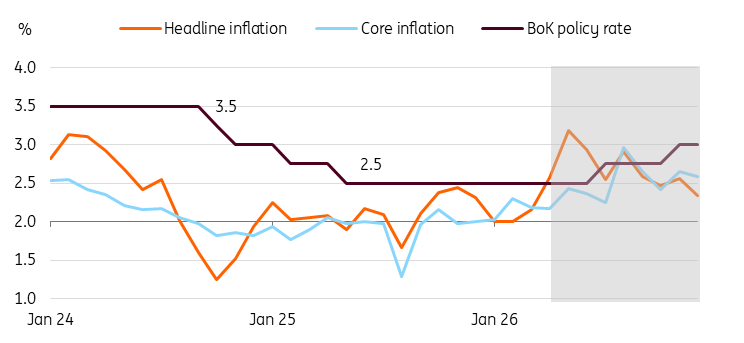
With core inflation remaining near 2% and the government working to limit price hikes, the Bank of Korea is likely to pause in May. It will likely take time for the BoK to assess the impact of the energy price hikes on inflation and growth. Strong exports, driven by semiconductors, will support overall growth, but the domestic economy will likely be hit harder by energy price hikes. This K-shaped recovery and widening growth gap between the IT and non-IT sectors should be a key challenge for the BoK. Fiscal support will mitigate some of the burdens on consumers and domestic-oriented activities. Overall, the BoK will focus on curbing inflation expectations. Considering these factors, the BoK’s rate hikes should be gradual. We currently expect a total of 50 bps hikes in the second half of 2026. We believe a July hike is more probable than a May hike for now.
Bank of Korea is expected to deliver hikes in 2H26
Source: CEIC, ING estimates
Comments
Log in or sign up to join the conversation.