

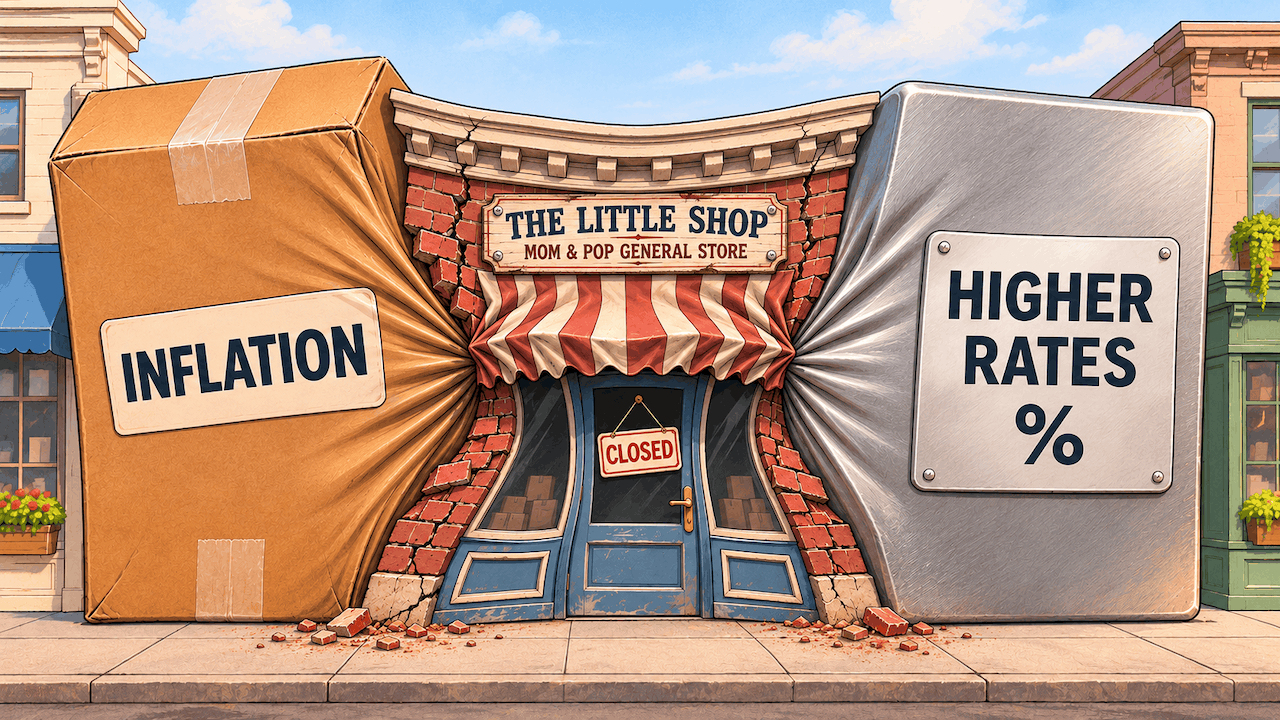
Pressured by inflation and elevated borrowing costs, small businesses are going bankrupt at an accelerating rate.
Small business bankruptcy filings under Subchapter V, a fast-track process for smaller firms, surged by 46 percent through the first nine months of 2026, according to Epiq AACER.
Epiq analysts identified 469,719 total bankruptcy filings through Sept. 30, an 11 percent increase from the same period in 2025.
Epiq AACER VP Michael Hunter said he expects bankruptcy filings to continue increasing into next year.
"The continued increase in bankruptcy filings reflects the strain of higher borrowing costs, rising household expenses, growing consumer delinquencies, and a softer job market. As cost pressures mount, more small businesses are turning to Subchapter V to reorganize.”
American Bankruptcy Institute executive director Amy Quackenboss noted that Congress recently passed legislation that would permanently increase the eligibility limits for both Subchapter V and Chapter 13. If President Trump signs the bill into law, it will expand access to struggling businesses and families seeking relief.
"The increase in bankruptcy filings, especially among small businesses, highlights the challenges many debtors continue to face amid persistent inflationary pressures, elevated borrowing costs, and economic uncertainty."
Larger corporations face the same economic pressure.
According to Cornerstone Research, large corporate filings dropped slightly in the second half of 2025 and the first half of this year. The financial consulting company identified 100 large corporate filings in the 12 months ending June 30. That was down from 117 filings in the preceding 12-month period, but still 22 percent above the annual average between 2005 and 2025.
“The continued elevated pace of large corporate bankruptcies reflects persistent challenges of the broader economic environment for companies that rely on debt financing,” Cornerstone analyst and report author Matt Osborn said.
“The data suggest that high interest rates and regulatory uncertainty, along with shifting demand and competitive dynamics within certain sectors such as manufacturing, remain the most frequently cited drivers of distress among large bankruptcy filers.”
Cornerstone identified higher interest rates as a source of corporate strain, saying elevated borrowing costs “weighed on companies with floating-rate debt and refinancing needs.”
Persistent inflation was also cited as a commonly cited headwind.
This Is the Federal Reserve’s Problem
These twin headwinds expose the problem the Federal Reserve faces as it tries to combat price inflation. The central bank needs to raise rates to tackle the inflation problem. However, higher rates will raise borrowing costs even higher, increasing stress on companies that rely on debt.
This is the crux of the Fed’s Catch-22. It needs to raise and lower rates simultaneously.
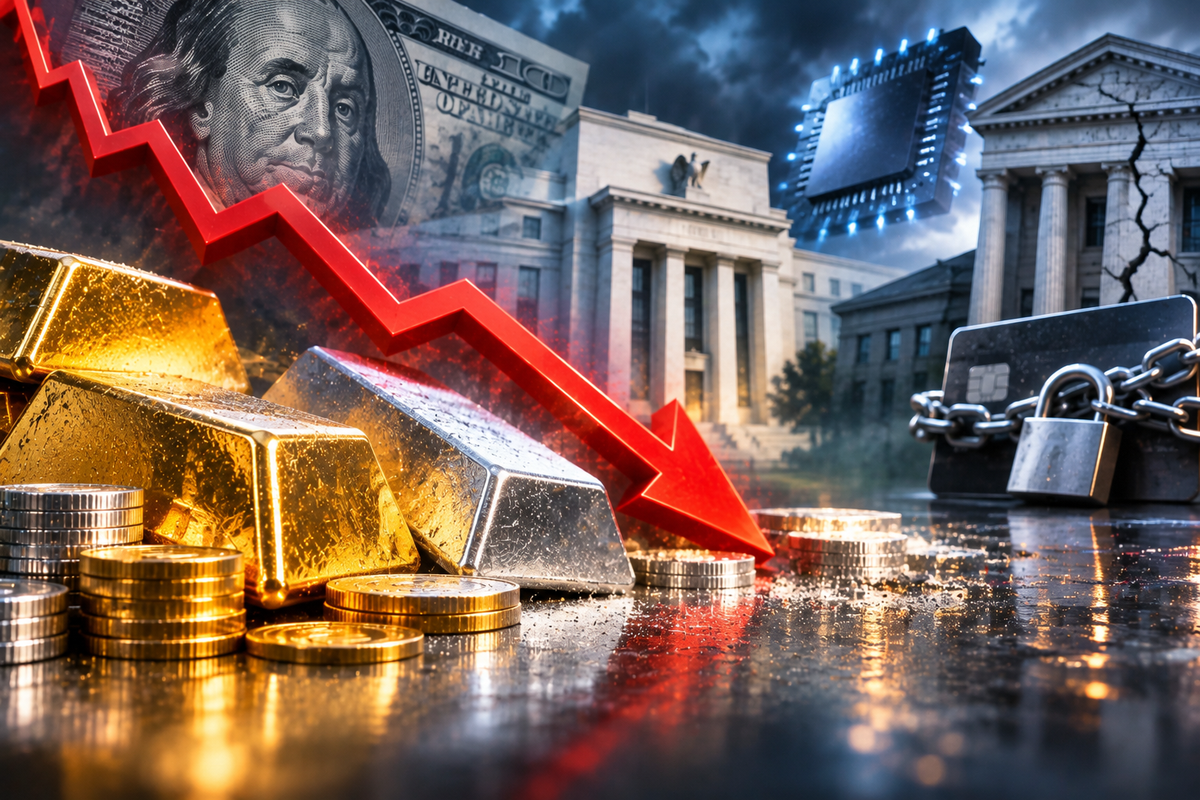
Corporate debt is only a fraction of the total Debt Black Hole dominating the economy. The federal government is buried under $40.5 trillion in debt, and interest expense topped $1 trillion in the last two years. Meanwhile, American consumers are burdened by well over $1 trillion in credit card debt.
Every upward nudge to interest rates increases the power of the Debt Black Hole.
So far, Federal Reserve Chairman Kevin Warsh and his minions at the Fed have taken a hawkish stance. However, if history is any indication, the central bank will ultimately choose propping up the economy with more easy money over tamping down inflation.

Comments
Log in or sign up to join the conversation.