

Lower motor fuel prices are bringing relief for consumers and suggest that inflation may have peaked. Slowing housing rents, weak wage growth and a waning influence from tariffs should more than offset concerns tied to tech-related inflation pressures. With the jobs market offering little, we expect the Fed to stay on hold until summer 2027.
Oil remains below its peaks, easing inflation and supporting consumers
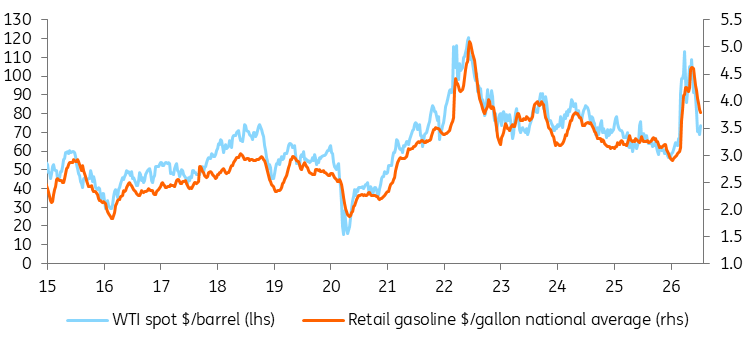
While we had argued that the United States' energy independence meant it was more insulated than most from the economic pain caused by the closure of the Strait of Hormuz, the fact that oil has been flowing has provided clear relief via lower global fuel prices. If the trend continues – although the risks to that outlook have clearly increased following the recent resurgence in hostilities – it should help to ease fuel costs, moderate freight transportation expenses and gradually lower airline fares, suggesting that headline inflation has peaked.
If oil prices remain below their peaks, lower energy costs should provide relief for consumers and help real household disposable incomes, which have fallen in recent months. The jobs market has also shown some improvement. Even though the June employment report was not as firm as hoped, job creation has averaged 137,000 over the past four months, much better than the 8,751 per month averaged in the January 2025 to February 2026 period. As such, we have modestly revised our consumer spending forecasts higher, which lifts our 2026 GDP forecast to 2.3%. Nonetheless, we remain wary of the growth concentration risks with strength in activity dominated by higher-income household spending and tech-related investment projects.
Lower oil prices suggest further falls in gasoline are on the cards
Eventual rate cuts more likely than rate hikes
In terms of the second half of 2026, there are three key hot topics. First, inflation and the Federal Reserve. Financial markets continue to price around a one-and-a-half 25bp interest rate increase over the next 12 months, but we are sticking to the view that the Fed will instead choose to wait. While nine members of the FOMC think that they are likely to raise rates at some point, a further nine don’t (Chair Kevin Warsh didn’t give an opinion). We are aligned with that latter group of nine.
Lower energy prices, cooling housing rents, weak wage growth and a diminishing influence from tariffs should allow inflation to cool gradually throughout the second half of 2026, before year-on-year changes in gasoline costs lead to a hefty plunge in the second quarter of 2027. This should open the door to eventual rate cuts. Higher prices for tech products tied to chip shortages will attract attention, but it is important to remember that they carry a tiny weight in the CPI basket – 0.3pp for computer equipment and 0.4pp for telephone hardware and calculators.
Disappointing jobs numbers pose political challenges
Second, will the jobs market shake off the low-hire, low-fire tag – which would boost the chances of a Fed rate hike – and will we see more of an AI impact? Well, business surveys continue to point to weak hiring, and private sector data on job vacancies suggests it is a very tough market right now. Similar sentiment about the strength of the jobs market can be seen in consumer surveys, while the sizeable drop in the labour participation rates suggests a growing disillusionment amongst jobseekers. We still think weak jobs growth largely reflects a hangover from overly aggressive hiring in the post-pandemic reopening frenzy. Lower energy costs and improved geopolitical sentiment may help to support hiring, but the potential opportunities of AI appear to be making firms reluctant to take the initiative. Consequently, we expect the jobs market to remain tepid.
The disappointment surrounding jobs and a general sense that, despite strong growth and robust stock markets, much of the US population is not feeling the benefits, feeds through into the third topic – politics. The 3 November mid-term elections in the US will see all 435 House of Representatives seats up for election and 35 of the 100 Senate seats.
Current polling suggests a high probability that Democrats will win control of the House, but are likely to fall short of flipping four of the 22 Republican seats up for election needed to win control in the Senate. The net result will be that President Trump will have any legislation blocked by the House Democrats, but the Republican-controlled Senate will not ratify the Democrats' efforts to initiate impeachment proceedings against President Trump. As such, the final two years of President Trump’s term are likely to see him having to focus on trade and foreign policy.



Comments
Log in or sign up to join the conversation.