

Rating: Cautious Buy | Ticker: SARO | Target price: $32 |
In Captain America: Civil War, Cap fights Tony Stark to protect his friend Bucky Barnes, a.k.a. “the Winter Soldier,” telling him “I can do this all day” — then spends the next few minutes getting thrown around anyway. From the visionary aircrafts of Tony Stark to the current high-flying fleets of Boeing and Airbus, these machines fly all day to get their passengers where they’re supposed to go, but even the toughest ones need a trip to the shop to keep doing it. Not many companies in the world offer that kind of service, and one of them is a much-underrated operator called Standard Aero (SARO). The company is an MRO operator in the aerospace sector with a durable moat and a recurring aftermarket revenue stream. With over 5,000 customers and 40 engine platforms under its service and repair umbrella, Standard Aero is a vital cog in ensuring today’s aircraft keep operating safely. In this article, I will provide a brief overview of the company, its latest quarterly earnings, growth investments, valuation and risks, and whether SARO can do this all day.
Overview
Standard Aero traces its roots to Winnipeg, Manitoba, Canada, and began in 1911 as Standard Machine Works, originally overhauling automobile, truck, and tractor engines before expanding into aircraft engine servicing in the 1920s. In 1937, the company spun out its aero engine business into an independent firm under the current name, becoming fully independent by 1940 and making it one of the oldest MRO operators in the world.
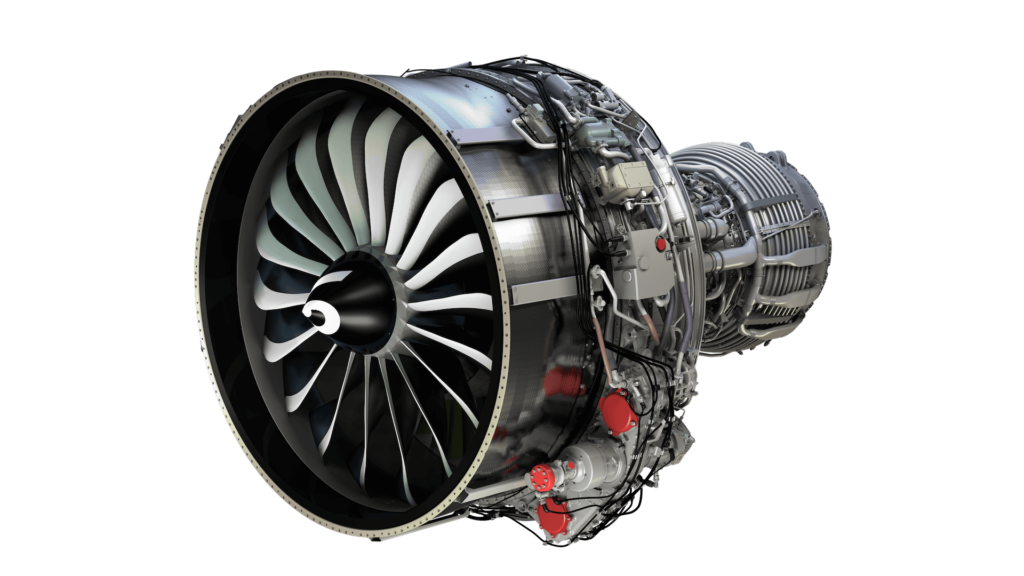
(Source - CFM International, https://www.aviationtoday.com/)
In its current form, the company specializes in aircraft engine maintenance, repair, and overhaul (MRO) for commercial, military, and industrial applications. The company reports its financial results across two segments: (1) Engine Services, which includes primarily engine and APU overhaul and maintenance, with field support and engineering management, and (2) Component Repair Services, which includes engine piece or accessory repair and limited new-part manufacturing. The primary revenue comes from the Engine Services segment, which accounted for 87.8% of Q2 2026 revenue, with the remaining 12.2% coming from the Component Repair Services segment. At the time of writing, the company is trading at $25.06, with a market capitalization of $8.29 billion and a 16.3x forward (FY2026) adjusted earnings multiple. On a conventional forward P/E basis, however, it trades closer to 18.7x — the gap reflects a recent change in how management defines adjusted earnings (more on that later). So, is the market assigning fair value to SARO’s business model? The answer appears to be more convoluted than it looks at first glance.
Q2 Earnings
Standard Aero released its quarterly earnings earlier this month, with the company beating both top- and bottom-line estimates. Revenue increased 4.6% YoY to $1.6 billion, up from $1.53 billion in Q2 2025.
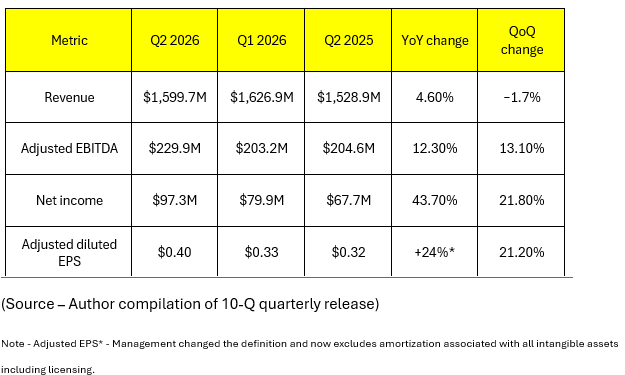
Revenue was down slightly, QoQ with management citing the elimination of low-to-no-margin pass-through sales, along with weak demand in the military end market, as the main reasons. Management highlighted that as much as $300–400 million of revenue will be eliminated with little to no profit, reducing overall revenue without reducing earnings. This is why earnings painted a positive picture even as revenue declined sequentially with remaining metrics, such as EBITDA and net income, grew by double digits year over year. This shows that the company is producing more profit from a higher-quality revenue base.
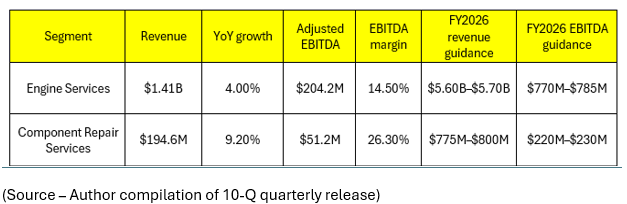
Digging deeper, Engine Services (the company’s main bread and butter) grew more slowly than the Component Repair Services (CRS) segment, with the main reason being the elimination of low-to-no-margin revenue. However, the management did re-affirmed guidance of $5.60-$5.70 billion and $775-$800 million for remaining of the year.
The company generated $50.2 million in free cash flow during Q2, but first-half free cash flow remained negative, at $83.5 million, partly due to higher receivables and lower cash conversion. However, management expects substantially stronger second-half cash generation, with adjusted free cash flow projected at $353–383 million in the back half — enough to bring the full-year total to the guided adjusted FCF $270–300 million range. The company has also further solidified its revenue stream by making a number of moves in the market, the first being the acquisition of Unified Turbines in an all-cash deal. Terms weren’t disclosed, but the deal gives the company a major advantage in hot-section component repair. This addition will strengthen its MRO capabilities and support additional recurring revenue growth. The company has also announced further investment in MRO upgrades for its LEAP and CFM56 repair facilities.
Growth Investments
The company has multiple growth levers, one of which is the investment it has made since 2022 to ramp up its capabilities for the CFM56 and LEAP engine platforms. SARO has invested more than $100 million in a new center of excellence in the Dallas–Fort Worth area for the repair and maintenance of CFM56 engines, while a similar amount has been spent in the San Antonio area to establish the same capabilities for LEAP engines.
This infrastructure buildout has more than doubled the company’s engine repair and overhaul capacity. This is important because there are more than 19,000 CFM56 engines in service today. Originally entering commercial service in 1982, these engines power Boeing’s 737 fleet and the Airbus A320 family. Meanwhile, more than 10,000 LEAP engines have entered service since the platform’s launch in 2016, with the first wave now beginning to arrive at MRO facilities for regular maintenance.
The LEAP and CFM56 MRO programs should create a new recurring revenue stream for the company and could support further valuation upside. So, why is the market assigning SARO a lower multiple than its peers? The answer lies in the risks associated with its business.
Valuation
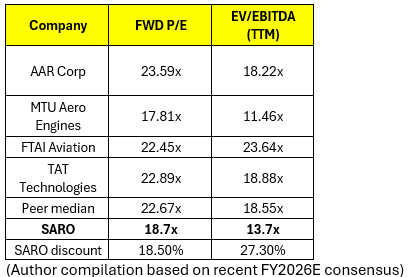
At the time of writing, StandardAero trades at approximately 18.7x forward earnings, representing a meaningful discount to its closest peers.
My FY2027 valuation produces a bear-case target of $24. This scenario assumes adjusted EBITDA reaches only $930 million and the market continues to value StandardAero at a discounted 11x EV/EBITDA multiple. The resulting target represents approximately 3% downside from the current share price of $25.06. However, investors should not view this estimate as a hard floor, particularly if execution or industry conditions deteriorate materially.
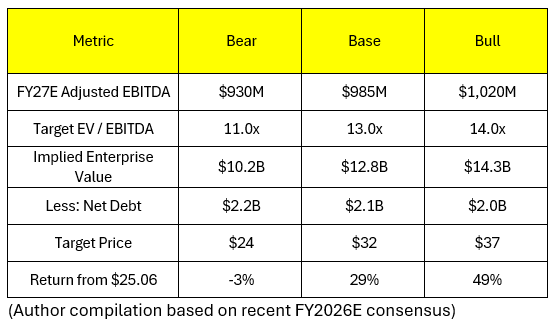
In my base case, adjusted EBITDA increases to $985 million, net debt declines to approximately $2.1 billion and the stock receives a modest re-rating to 13x EV/EBITDA. These assumptions produce a target price of $32, implying approximately 29% upside.
Under the bull case, stronger operating leverage, successful execution of the LEAP and CFM56 growth programs, and further debt reduction could lift adjusted EBITDA to $1.02 billion. Applying a 14x EV/EBITDA multiple produces a target price of $37, representing approximately 49% upside from the current level.
Risks and Why I Disagree with the Market
There are several risks associated with the business, one of which is that Standard Aero operates in a capital-intensive industry. Running an MRO business requires significant capital expenditure and continuous reinvestment in facilities, equipment and additional capacity. The company generated negative cash flow during the first half of the year. Since, we are not talking about a high-growth software company, any negative cash-flow print will naturally make the market nervous and could cause the stock to be re-rated lower.
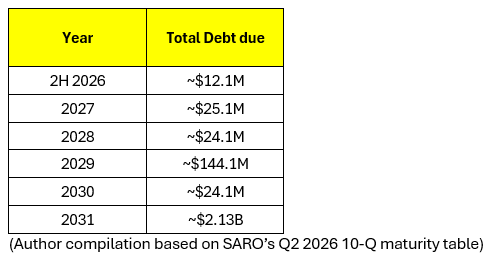
The balance sheet also remains leveraged compared with those of its peers. As of June 30, 2026, the company had approximately $2.35 billion of gross debt, consisting of $2.216 billion in term loans, $120 million drawn on its revolving credit facility and $18.7 million in leases and other debt. Although the company held approximately $179 million in cash and cash equivalents, leverage remained around 2.6x LTM adjusted EBITDA. While this is lower than the 3.0x recorded earlier in the year, the company still needs to keep a close eye on its interest payments in the coming years.
Although the market is giving the company little benefit of the doubt, I believe this creates an attractive opportunity for long-term investors. Standard Aero possesses technical expertise and specialized facilities that create high barriers to entry. Since engine maintenance and repair are not optional, the recurring nature of this demand provides the company with a solid foundation for future growth.
Furthermore, management raised its revenue and adjusted EBITDA guidance during the earnings call, with stronger performance expected during the second half of the year. This should help the company generate positive cash flow for the full year. The LEAP and CFM56 programs are also beginning to provide positive inflection points for its growth story.
With the stock already sufficiently suppressed, even modest improvements in operational efficiency could further strengthen its financial metrics. In Q2, adjusted EBITDA increased by 12.3% despite revenue growing by only 4.6%, while the adjusted EBITDA margin reached a record 14.4%. If management can deliver on its targets and gradually reduce debt, the market will reward SARO a higher multiple in the near term future.
Takeaway
Standard Aero is a legacy business in the aerospace sector with a rich history and technical expertise only a few businesses in the world possess. The company has invested significantly in recent years to further solidify its growth prospects and become a leader in the MRO sector. Revenue and free cash flow metrics are expected to improve over the course of the year, and with incremental operational efficiencies, the growth is expected to accelerate. The company operates in a sector where repair and overhaul are required without exception, and as Cap said to Tony Stark, the company must do it all day in order to keep us safe up in the air. For that reason, I view this company as an undervalued operator and reasonable add for long-term investors at the current levels.


Comments
Log in or sign up to join the conversation.