


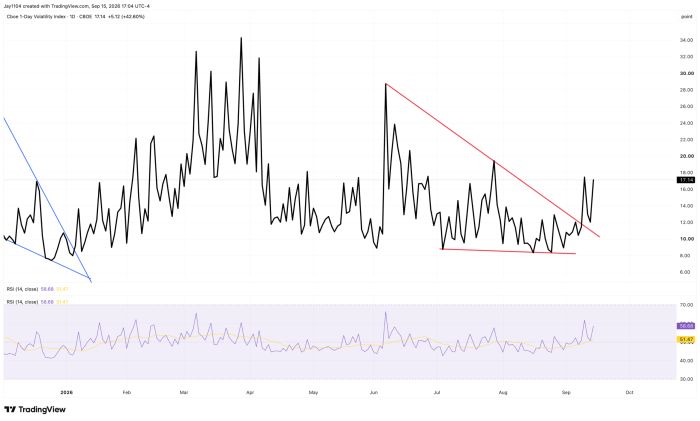
Stocks fell 45 basis points one day ahead of the Fed’s rate decision. The VIX 1-Day closed at 17, which is notable given that tomorrow’s session still has several hours of trading before the 2 p.m. announcement. That suggests the VIX 1-Day could be even higher by the time the decision is out, probably well above 20.
That sets up the potential for an implied volatility crush once the announcement is behind us, as implied volatility falls and resets. That said, the crush has sometimes held off until the following day and played out overnight, as it did after the July meeting. But with all of the uncertainty heading into this meeting, a higher-than-usual VIX reading seems reasonable.
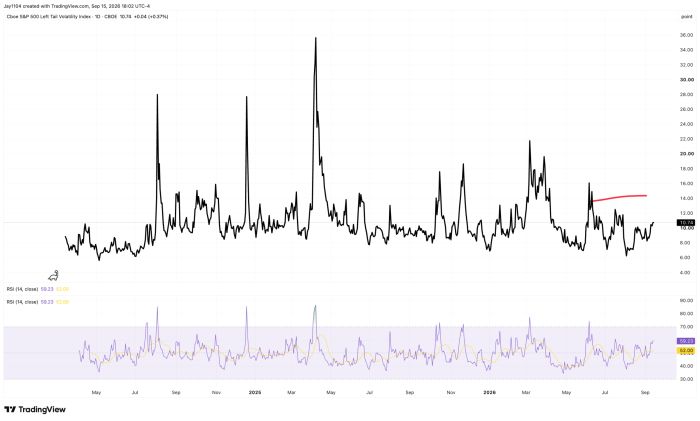
The left-tail VIX has also been rising over the last few days, a measure of traders looking for downside protection. There isn’t much data to go on, but it shows a steady upward trend, while the measure itself remains fairly low. So, to me, this seems more about normalization than anything else at this point.
The vol setup is about tomorrow. The rates setup is about everything after.
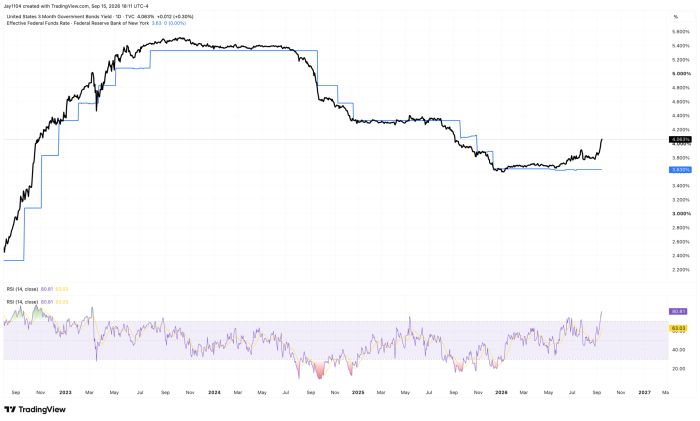
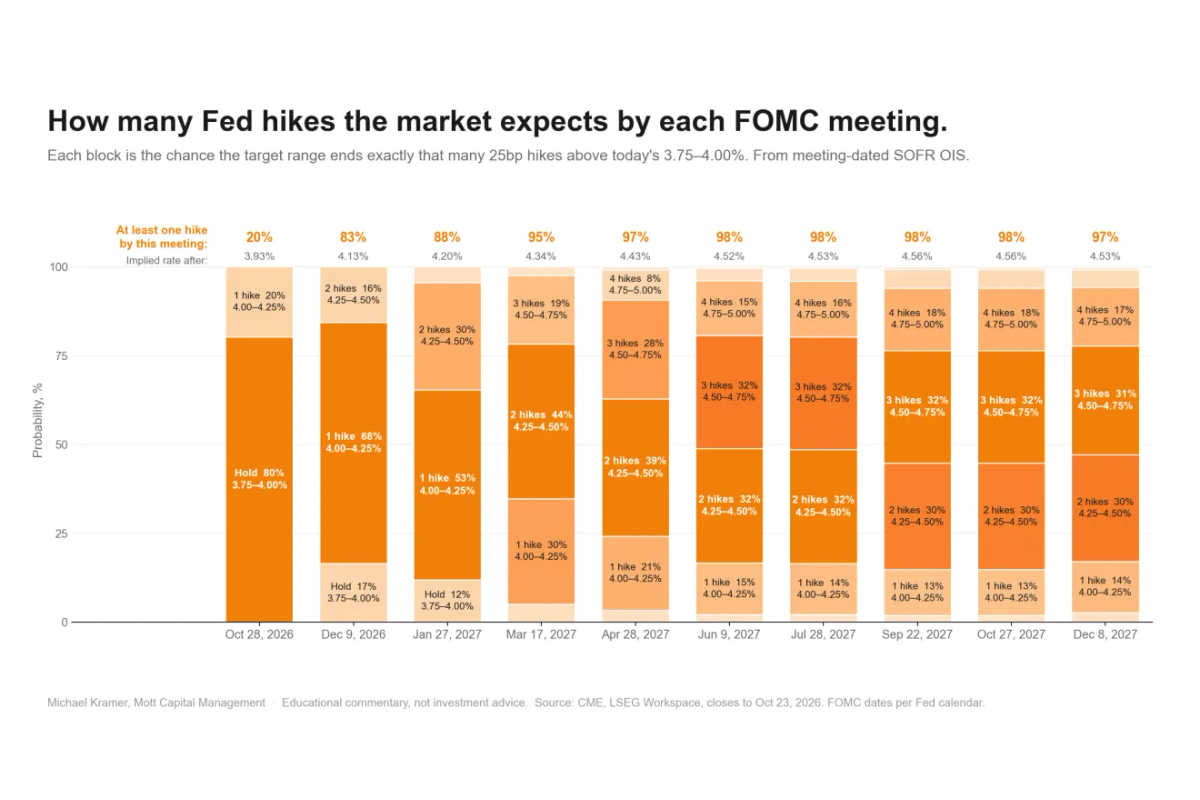
The market expects the Fed to hike, with the 3-month Treasury rate trading more than 40 basis points above the effective federal funds rate. If the Fed passes on hiking, it would be beyond bizarre. The market is telling the Fed that it is time to hike, and this is a Fed that has said it wants to take signals from the market. By that measure, the Fed has to hike, and anything less would be very difficult to defend.
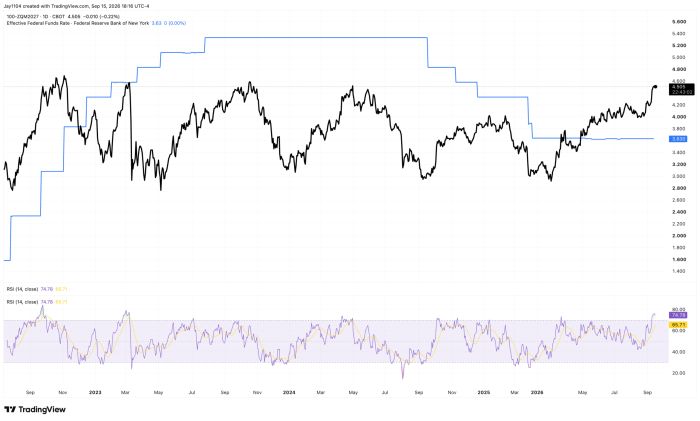
The June 2027 Fed funds futures are trading at 4.5%, suggesting a Fed that hikes three to four times before all is said and done. So, at least based on current market pricing, this is unlikely to be a one-and-done hike.
This is why long-end rates are rising, and why real yields are rising. The market is pricing in a new neutral rate for the economy, one that requires the Fed to keep policy rates higher than markets grew accustomed to over the past 10 to 15 years.
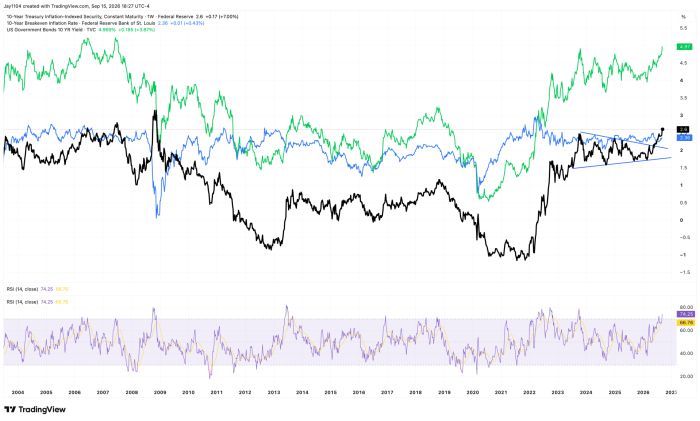
The increase in the 10-year real yield has come almost entirely from rising nominal rates rather than rising inflation expectations. In fact, 10-year breakeven inflation rates have been largely flat throughout this move, while real yields have continued to climb and are now above 10-year inflation expectations.
Historically, it has been relatively rare for the 10-year real yield to rise meaningfully above the 10-year breakeven rate and stay there for a prolonged period. If it holds, it would underscore just how significant the repricing in real rates has become.
If the Fed doesn’t raise rates tomorrow and signal more to come, I think the bond market’s response could be brutal for the Fed.


Comments
Log in or sign up to join the conversation.