

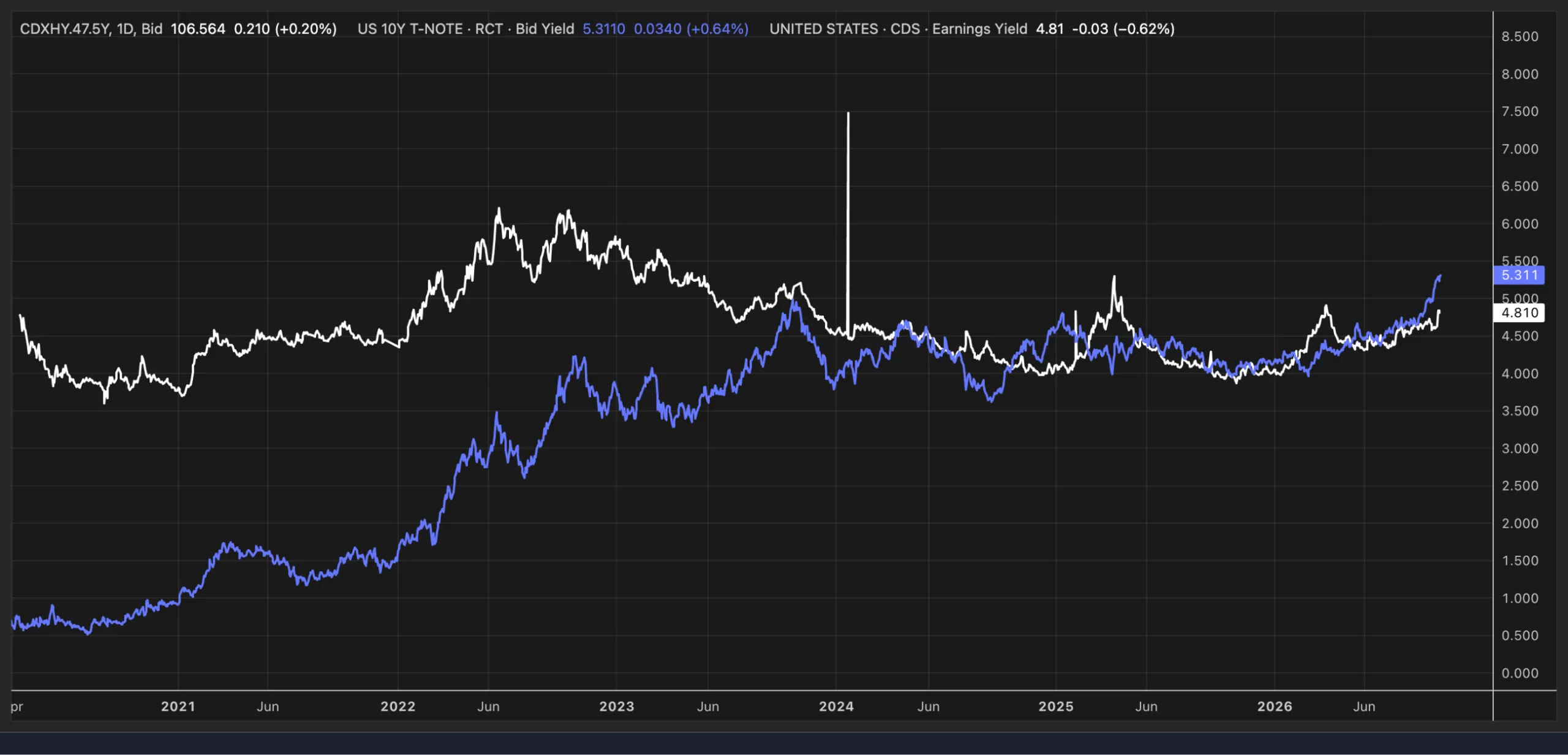
The S&P 500 earnings yield has been rising right along with the 10-year Treasury rate for a few weeks now. So the idea that the stock market is immune to rising rates isn’t really true. It just hasn’t been visible in price; it has been visible only through a falling PE ratio.
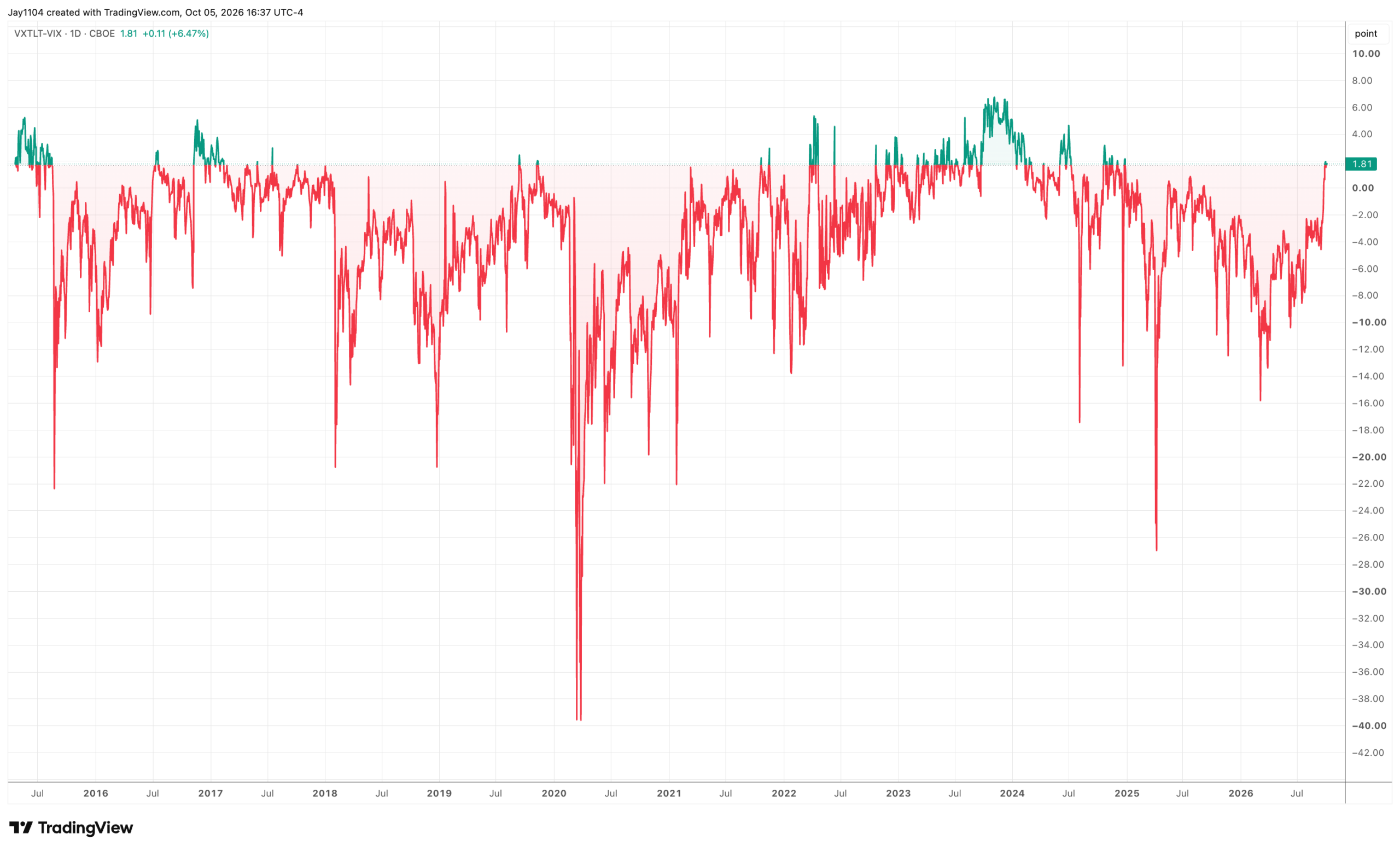
The other part of the equation, which matters as much if not more, is that implied volatility in the equity market remains low despite a steep rise in implied volatility in the bond market. Currently, the VXTLT is higher than the VIX index, and that doesn’t happen very often. In fact, as the chart shows, it has rarely happened over the past decade. The Fed minutes are due Wednesday afternoon, and I’m not sure that will be the day we see a course correction in this spread, but one of these markets is off base here.
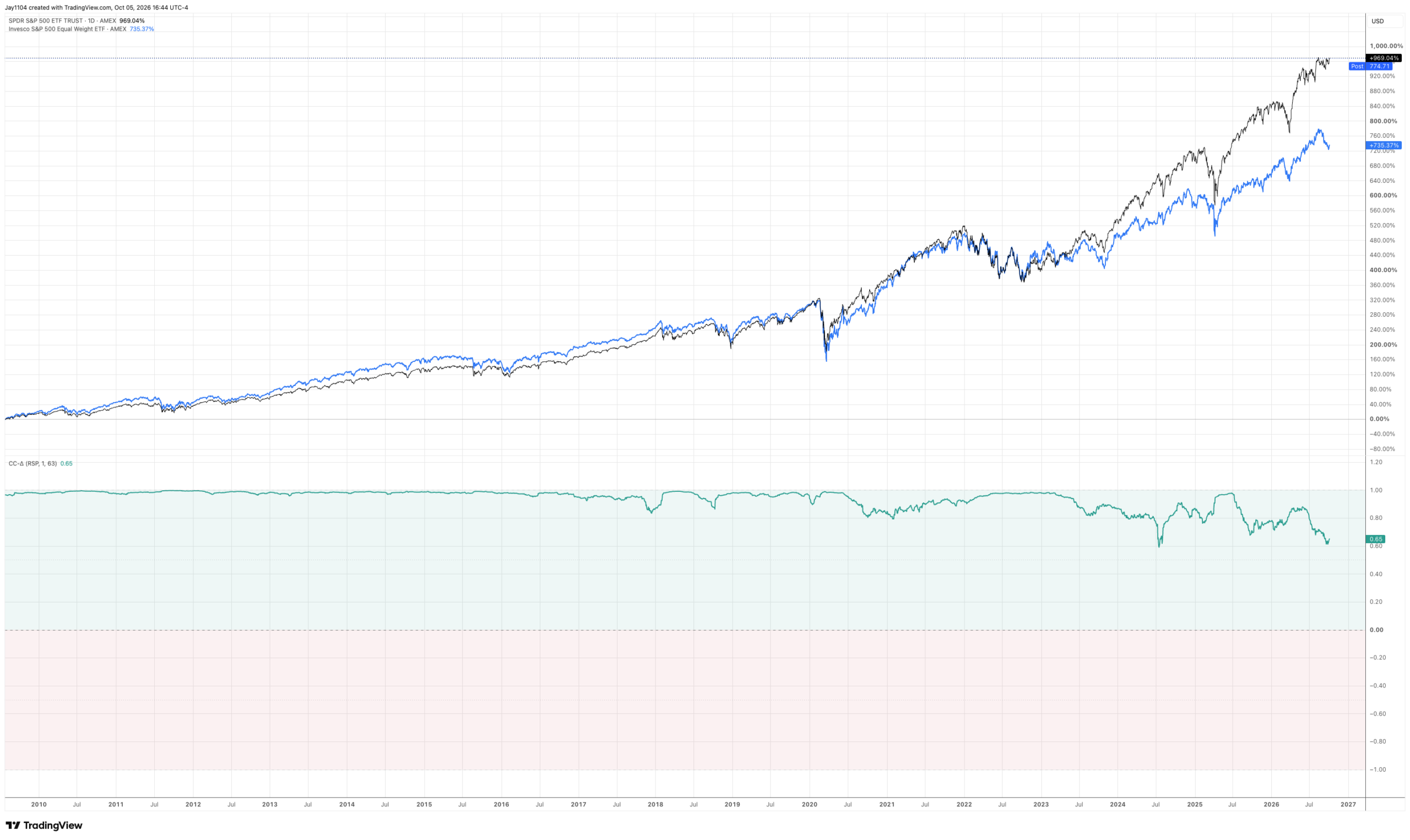
The other piece is that the S&P 500 is no longer a valid proxy for the entire market. There used to be a time when the S&P 500 and the equal-weight S&P 500 traded pretty close to one another. In fact, the RSP even outperformed for a long time. That has obviously changed, and the rolling 3-month correlation between the RSP and SPY has fallen to its lowest level since 2024. The average stock is feeling the pain of higher rates, just not the biggest stocks that dominate the market-cap-weighted index.
Right now, financial conditions just haven’t tightened nearly enough to matter. Rates will need to stay at these levels for some time before the biggest impacts are felt, and that will have to come through a contraction of earnings estimates for the S&P 500 or a much more significant repricing of credit spreads. We just aren’t there yet. At the same time, it won’t be easy for stocks to rise materially further from here either. More stagnation is likely.


Comments
Log in or sign up to join the conversation.