

Contrast the build in the US rate hike discount to the taming in inflation expectations. Chair Warsh can choose to latch on to the latter, thus steepening the curve from both ends. European markets continue to follow a hawkish playbook for central bank expectations. Interestingly, the priced-in probability of immediate hikes in July remains minimal.
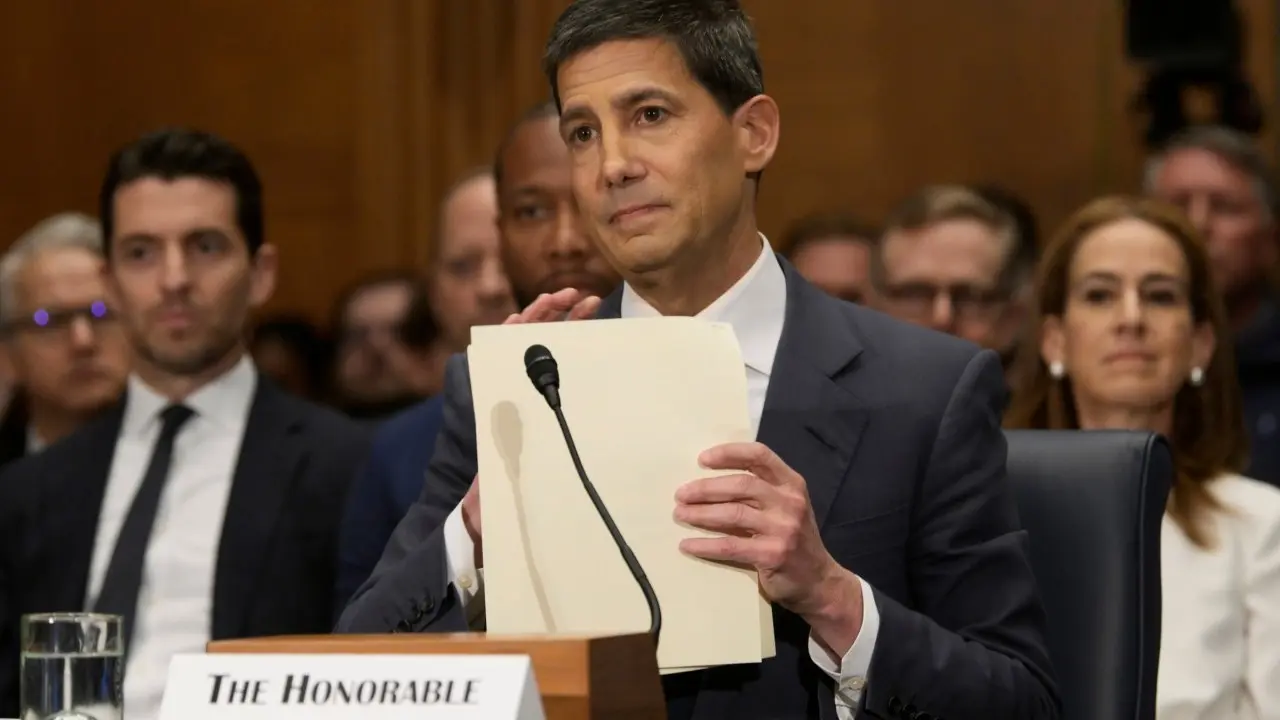
Juxtaposition between the rate hike discount and benign inflation expectations
The US 10yr yield breached above 4.6% on Monday, driven there by yet another nudge higher in real yields. But in addition, break-even inflation rates too have been on a renewed rising trend in the past week. The latter coincides with the re-elevation of tensions between the US and Iran, manifesting in a concerning kinetic element. We're not quite in a state of all-out war, but the direction of travel has been more towards that, rather than a ratcheting down. And there is also the unravelling for the markets of the 20% tolls being contemplated by the US for passage through the Strait of Hormuz, and how that might pan out in the weeks and months ahead.
On the front end of the curve, the 2yr yield has breached above 4.25%. That compares with 3.4% (and a rate cut discount) before the war broke out. Now the market has a dominant discount for the next move to be a hike (there is now a 25bp hike discounted for the September meeting). It's unclear whether Chair Warsh will have anything material to say about this as he testifies before the House Financial Services Committee on Tuesday. Unlikely, one would have thought, given his preference for no forward guidance. But he could, if he chooses, emphasise the tameness of inflation expectations.
What is interesting here is the contrast between the build of a rate hike discount and the equally impressive fall in inflation break-even rates. Even though they have risen in the past week or so, big picture they are not only back to where they were before the Iran war broke, but in absolute terms they are quite tame (2yr at 2% and 10yr at 2.25%). Tuesday's June inflation release is expected to see the headline rate fall back below 4%, reflecting falls in energy prices. Even then, inflation remains uncomfortably high (hence the rate hike worries).
But then again, the market is already discounting big falls in inflation. Chair Warsh has enough ammunition here to ride the rate hike risk and instead hold pat. Even if he comes under pressure to hike, the richness attached to the 5yr part of the curve tells us that any hike (if delivered) is likely to be subsequently reversed, with the prospect still for bigger cuts than hikes. Given that, we see the curve pivoting steeper from both ends as a central call in the months ahead. That call could accelerate should Chair Warsh decide not to endorse the rate hike panic.
No immediate ECB and BoE hikes, but risks tilted towards more tightening
The re-escalation of the conflict around the Strait of Hormuz could be more consequential for European rates than it is for the US. For both the Bank of England and European Central Bank pricing, markets are quick to price in additional tightening in response to higher oil prices. The 2Y inflation swap for EUR is now trading at 2.2%, which is just slightly above target, yet markets are looking at almost 50bp of hikes over the next year. This also means that long-term inflation expectations remain well anchored with the 10Y inflation swap at 2.1%.
Interestingly enough, neither the ECB nor BoE markets see a material chance of a July hike, which is in just two weeks. But for the meetings thereafter in September, the probabilities priced in are much higher. Such pricing seems partly a reflection of the balance of risk. If oil prices were to stay at current levels, the threshold for another hike is still significant, but if oil were to drift higher, then hiking becomes more of a baseline outcome. Therefore, the probabilities that are priced in also incorporate the distribution of risk of where oil could be over the coming months.
Tuesday’s events and market view
The focus is on the US, not just because there is no notable Eurozone data to report. First, we will get the US inflation data for June, where the market is looking for a second consecutive 0.2% month-on-month reading for the core rate. This would be a relatively benign outcome, but the balance of risks surrounding the median expectation are skewed towards a higher 0.3% reading just judging by the distribution of individual forecasts. Secondly, Fed Chair Warsh will go through his first semi-annual testimony to Congress. Whether there will actually be much to learn in terms of market direction is unclear, since Warsh has made clear that he is no fan of forward guidance. Other speakers on Tuesday include Barr, Goolsbee, Cook and Bowman. We will also get the TIC flows data for May.
In primary markets, the Netherlands taps a 5y DSL for €2.5-3.5bn. Germany will launch a new 2y Schatz for €6bn.


Comments
Log in or sign up to join the conversation.