Pricing Berkshire Without The Founder Premium

Warren Buffett’s departure as Berkshire Hathaway chairman shifts focus to Greg Abel’s capital allocation and a $365 billion cash pile.

Source: DepositPhotos

For decades, buying Berkshire Hathaway meant putting a great deal of trust in Warren Buffett’s judgment. Now he has stepped down as chairman, with his son Howard becoming non executive chairman and Greg Abel continuing as CEO. Buffett is staying on as chairman emeritus and a director, so he is not disappearing from the picture. The question is whether Berkshire can preserve the discipline and reputation he built while Abel makes the big decisions.

Main Note

Pricing the Berkshire Transition

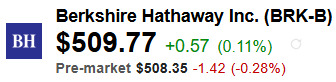
Berkshire Hathaway (BRK-B) Quote

Verdict: The handover gives investors another reason to look closely at Berkshire’s businesses and capital allocation. Buffett’s reputation may still influence what investors are willing to pay, but the long term case rests on the earnings, cash and discipline behind the name.

What happened

Berkshire announced Friday morning, September 18, that Warren Buffett had stepped down as chairman, effective immediately. His son Howard became non executive chairman, while Warren remains a director and chairman emeritus. The move follows a succession plan that has been discussed for years.

Greg Abel has been CEO since the start of January, so responsibility for running Berkshire did not suddenly shift on Friday. Howard’s role is to lead the board and help protect Berkshire’s culture, not run the operating businesses. This is another step in the transition, rather than a new management team starting from scratch.

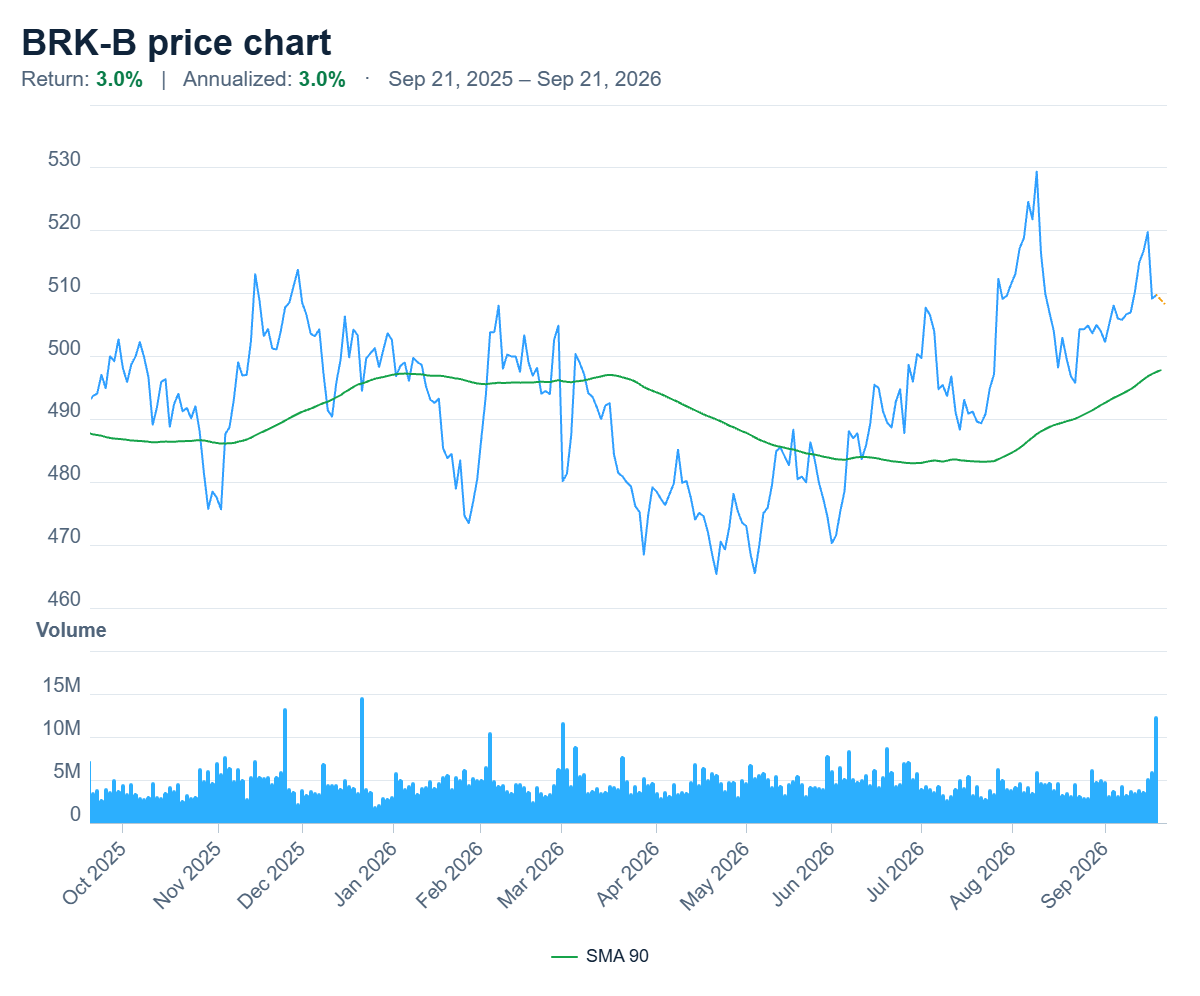
Berkshire Hathaway (BRK-B) 1 Year Chart

Berkshire Hathaway (BRK-B) 1 Year Chart

Why it matters

The big issue is still capital allocation. Berkshire ended June with roughly $365 billion in cash, cash equivalents and U.S. Treasury bills. Its insurance float, the money it holds before paying claims, helps finance the business, but it is not an extra cash pile to add to that figure. Investors will be watching whether Abel puts Berkshire’s resources to work with the same patience and discipline.

What changed in the thesis

If investors are right to trust the transition, the story shifts from betting on a unique financial fortress to holding a collection of operating companies that need to defend their own margins. The focus moves from the holding company level down to the individual business unit level.

What the market may be missing

The operating businesses still deserve a close look. In the second quarter, GEICO’s combined ratio rose to 91.2% from 83.5% a year earlier, while pretax underwriting income fell about 45%. That is a weaker result, although a ratio below 100% still means it earned an underwriting profit. BNSF’s operating ratio was 65.4%, compared with Union Pacific (UNP)’s reported 59.7%; lower is better. Those gaps matter, but they were there before Friday’s handover.

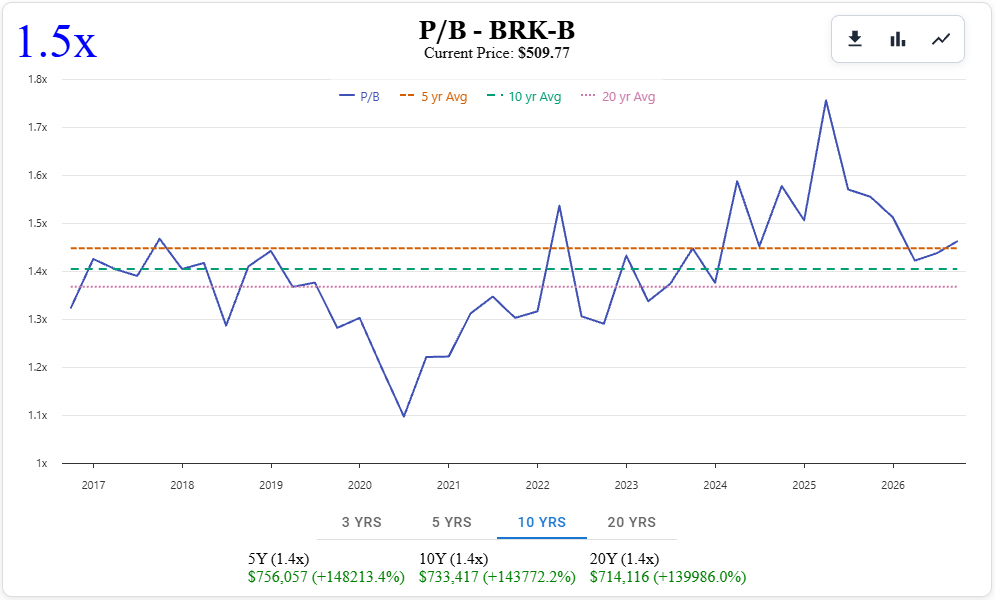
Valuation and expectations

The risk to watch is whether Berkshire pays too much, not simply whether the cash pile gets smaller. A big acquisition can make sense at the right price, while a buyback can destroy value at the wrong one. Berkshire already repurchased about $4.5 billion of stock in the second quarter. That gives investors a real decision to examine, rather than just a future promise. The price paid matters more than whether management chooses an acquisition or a buyback.

Berkshire Hathaway (BRK-B) Price to Book Ratio

Berkshire Hathaway (BRK-B) Price to Book Ratio

Bottom line

The transition forces the company to prove its decentralized model works in isolation. If the operating units can improve their margins, the stock should hold its ground. If they struggle, the market will start demanding a conglomerate discount.

Pre Market Pulse

  • Class B shares traded relatively flat near $508 early Monday morning.

  • U.S. stock futures were higher as AI related shares gained and oil prices eased. The broader market backdrop remains important alongside Berkshire’s succession news.

Why it matters this morning

The quiet early reaction is consistent with a transition investors have had years to consider. But one premarket snapshot does not tell us how much of Buffett’s reputation is still reflected in the share price. The bigger test is how Berkshire performs under the new setup.

Peer Read Through

Markel Group (MKL)

Often viewed as a mini Berkshire, this specialty insurer faces similar questions about capital allocation and legacy leadership transitions. It currently commands a market capitalization of roughly $22.0 billion.

Loews Corporation (L)

Another family controlled conglomerate reliant on value investing principles and insurance float. Loews has a market capitalization near $22.3 billion and is currently executing its own family succession plan.

JPMorgan Chase (JPM)

A proxy for the broader financial sector and another mega cap institution preparing for an eventual CEO succession. The bank features a premium price to book ratio near 2.54 and is actively managing its own transition timeline.

Group takeaway

The read through for these firms is that founder level transitions require a pristine balance sheet to keep investors calm. Holding companies with deep cash reserves can manage leadership changes much more smoothly than those reliant on constant market funding.

What to Watch

  • Third quarter buybacks, including the prices paid and whether they look attractive against Berkshire’s earning power.

  • GEICO’s combined ratio and underwriting profit, with attention to whether the second quarter deterioration continues.

  • BNSF’s profitability and its operating ratio compared with Union Pacific on the same reporting basis.

  • The third quarter cash balance, separating acquisitions and buybacks from normal cash generation. July’s Taylor Morrison (TMHC) purchase is already one known use of cash.

Bottom line

The next market crisis will be one important test: do companies still turn to Berkshire when they need a large check and a dependable partner? But investors do not need to wait for a crisis to judge the transition. The prices Berkshire pays, the returns it earns and the way it treats shareholders will provide evidence along the way.

STOCKS IN THIS ARTICLE

Also Mentions:

Comments