

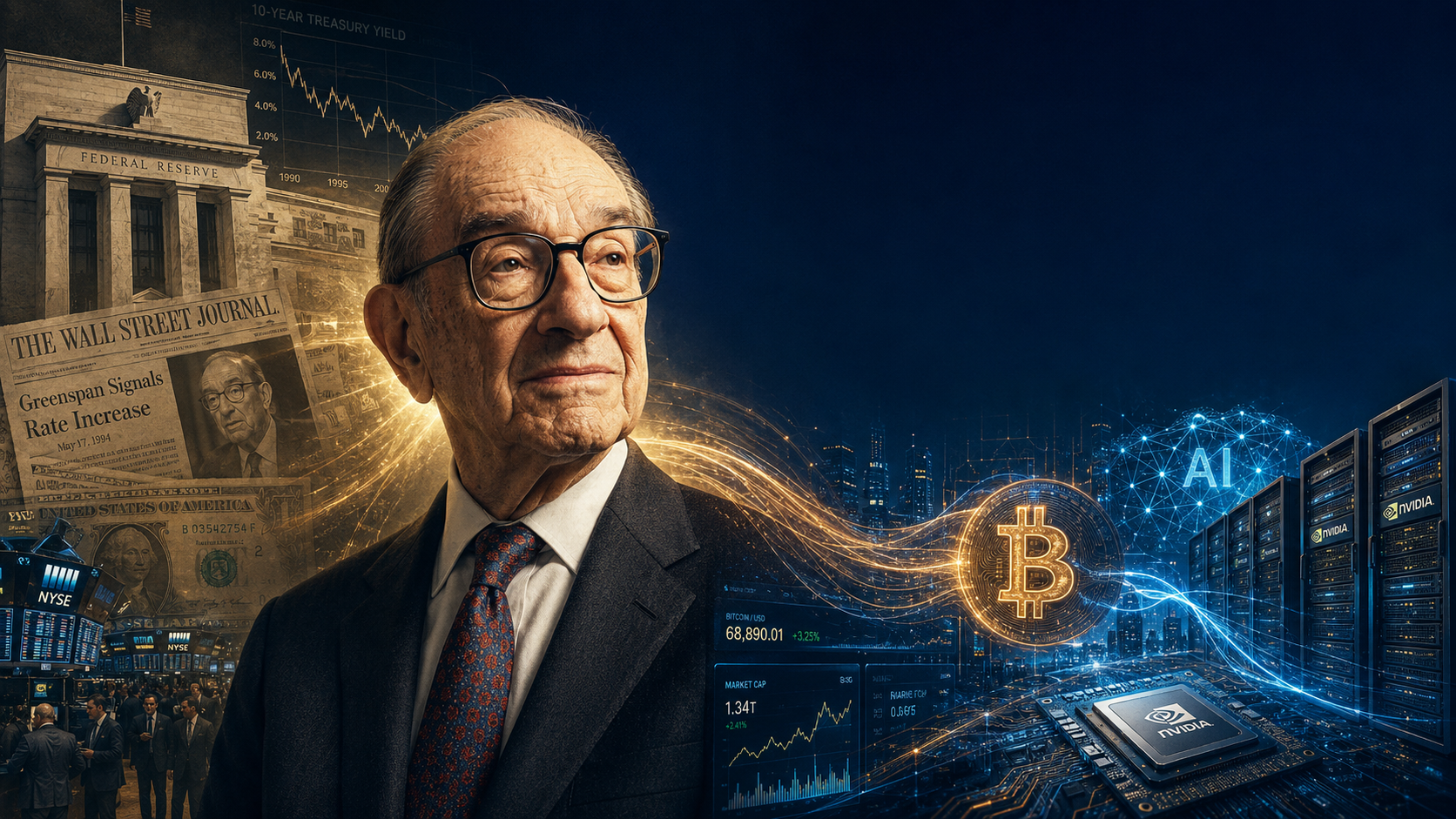
Today we say goodbye to Alan Greenspan.
No relation, despite the shared last name. Though he did once help get me out of a bit of trouble in Las Vegas. That's a story for another time.
Whether you agreed with Uncle Alan or not, few people have influenced global markets more profoundly. Greenspan spent nearly two decades at the helm of the Federal Reserve, helping shape an era defined by globalization, technology, financialization, and most importantly, liquidity.
He may not have been into Bitcoin (BTC.X), but he certainly understood liquidity flows.
His passing comes at a moment where once again, markets are obsessed with the same question that defined much of his career:
Where is capital flowing next?
That question matters more today than any chart pattern, technical indicator, or social media narrative.
Price is the headline.
Flows are the story.
The Great Rotation
Bitcoin's New Competitor Isn't Gold
For years, Bitcoin's primary comparison was gold. Digital gold. Gold 2.0. Gold for the internet age.
Increasingly, that comparison feels incomplete.
Bitcoin's biggest competitor today is AI.
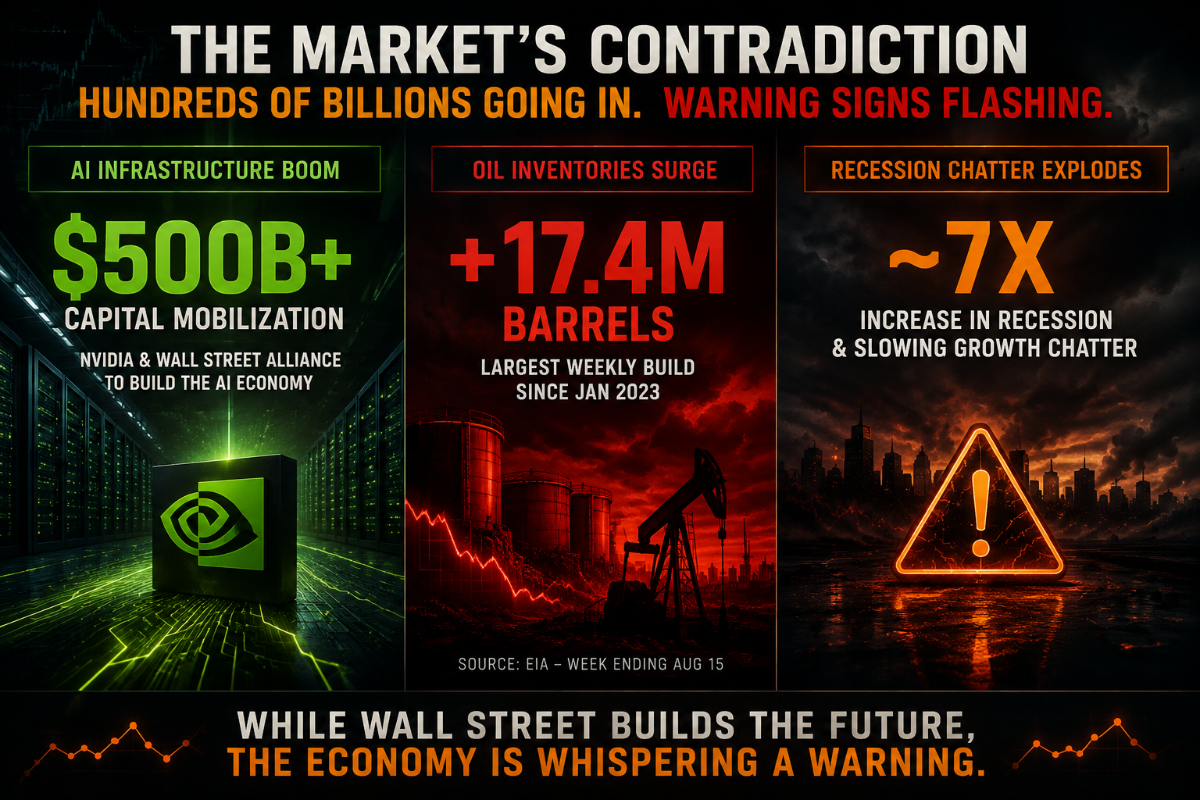
The largest technology companies in the world are deploying hundreds of billions of dollars into data centers, energy infrastructure, chips, model training, and AI startups. The AI arms race is no longer a future story. It's happening now.
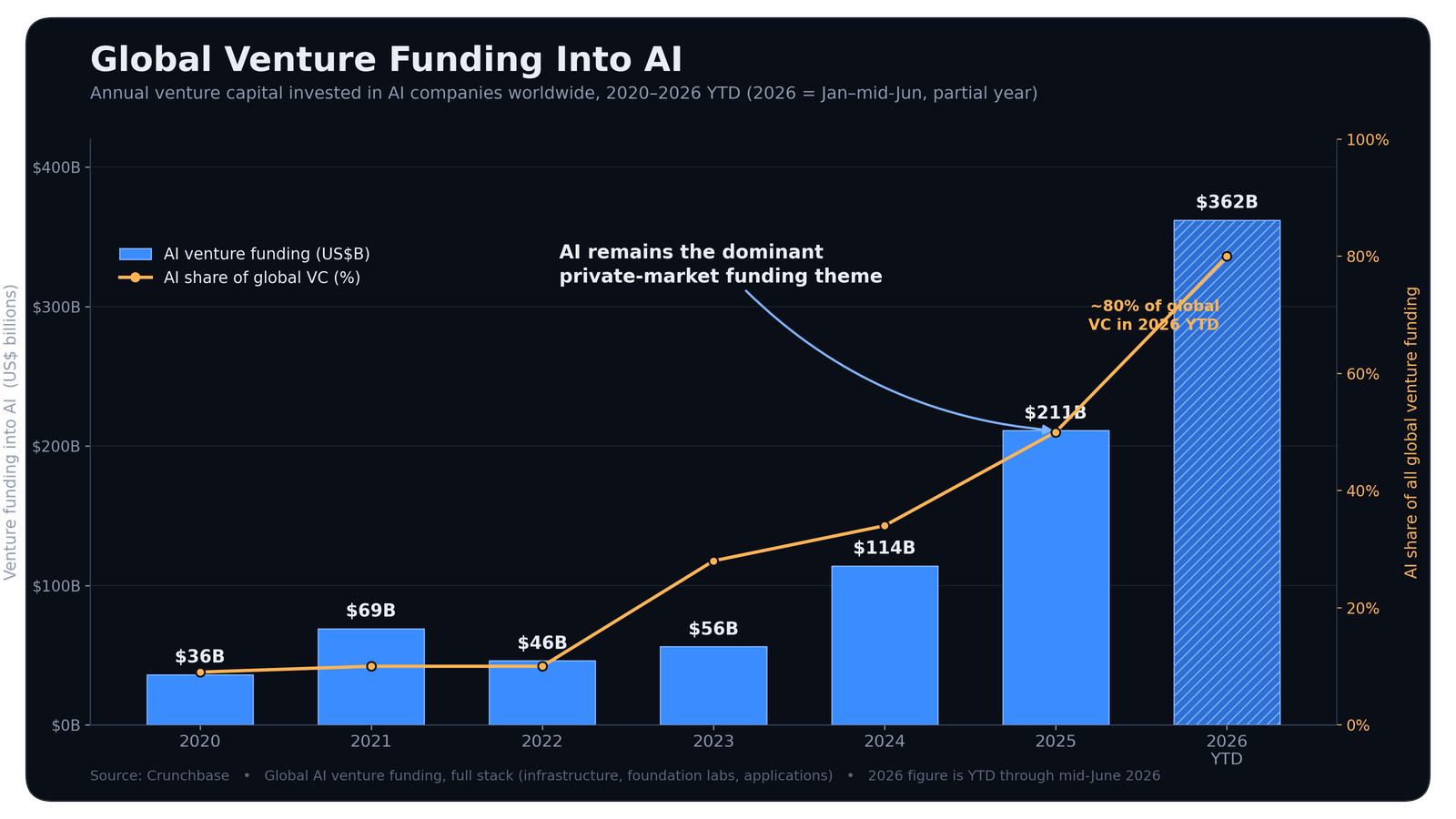
Global AI venture funding continues to accelerate as capital pours into infrastructure, models, and applications.
Last week we discussed what our in-house market-reading AI agent Korra has been calling the Great Rotation. Capital is moving toward whichever opportunity appears to offer the greatest future returns.
That does not invalidate Bitcoin. In fact, it may indicate the opposite.
When investors need liquidity to pursue new opportunities, they increasingly turn to Bitcoin because Bitcoin has become one of the most liquid global assets available.
That's not weakness. That's maturity.
Gold sits in vaults. Bitcoin moves. And increasingly, it moves capital.
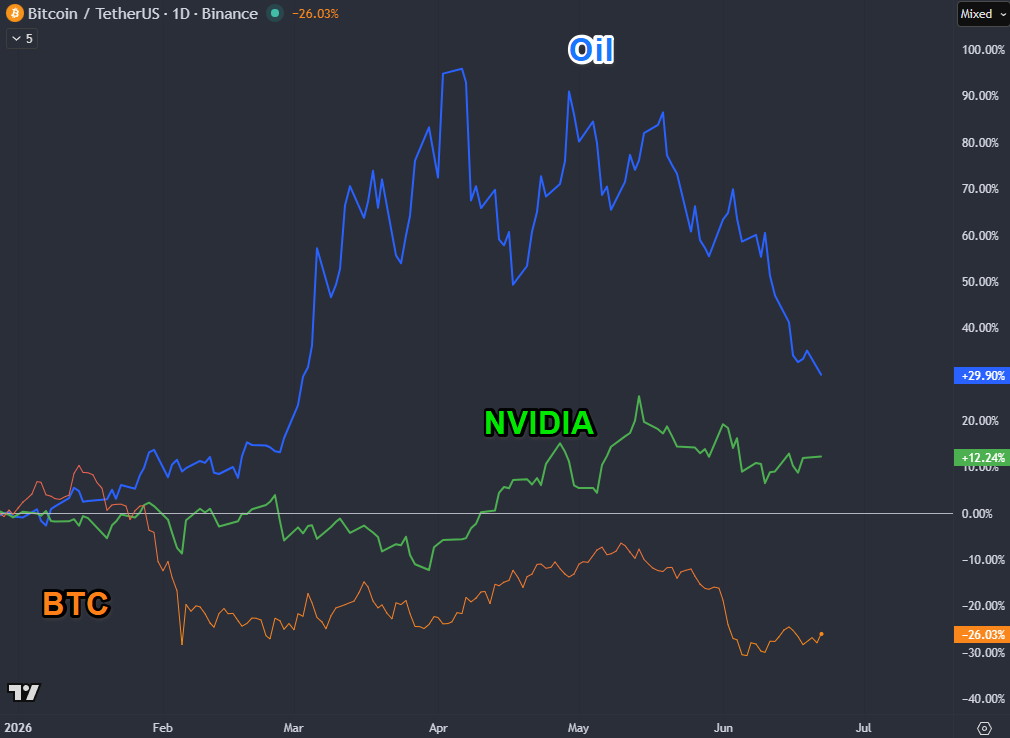
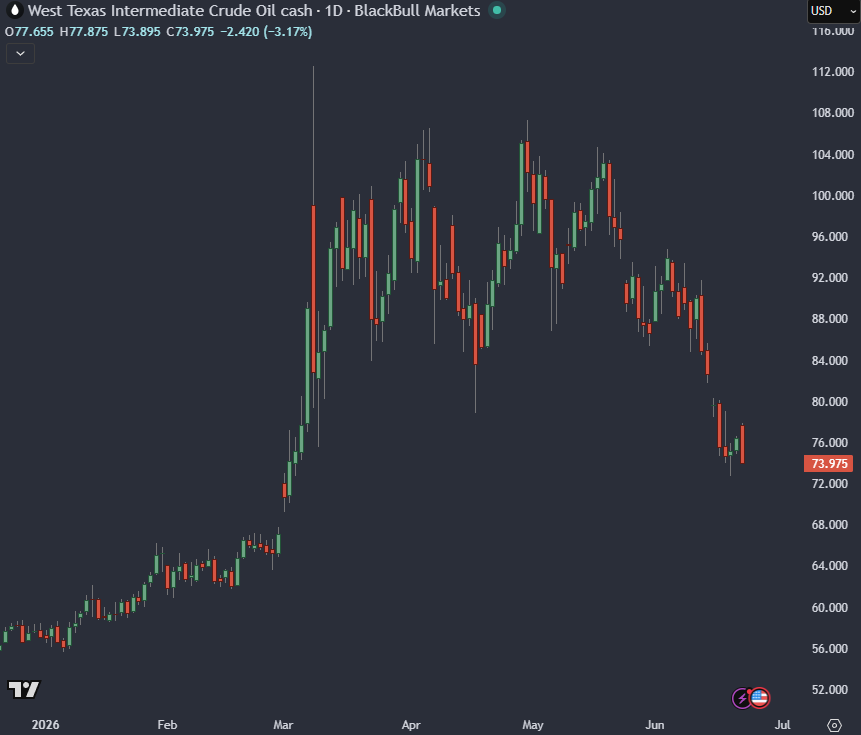
BTC, NVIDIA (NVDA), and WTI crude indexed year-to-date.
Politics + Monetary Infrastructure
Political Turbulence, Financial Evolution
This week saw the resignation of UK Prime Minister Keir Starmer following months of mounting political pressure.
Let's not pretend people are angry over nothing. Across the UK and Europe, voters are increasingly frustrated by immigration policy, social cohesion, public safety, housing pressure, stagnant growth, and the feeling that their concerns have been dismissed by elites for far too long.
When people believe institutions are no longer listening, political change follows.

Yet while political systems struggle to adapt, financial systems continue evolving.
One of the more important developments this week came from the Bank of England, which softened aspects of its proposed stablecoin framework.
That may sound technical. It isn't.
The question regulators used to ask was: "Should stablecoins exist?"
The question they are asking now is: "How do we integrate stablecoins into the financial system?"
That is a profound shift.
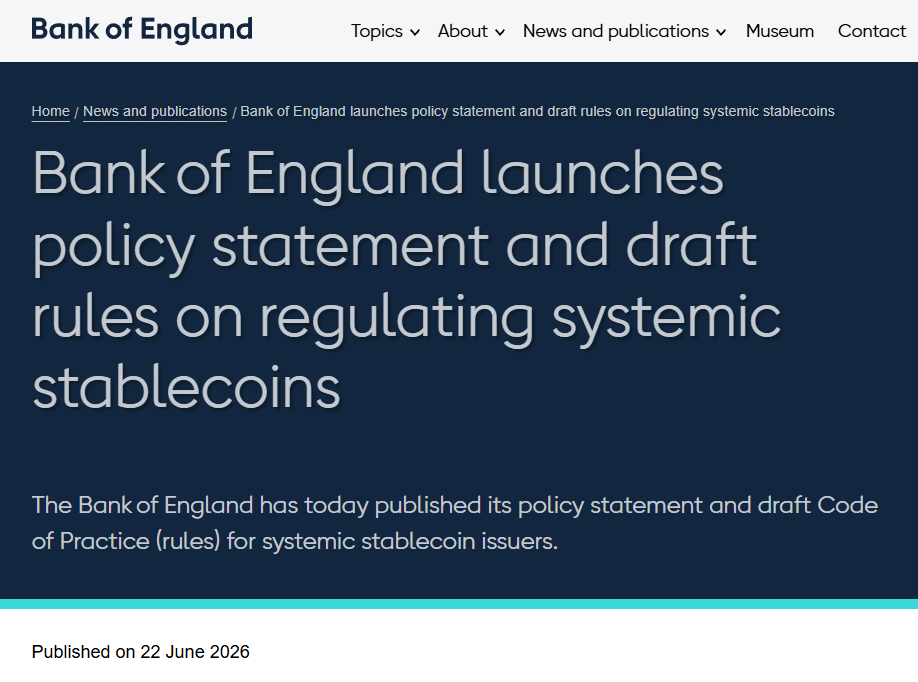
Stablecoins are quietly becoming one of the most important pieces of financial infrastructure in the world.
While politicians argue about the future, markets continue building it.
Middle East Reality Check
Peace On Paper. Risk In Practice.
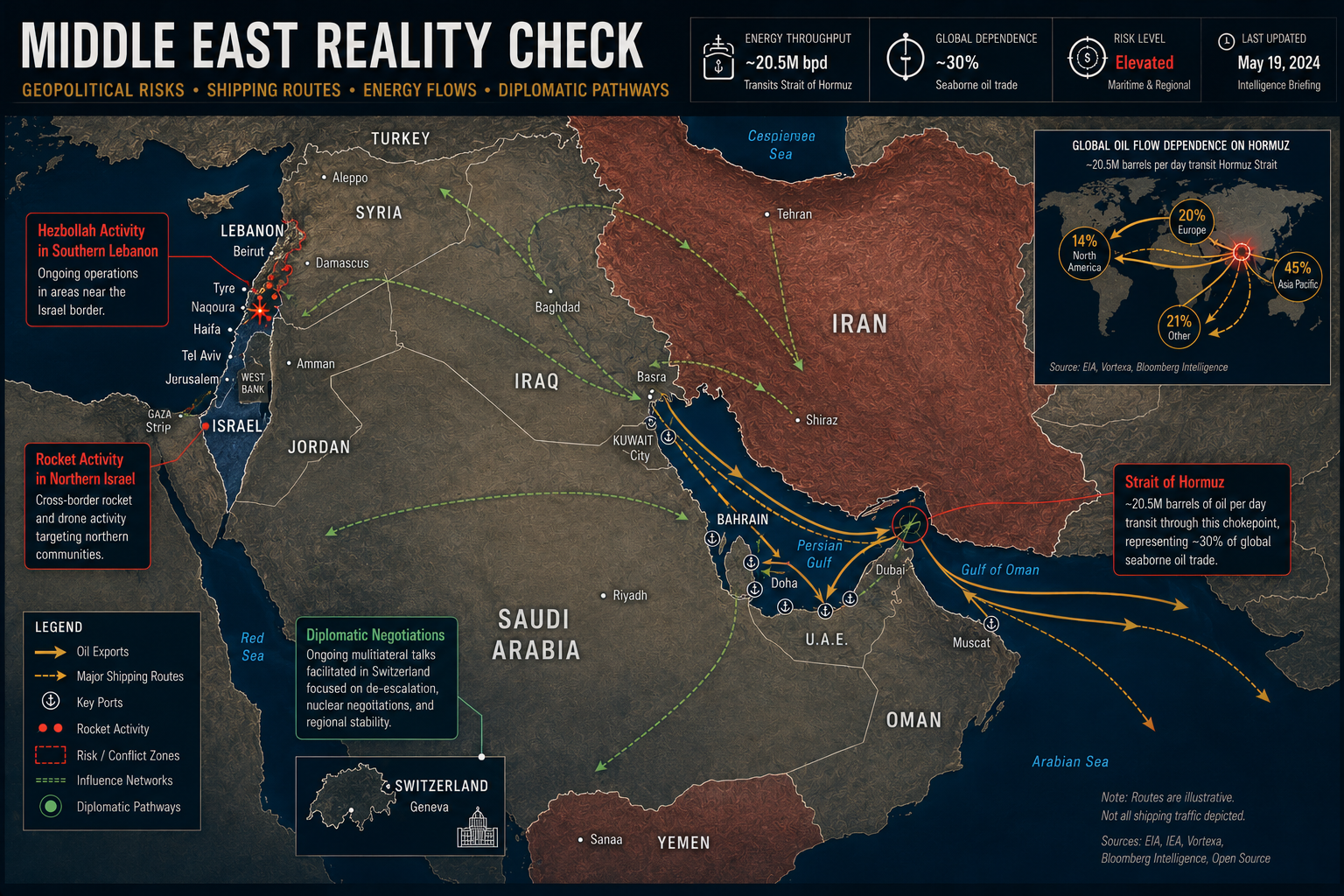
From my desk in Israel, there is one thing that continues to stand out.
The story most people are seeing is incomplete.
International headlines often focus on Israeli military responses. What many people never see are the rockets that came first. The civilians forced into shelters. The attacks that triggered those responses.
You cannot honestly analyze a conflict by starting in the middle.
This week saw continued diplomatic engagement between the United States and Iran, including new agreements and ongoing negotiations. Markets responded positively. Oil prices moved lower. Risk assets breathed easier.
On the surface, that makes sense.
But markets have a habit of oversimplifying complicated realities.
The challenge is not necessarily what gets signed at the negotiating table. The challenge is implementation.
Iran can negotiate with Washington, but the conflict itself is often carried out through regional proxies operating according to their own incentives and timelines.
As long as rockets continue flying into Israel, Israel will continue responding. No government anywhere would simply absorb ongoing attacks against its civilian population without action.
That reality exists regardless of what is being discussed in Switzerland, Washington, Tehran, Jerusalem, or anywhere else.
Peace agreements matter. Behavior matters more.
Watch the video showing rockets fired into Israel, the initial violation of the ceasefire.
Korra Signal
What Prediction Markets Are Saying About Hormuz
One of the most interesting divergences Korra identified this week involves the Strait of Hormuz.
Headline readers saw diplomatic progress.
Prediction markets saw something else.
While public narratives increasingly suggest normalization, traders remain significantly more skeptical about how quickly shipping traffic returns to normal.
That matters because prediction markets force participants to put money behind their beliefs.
Social media reveals what people say. Markets reveal what people are willing to risk.
When those two stories diverge, opportunity often emerges.
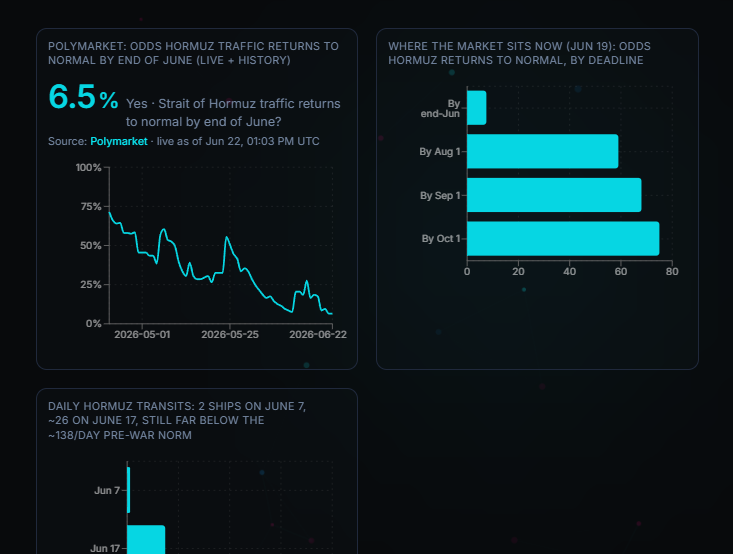
Whether the prediction markets ultimately prove correct remains to be seen.
But the gap itself is worth watching.
It's another reminder that narratives move fast. Reality moves slower.
Korra's reach continues to expand as we test new distribution channels and audiences.
This week Korra launched on several new platforms, including Bluesky, YouTube, TikTok, and Farcaster.

Comments
Log in or sign up to join the conversation.