


PPI Final Demand Month-Over-Month
Today, the BLS released its report on PPI Final Demand for January 2026.
PPI Final Demand Month-Over-Month
Final Demand: 0.5 percent
Final Demand Goods: -0.3 Percent
Final Demand Services: 0.8 percent
Final Demand Food: -1.5 percent
Final Demand Less Food and Energy: 0.8 percent
Final Demand Services
The index for final demand services advanced 0.8 percent in January, the largest increase since moving up 0.9 percent in July 2025. Most of the January rise in prices for final demand services can be traced to margins for final demand trade services, which jumped 2.5 percent. (Trade indexes measure changes in margins received by wholesalers and retailers.) Prices for final demand transportation and warehousing services advanced 1.0 percent, while the index for final demand services less trade, transportation, and warehousing was unchanged.
Product detail: Over 20 percent of the January increase in prices for final demand services is attributable to a 14.4-percent jump in margins for professional and commercial equipment wholesaling. The indexes for apparel, footwear, and accessories retailing; chemicals and allied products wholesaling; bundled wired telecommunications access services; health, beauty, and optical goods retailing; and food and alcohol retailing also moved higher. Conversely, prices for system software publishing fell 12.2 percent. The indexes for guestroom rental and for apparel wholesaling also decreased.
This is the second month margins for commercial equipment wholesaling jumped.
Last month I commented “Margins for machinery and equipment wholesaling jumped. But why? The report did not say, but tariff passthrough seems likely.”
Final Demand Goods
Prices for final demand goods moved down 0.3 percent in January, the largest decrease since falling 0.7 percent in March 2025. Leading the January decline, the index for final demand energy dropped 2.7 percent. Prices for final demand foods decreased 1.5 percent. In contrast, the index for final demand goods less foods and energy advanced 0.7 percent.
Product detail: Nearly 80 percent of the January decline in prices for final demand goods can be traced to the index for gasoline, which fell 5.5 percent. Prices for chicken eggs, electric power, gas fuels, fresh fruits and melons, and ethanol also moved lower. Conversely, the index for search, detection, navigation, and guidance systems jumped 15.5 percent. Prices for nonferrous metals and for pork also rose.
Energy will not repeat next month. It will add to goods inflation.
Intermediate Demand
Within intermediate demand in January, prices for processed goods were unchanged, the index for unprocessed goods fell 0.5 percent, and prices for services moved up 0.3 percent.
Intermediate Demand Processed Goods
The index for processed goods for intermediate demand remained unchanged in January. A 0.5-percent increase in prices for processed materials less foods and energy offset declines in the indexes for processed energy goods and for processed foods and feeds, which fell 2.0 percent and 0.6 percent, respectively. For the 12 months ended in January, prices for processed goods for intermediate demand rose 2.6 percent.
Product detail: Within processed goods for intermediate demand in January, the index for nonferrous metals moved up 4.8 percent. Prices for industrial gases; search, detection, navigation, and guidance systems; paints and allied products; and industrial natural gas also increased. In contrast, the index for gasoline declined 5.5 percent. Prices for commercial electric power, industrial electric power, ethanol, and confectionery materials also fell.
Intermediate Demand Unprocessed Goods
The index for unprocessed goods for intermediate demand moved down 0.5 percent in January after advancing 1.9 percent in December. The decline is attributable to prices for unprocessed foodstuffs and feedstuffs, which decreased 3.5 percent. Conversely, the indexes for unprocessed nonfood materials less energy and for unprocessed energy materials rose 2.6 percent and 0.4 percent, respectively. For the 12 months ended in January, prices for unprocessed goods for intermediate demand fell 6.1 percent, the largest 12-month decline since dropping 8.2 percent in September 2024.
Product detail: A major factor in the January decline in the index for unprocessed goods for intermediate demand was a 9.8-percent drop in prices for raw milk. The indexes for ungraded chicken eggs, corn, oilseeds, natural gas, and fresh fruits and melons also moved lower. In contrast, prices for nonferrous scrap rose 8.5 percent. The indexes for crude petroleum and for slaughter chickens also advanced..
Where Things Stand Synopsis
Last month, I commented “Yesterday, Jerome Powell prematurely praised a decline in services inflation.”
That was immediately followed by a 0.7 percent jump in services PPI.
This month, there is another 0.8 percent jump in services PPI.
In the press conference following the December rate cut announcement (no change), Powell did comment multiple times on services inflation.
The Fed expects services inflation to drop. I don’t, and health care is my primary reason.
I also think oil has bottomed. If so, that will put upward pressure on energy.
However ….
It’s the Reaction that Matters Most
It’s not the news that matters the most, it’s the reaction to the news. We saw that yesterday with a negative reaction to Nvidia sales. And we see it again today in the bond market.
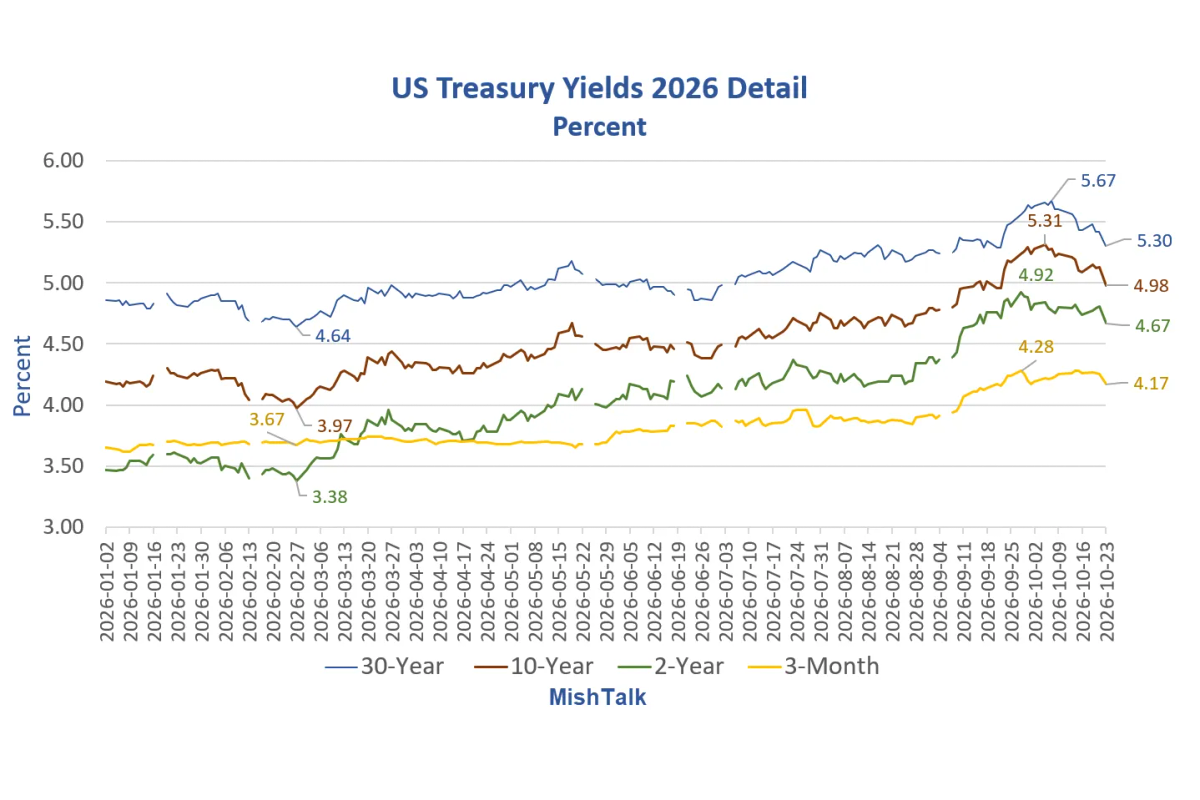
The bond market reacted as if today was good news. Yield on the long bond fell 3 basis points to 4.64 percent. Yield on the 5-year note fell 6 basis points.
A month ago, the long bond was on the verge of breaking out above 5 percent.
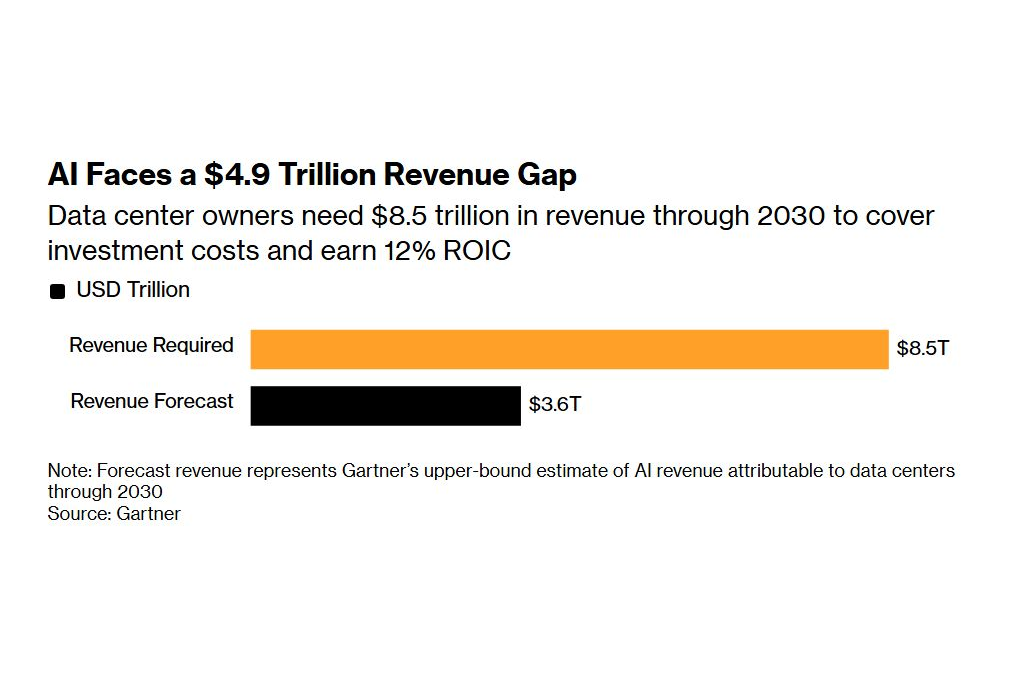
My view is the bond market senses weakness somewhere. I suspect both AI and jobs. Jobs may be in serious trouble.
Related Posts
January 14, 2026: The Fed Has Missed Its Inflation Target on Ten Different Measures
The Atlanta Fed tracks various inflation targets. Let’s have a look.
January 27, 2026: Trump Cheers a Plunge of the US Dollar “I Think It’s Great”
“Look at all the business we are doing,” says Trump.
And for a look at what health care will do to the PCE price index, please see Expect a Big Divergence This Year Between CPI and PCE Inflation
Rent and Healthcare go different ways in 2026. Plus there are huge timing issues.
The Fed is not in a good place, as it claims.
January 30, 2026: Dear Zoomers, Trump Says He “Wants to Drive Up Housing Prices”
Somehow, I doubt Gen Z will like this message.
And finally, please consider Nvidia Dives After Posting Record Beat the Street Numbers. Why?
The answer is easy, but analysts are perplexed.
I remain flexible on the outcome, but for now, the bond market seems to be ignoring stagflationary data.

Comments
Log in or sign up to join the conversation.