

Philippines headline inflation eased to 6.4% YoY in June, driven by softer transport and food price pressures, but core inflation accelerated to 4.4%, highlighting persistent underlying cost pressures. Despite signs that inflation may have peaked, sticky services and utility inflation, and food supply risks support our view of further rate hikes
Inflation undershoots expectations
Headline CPI inflation in the Philippines eased to 6.4% YoY in June from 6.8% in May, coming in slightly below market expectations. The moderation was largely driven by softer transport inflation and easing price pressures in non-rice food items. However, underlying inflation trends remained less benign, with core inflation accelerating by 0.3ppt to 4.4% YoY as utility and services costs continued to firm.Headline CPI inflation in the Philippines eased to 6.4% YoY in June from 6.8% in May, coming in slightly below market expectations. The moderation was largely driven by softer transport inflation and easing price pressures in non-rice food items. However, underlying inflation trends remained less benign, with core inflation accelerating by 0.3ppt to 4.4% YoY as utility and services costs continued to firm.
Transport leads the slowdown, while core pressures persist
The biggest source of disinflation came from transport. Following a roughly 12% decline in domestic fuel prices in the month of June and 24% from their April peak, transport inflation slowed to 13% YoY from 16% previously.
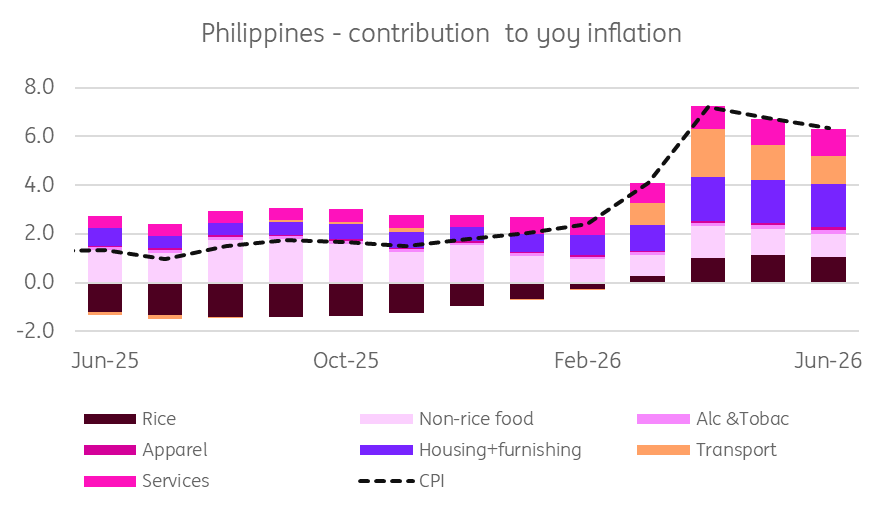
Food inflation remained the largest contributor to headline CPI, reflecting its roughly 38% weight in the consumption basket. While food prices continued to exert upward pressure, the contribution eased modestly from the previous month. Rice inflation softened to 15.0% YoY from 15.6%, contributing 1.1ppt to headline inflation. At the same time, inflation in non-rice food categories also moderated, suggesting that some of the supply-driven pressures seen in recent months are beginning to ease.
Meanwhile, housing, water, electricity, gas and other fuels continued to contribute around 1.6ppt to headline inflation, broadly unchanged from May, highlighting the stickiness of utility-related price pressures.
Services inflation continued to drift higher, contributing slightly more than 1.1ppt to headline inflation. Within the category, restaurant and hotel inflation accelerated to 7.0% YoY from 6.7% previously, pointing to still-resilient consumer demand and ongoing pass-through of higher input and labour costs.
We maintain our call of further rate hikes
We continue to expect the Bangko Sentral ng Pilipinas (BSP) to deliver another 50bp of rate hikes in 2H’2026, despite the latest moderation in headline inflation. While the June CPI print offers some reassurance that inflation has peaked, underlying price pressures remain elevated and are likely to keep the central bank cautious.
First, although global Brent crude prices have retreated sharply and are now close to pre-conflict levels, retail gasoline prices in the Philippines remain around 35% above pre-war levels. We also see some upside risks to global oil prices over the remainder of the year, which could slow any further correction in local fuel costs and keep transport-related inflation pressures lingering.
Second, the acceleration in core inflation underscores the persistence of second-round effects. Despite softer headline inflation, core CPI rose to 4.4% YoY, suggesting that underlying demand and cost pressures remain firm. In particular, services and utility inflation continue to trend higher, indicating that inflationary pressures are becoming more entrenched beyond the energy and food components.
Third, recently announced wage increases could add to inflation persistence. Metro Manila's minimum wage is set to increase by 12-13%, with non-agricultural workers seeing daily wages rise from PHP695 to PHP780 by January. Employees in smaller establishments and agricultural workers will also receive similar sizable increases. While the direct impact on inflation may be manageable, any wider wage adjustments within the country raise the risk of broader second-round effects as firms seek to pass higher labour costs on to consumers.
Finally, food inflation remains vulnerable to supply-side shocks. The growing probability of a strong El Niño episode poses upside risks to food prices in the coming months, potentially keeping headline inflation volatile. Food-related price pressures have already become more broad-based, with food's contribution to headline inflation rising to around 2.0ppt in June 2026 from roughly 0.6ppt earlier in the year.
Taken together, while headline inflation has eased, we do not believe the BSP has enough evidence yet to declare victory over inflation. Persistent core inflation, rising wages and lingering food-price risks should keep policymakers focused on ensuring inflation expectations remain anchored, supporting our expectation of a further rate hikes by the BSP.
Lower fuel inflation drives CPI inflation lower


Comments
Log in or sign up to join the conversation.