

Oracle's (ORCL) head count drops 13% according to latest annual report. Many Risk Warnings
Key Headcount Details
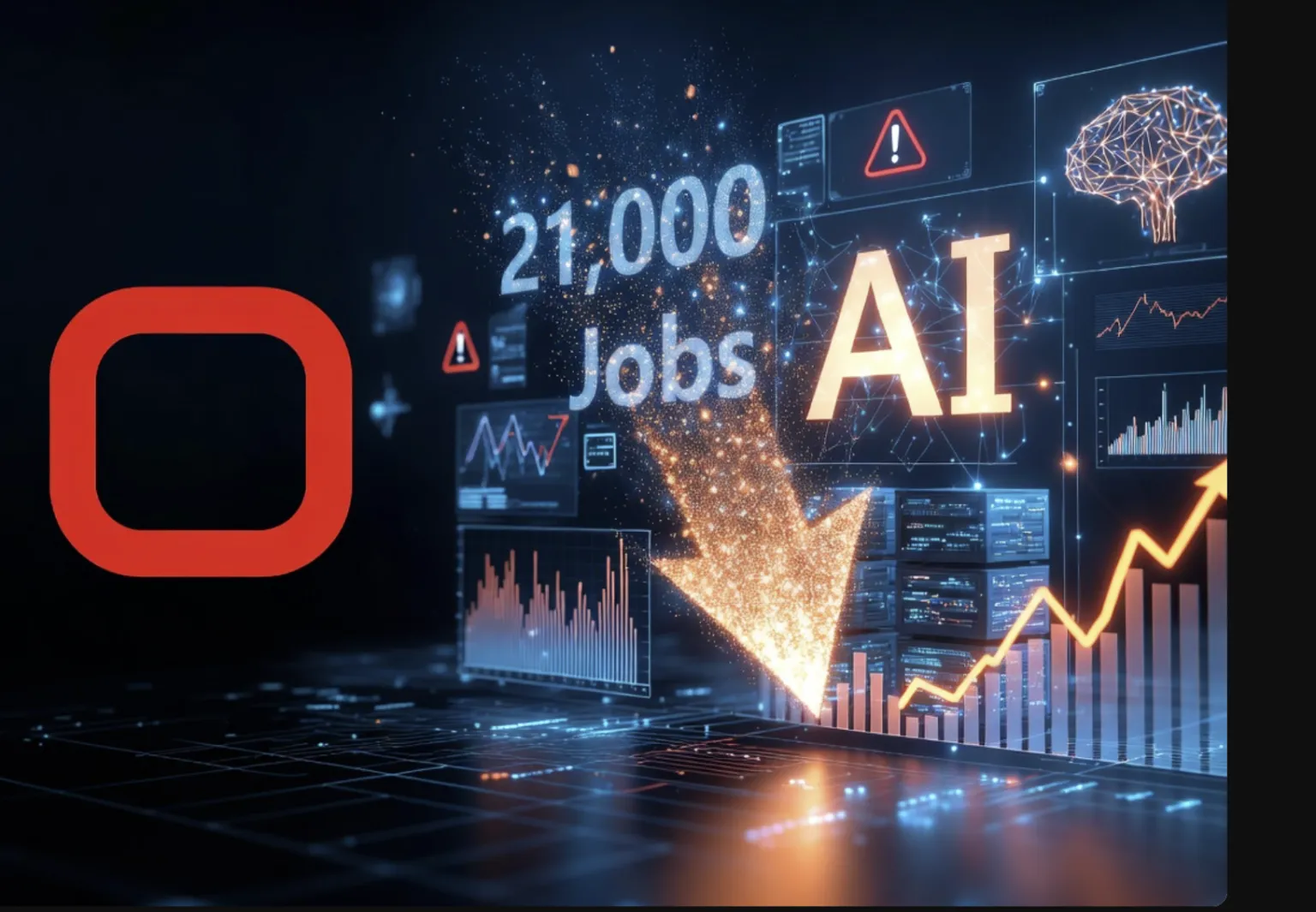
As of May 31, 2026, Oracle employed approximately 141,000 full-time employees (down from ~162,000 as of May 31, 2025, a ~13% or ~21,000 reduction).
U.S. Headcount: ~49,000 (down from ~58,000)
International Headcount: ~92,000 (down from ~104,000)
Severance/restructuring costs ~$1.84 billion
Oracle’s SEC Filings
While Oracle cut ~21,000 jobs (13% of its workforce) as part of its AI-focused streamlining, the company is simultaneously warning investors about the high costs and competitive risks of its aggressive AI bet.
Excerpts from 10-K Risk Factors
Our AI products may not operate as anticipated, which could adversely affect our reputation, revenues and profitability. Machine learning and AI, including generative AI, agentic AI and LLMs, are increasingly driving innovations in technology, and AI technology and services are highly competitive and rapidly evolving.
We are building AI into many of our product offerings and we are also making AI available for our customers to use in solutions that they build. We have made significant investments in AI initiatives, including investments in infrastructure and headcount, and we expect to continue to invest significant resources to build and support our AI products in support of our growth strategy.
In addition, we rely on partners and suppliers to produce some of our AI products.
If we are unable to introduce new AI products, or if our AI products fail to operate as anticipated or as well as competing products or otherwise do not meet customer needs, if our competitors’ AI products achieve higher market acceptance than ours, or if we incur costs higher than expected to build and support our AI products, we may fail to recoup our investments in AI and our business and reputation may be harmed.
Further, if we do not continue to invest significant resources to develop and support our AI products, we may fall behind technological developments and evolving industry standards, which would likewise harm our ability to compete.
Oracle Won’t Be Alone
Oracle is not an outlier. It is part of a broad industry-wide shift.
In 2026, major tech companies are simultaneously slashing headcount and pouring hundreds of billions of dollars into AI infrastructure, data centers, chips, and model development.
The pattern is consistent: cut costs in traditional operations to fund the massive capital expenditures required for AI competitiveness.
Why Other Companies Doing the Same
Massive AI CapEx Needs: Hyperscalers (Meta (META), Microsoft (MSFT), Google/Alphabet (GOOGL), and Amazon (AMZN)) are projecting combined AI-related capital spending of $650–700+ billion in 2026. This funds enormous data center builds, GPU clusters, custom silicon, and power infrastructure. To protect margins and satisfy investors, companies are offsetting these huge investments with workforce reductions and efficiency gains.
Recent Examples Across Big Tech:
Meta: Announced ~8,000–10,000 job cuts (about 10% of workforce) explicitly to free up resources for AI spending (including $115–135 billion in projected 2026 capex).
Amazon: Cut ~16,000 corporate roles in early 2026 (on top of prior reductions), citing streamlining and AI-driven efficiency.
Microsoft: Offered voluntary buyouts to thousands of employees while ramping up heavy AI investments.
Others: Atlassian (TEAM), Salesforce (CRM), Snap (SNAP), Cloudflare (NET), GitLab (GTLB), and Coinbase (COIN) have also announced significant percentage-based cuts tied to AI restructuring.
Broader Trend: Over 150,000 tech jobs have been cut in 2026 so far, with AI/automation cited as a factor in a large portion of them. Companies are flattening management layers, automating repetitive work, and redirecting headcount toward AI-related roles where possible — but overall headcount is declining as AI tools allow smaller teams to do more.
Investor Pressure + Competitive Race: Wall Street rewards companies that show discipline in non-AI spending while demonstrating aggressive AI bets. Those that fall behind on AI infrastructure risk losing market position in cloud, search, advertising, enterprise software, and more.
Three Key Conclusions
Oracle’s 13% workforce reduction, $1.84 billion in restructuring costs, and simultaneous AI risk warnings reflect a playbook that most major tech firms are following.
The winners in the coming years will likely be the ones that most effectively balance aggressive AI investment with leaner, more productive organizations.
This wave of “AI streamlining” is still in its early stages.

Comments
Log in or sign up to join the conversation.