


ETFs are booming. This is a statement which is without a doubt true, since the estimated net inflows into ETFs globally (+$2,251.7 bn) over the first nine months of 2026 have already surpassed the estimated net inflows of the record year 2025 (+$2,094.5 bn). In addition, the assets under management in the global ETF industry have reached several new (month-end) all-time highs over the course of the year so far.
The growth of the assets under management is impacted by the estimated net inflows and the performance of the underlying markets. Especially the latter is a component which has nothing to do with the “real” growth of the ETF industry, as the contribution of the underlying markets depends on the mood in the markets and not on the decision of investors to buy an exchange traded fund or not.
Graph 1: Twenty Best-Selling ETF Promoters Globally, January 1 – September 30, 2026 (USD Billions)
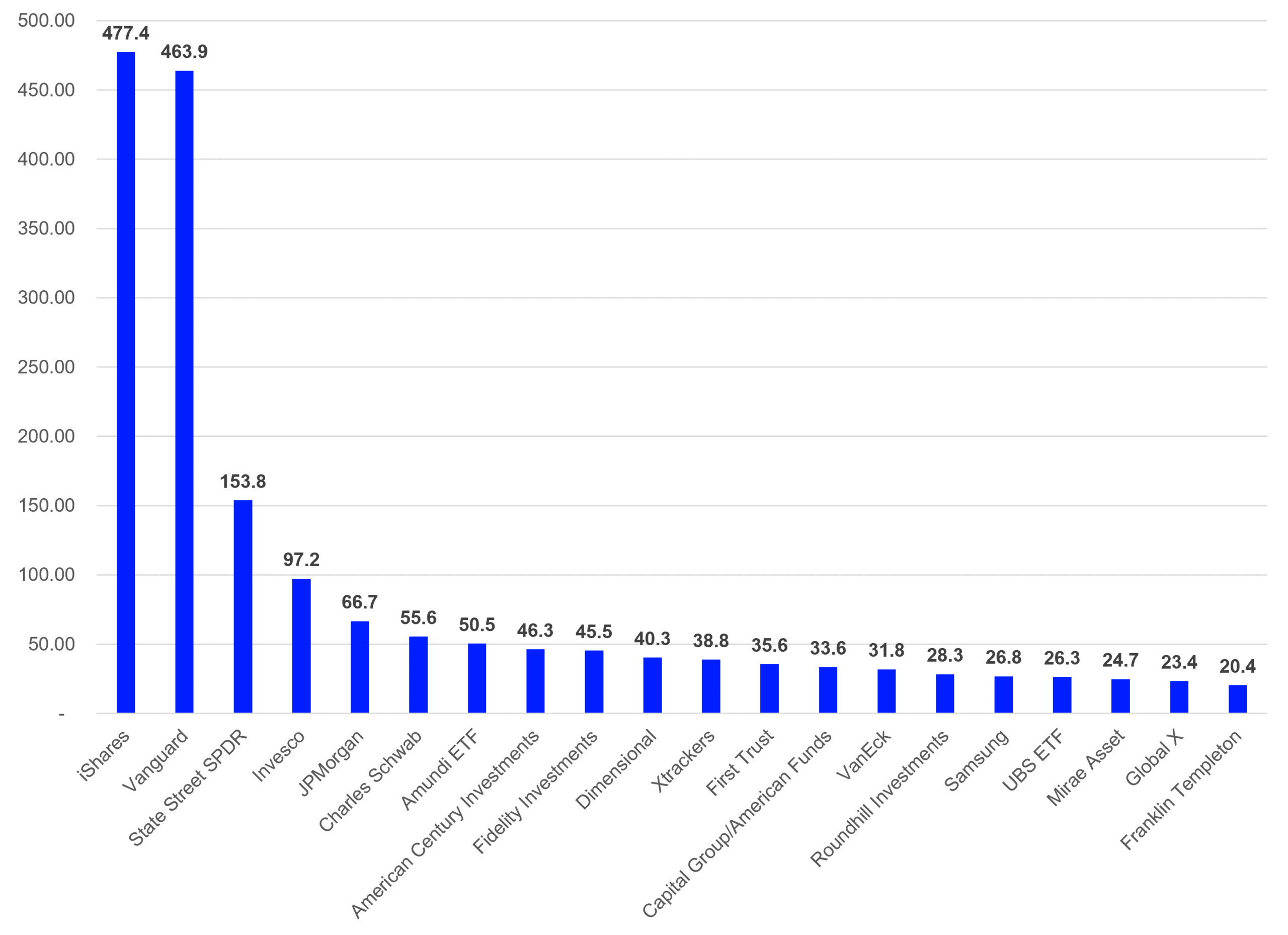
When it comes to this, it is not surprising that an increasing number of asset managers are joining the party by launching their own strategies in the ETF wrapper. Now, the question is, are all these asset managers successful in doing so?
Even as one would expect to see a high success rate at the promoter level in such a market environment, the numbers look somewhat different. According to the Lipper database, 186 of the 881 ETF promoters who were active in the global ETF industry over the course of the first nine months of 2026 faced cumulative outflows (-$47.2 bn). Even as these overall outflows are quite low compared to the overall inflows for the year so far, these numbers mean that more than one-fifth (21.11%) of ETF promoters globally could not profit from the strong overall growth of the ETF segment.
Generally speaking, it is to be expected that not all ETF promoters are successful, but these numbers show that a high percentage of market participants are not taking profits from the high growth in this market segment. This may mean that competition in the global ETF industry is very high and each ETF promoter has to deliver value added to the investors to participate in the growth of the market segment. In other words, it is not enough to simply list an exchange traded fund on an exchange, as money doesn’t flow automatically into all ETFs. More generally speaking, one could say that the global ETF industry may have low barriers to entry but high barriers to success.



Comments
Log in or sign up to join the conversation.