


For much of the past year, global markets had displayed an unusual resilience toward geopolitical risk. Investors appeared willing to overlook wars, trade disruptions, inflation concerns, and political uncertainty as long as liquidity remained strong and the artificial intelligence-driven rally in global equities continued.
That mood is now beginning to shift.
The latest escalation surrounding Iran, combined with renewed stress in global energy markets, is once again forcing investors to confront an uncomfortable reality: geopolitics eventually flows into economics. And when it does, countries heavily dependent on imports, particularly energy imports, often feel the pressure first.
India is increasingly finding itself at the center of that vulnerability.
Brent crude prices remain elevated amid supply disruptions and concerns around the Strait of Hormuz, one of the world’s most strategically important oil transit routes. OPEC has already lowered its 2026 oil demand growth forecast, warning that persistently high prices are beginning to affect global consumption patterns.
For India, this creates a complicated macroeconomic chain reaction.
The country imports more than 90% of its crude oil requirements, meaning every sharp rise in oil prices directly affects:
inflation,
the trade deficit,
corporate margins,
transport costs,
fiscal management,
and ultimately consumer sentiment.
The pressure is already visible in currency markets.
The Indian rupee recently touched fresh record lows near 95.74 against the U.S. dollar as rising crude prices, foreign portfolio outflows, and importer hedging demand weighed heavily on sentiment.
Currency weakness matters far beyond forex traders.
A weaker rupee raises the cost of imports, intensifies inflationary pressures, and creates additional anxiety for policymakers attempting to maintain economic stability during periods of global volatility. Reports suggest the Reserve Bank of India is even evaluating crisis-era stabilization tools previously associated with the 2013 currency stress period.
This is precisely why markets are becoming more sensitive to macro signals again.
For months, equity investors were primarily focused on:
AI-led optimism,
earnings resilience,
and liquidity-driven momentum.
Now, attention is shifting back toward:
oil,
inflation,
bond yields,
currencies,
and geopolitical uncertainty.
That psychological transition is important.
Markets are not driven only by numbers. They are driven by expectations. And when investors begin fearing that inflation may remain elevated for longer, risk appetite changes quickly.
In the United States, producer price inflation recently hit its highest level in four years, largely due to rising energy costs linked to Middle East tensions.
This creates a difficult situation for central banks globally.
If oil-driven inflation remains persistent:
interest rate cuts may get delayed,
borrowing costs could remain elevated,
and emerging markets may face renewed foreign capital pressure.
India is particularly exposed because elevated crude prices simultaneously weaken the rupee and increase imported inflation risk.
That combination has already begun affecting Indian equities.
Dalal Street has experienced sharp volatility in recent sessions, with the Sensex correcting heavily amid concerns around oil prices, foreign investor selling and weakening currency conditions.
Some sectors appear especially vulnerable.
Airlines, paints, logistics and other fuel-sensitive industries could face margin pressure if crude prices remain elevated for an extended period. Consumer-facing businesses may also encounter slower discretionary demand if inflationary stress intensifies.
Jewellery and retail segments are already reacting.
India recently increased import duties on gold and silver from 6% to 15% in an effort to reduce pressure on foreign exchange reserves.
While the move may support India’s external stability in the short term, it also reflects growing concern about rising bullion imports during a period of currency stress.
Interestingly, the policy highlights a deeper psychological reality within Indian households.
During periods of uncertainty, Indian consumers traditionally move toward perceived stores of value such as gold. That safe-haven behavior becomes even stronger when:
inflation fears rise,
currencies weaken,
or geopolitical instability increases.
This explains why gold demand often remains resilient even when prices surge sharply.
Globally, similar defensive behavior is emerging across markets.
Investors are increasingly watching safe-haven assets, oil inventories, bond yields and central bank communication more closely than they were just months ago. Even in developed economies such as the United Kingdom, political instability and inflation concerns have started unsettling bond markets and investor confidence.
Yet this environment is not entirely negative for every sector.
Higher oil prices could benefit upstream energy companies and oil producers globally, including firms such as XOM and CVX. Gold-linked assets and ETFs like GLD may also continue attracting defensive investor flows if macro uncertainty persists.
Meanwhile, volatility itself may become a defining market theme in the coming months.
The broader concern for investors is not simply whether oil prices rise temporarily. It is whether the world is entering a phase where:
geopolitical disruptions become structurally frequent,
inflation remains more unpredictable,
and central banks lose flexibility.
That possibility changes how investors price risk.
For India, the challenge is especially delicate because the country’s long-term growth story remains attractive, yet its near-term macro exposure to oil and imported inflation remains significant.
This is why the current market phase feels psychologically different from earlier corrections.
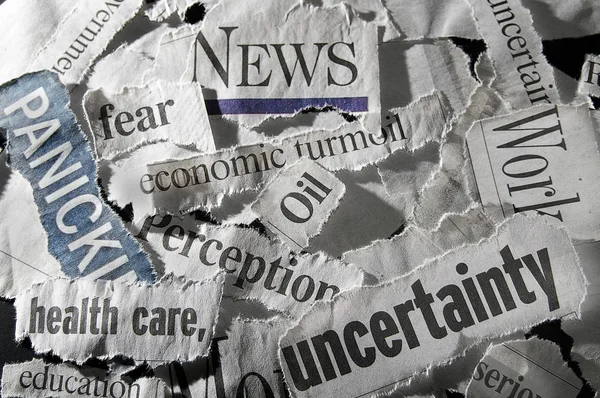
Investors are no longer reacting only to earnings or valuations. They are reacting to uncertainty itself.
And in global markets, uncertainty is often the most powerful force of all.


Comments
Log in or sign up to join the conversation.