


Rate Fears Ease
Wall Street surged to fresh record highs as traders received something that may prove almost as valuable as a peace deal itself: more time. The sixty-day ceasefire extension between Washington and Tehran does not resolve the conflict, reopen the Strait of Hormuz overnight, or eliminate the region’s geopolitical risks. What it does do is reinforce the growing perception that both sides remain highly motivated to reach a broader agreement. Markets were not necessarily expecting a breakthrough, but they were increasingly hoping for evidence that diplomacy remained alive. The extension delivered exactly that. Stocks climbed to all-time highs, Treasury yields fell across the curve, the dollar weakened against every major developed market currency, and oil surrendered much of its war premium as investors embraced the idea that the path toward normalization remains open.
Beneath the headlines, powerful economic forces appear to be pulling both sides back toward the negotiating table. In Washington, energy analysts are almost certainly reminding President Donald Trump that storage tanks do not refill themselves. The White House energy quants are likely whispering tank bottoms into the President’s ear. Every week that Iranian barrels remain shut in increases the risk that today’s inventory cushion eventually becomes tomorrow’s inflation problem. Meanwhile, Tehran faces its own mounting pressures. The economic carnage left behind by months of disrupted exports, financial isolation, restricted shipping activity and the lingering effects of the American blockade has imposed a severe burden on the Iranian economy. Neither side may be eager to concede publicly, but markets increasingly sense that both sides need a deal. Financial markets care less about diplomatic language than about incentives, and those incentives increasingly point toward negotiation rather than escalation.
The timing of the ceasefire extension combined with a softer-than-expected PCE report provided what I call a “double bubble bounce” for stocks. For days, investors had worried that the latest PCE data and revised growth figures might reinforce the narrative of an economy still running too hot for comfort, particularly after months of oil-driven inflation fears linked to the conflict. Instead, while the numbers hardly offered the Federal Reserve an all-clear signal, they also failed to deliver the upside surprise many feared. In effect, the market had spent days preparing for a heavyweight punch and received something closer to a glancing blow. Investors had been forced to navigate two separate risks simultaneously: a renewed energy shock from the Middle East and the possibility that stronger domestic data could reignite fears of additional Federal Reserve tightening. When neither threat intensified materially, traders rapidly unwound defensive positions. In many respects, the market was not celebrating good news. It was celebrating the absence of bad news.
That realization explains why the market reaction extended far beyond crude oil. For months, Hormuz has effectively functioned as the world’s most expensive tax on crude, sitting astride a critical artery of global commerce and injecting risk premiums into everything from fuel prices to inflation expectations and bond yields. The ceasefire extension does not immediately remove that toll booth, but it increases confidence that the barriers may eventually come down. Markets rarely wait for certainty. They discount future outcomes long before they arrive. In this case, investors immediately began pricing a world where tankers move more freely, physical oil tightness eases, and one of the largest inflation risks facing the global economy begins to fade.
The path to that conclusion was anything but smooth. Overnight, futures tumbled, and oil surged after renewed military strikes, sanctions and retaliatory attacks reminded investors how fragile the situation remains. A few hours later, reports emerged suggesting a framework for extending the ceasefire had been reached. Oil immediately plunged before denials and conflicting headlines briefly reversed the move. Inventory draws, Strategic Petroleum Reserve depletion, fresh reports of activity in the Strait and another round of diplomatic ambiguity created yet another violent swing through the crude complex. By the closing bell, front-month WTI had effectively travelled in a circle. Dated Brent, however, told a far more important story. The benchmark for immediate physical barrels fell sharply below $100, reaching its lowest level since March, signalling that the physical market is beginning to anticipate easing supply constraints even if diplomats have not yet crossed the finish line.
That distinction matters enormously for Asia. While futures traders obsess over every headline crossing the screen, physical oil markets focus on the actual movement of molecules. Lower Dated Brent suggests traders are beginning to see a pathway toward improved energy availability. For energy-importing economies across Asia, that translates into lower inflationary pressures, improved growth expectations, and a more supportive macro backdrop. The ceasefire itself is important. The possibility of restoring energy flows is what truly moves markets. Investors are no longer trading whether a ceasefire exists. They are trading the possibility that the ceasefire evolves into something larger. In effect, markets are already beginning to price the peace dividend before the first tanker has fully cleared the Strait.
Equities embraced that possibility with enthusiasm. The S&P 500 extended its winning streak, the Nasdaq led the charge, and small caps joined the advance as investors rotated aggressively back into risk. Yet the internals suggest this was not a traditional broad-based risk rally. Instead, it increasingly resembled a dash for trash. The most heavily shorted stocks exploded higher again, extending an extraordinary series of squeezes. Non-profitable technology companies dramatically outperformed the market while expensive software names experienced another wave of speculative buying. The leadership profile was revealing. Investors were not merely buying quality. They were buying whatever had the highest sensitivity to improving financial conditions and falling volatility.
That brings us to one of the most important forces driving markets today: positive gamma. While the term sounds technical, its market impact is straightforward. Dealers who have sold large volumes of options are often forced to buy weakness and sell strength as prices move. The result is a self-stabilizing feedback loop that suppresses volatility and encourages risk-taking. Positive gamma functions like a shock absorber beneath the market. Pullbacks become shallower, rallies become smoother, and investors grow increasingly comfortable adding exposure. With oil falling back toward the $90 area, equity volatility compressed further, reinforcing the bullish feedback loop already supporting stocks.
Yet beneath that calm surface, another story is developing. Index volatility continues to collapse while single-stock volatility remains elevated. In practical terms, the overall market appears increasingly stable, while individual names continue to behave wildly. That divergence suggests the rally remains heavily concentrated rather than broadly healthy. The megacap technology complex still provides the foundation, but the most aggressive price action has migrated toward memory stocks, speculative AI beneficiaries and other momentum-driven corners of the market. Goldman traders described the session as squeezy price action, and that characterization feels accurate. The most shorted basket has exploded higher, while expensive software and unprofitable technology stocks continue to attract outsized flows. The broad indices may appear calm, but underneath the surface the currents remain fast-moving and increasingly selective.
The reaction in rates markets reinforced the broader peace dividend narrative. Treasury yields finished lower across the curve despite another round of inflation warnings from Federal Reserve officials. The bond market’s verdict was revealing. Investors appear increasingly convinced that the latest PCE data did not materially alter the policy outlook and that easing energy risks matter more than another incremental inflation data point. The market increasingly views oil as the critical variable. If Hormuz gradually reopens and crude prices continue to retreat, traders believe the inflation pulse that has dominated recent months could begin to lose momentum.
More importantly, traders began marking down the probability that the Federal Reserve would need to tighten policy again. Going into the session, the combination of elevated oil prices, resilient growth and sticky inflation had kept fears of another rate hike alive. By the closing bell, those fears had eased considerably. The ceasefire extension removed some of the upside risk to energy prices, while the latest PCE data failed to provide fresh ammunition for the hawks. As a result, rate-hike odds moved lower, modest rate-cut expectations edged back into market pricing, and Treasury yields fell across the curve. Markets do not need imminent rate cuts to rally. They simply need confidence that the next move is unlikely to be another hike. The difference between a Federal Reserve that might tighten again and one that can comfortably remain on hold is often enough to alter valuations across equities, bonds, currencies and commodities.
In effect, investors were handed something close to a Goldilocks outcome. Inflation was not weak enough to signal economic trouble, but it was also not strong enough to prompt a more aggressive Federal Reserve response. Thirty-year Treasury yields slipped back below the psychologically important 5% threshold, reinforcing the idea that investors are becoming less concerned about a renewed inflation spiral and more comfortable with a prolonged pause. Whether that confidence proves justified will depend heavily on oil. If crude continues to retreat and Hormuz gradually reopens, markets will likely continue to nudge rate-cut expectations further forward. If energy prices reaccelerate, today’s optimism could quickly be challenged.
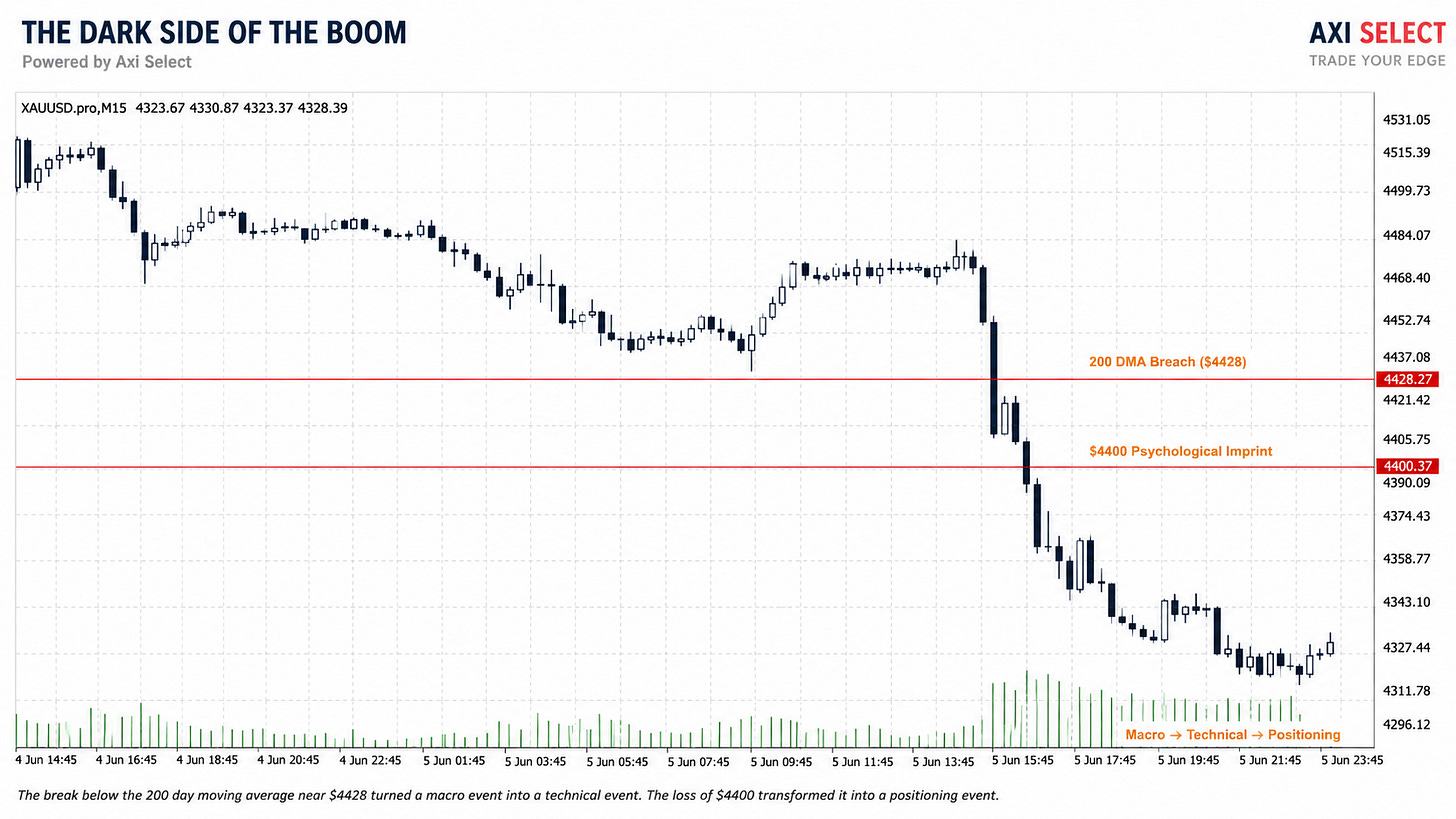
That same logic drove the dollar sharply lower. As yields retreated and rate-hike expectations faded, the greenback lost altitude against every major developed-market currency. Precious metals immediately seized the opportunity. Silver led the advance while gold climbed back above $4500. Gold continues to behave exactly as one would expect during a period of geopolitical uncertainty and monetary ambiguity. It remains the preferred store of value when investors want protection without making a direct bet on economic growth. Bitcoin (BTC.X), by contrast, struggled. ETF outflows continued, prices retreated toward the $ 72,000 area, and the Bitcoin-to-gold ratio began reversing lower. Investors appear increasingly willing to exchange speculative digital exposure for traditional safe havens, perhaps viewing stocks as the preferred vehicle for risk appetite while reserving gold for protection.
Looking beyond today’s celebration, another challenge is quietly approaching on the horizon. Corporate America continues to generate extraordinary returns on equity near historical extremes, but that tailwind may be nearing its peak. Massive capital spending tied to artificial intelligence, a coming wave of blockbuster IPOs led by SpaceX and major AI laboratories, and persistently elevated inflation all threaten to increase the supply of equity while simultaneously raising capital requirements. High inflation quietly taxes profitability by forcing companies to devote a larger share of earnings to maintaining productive capacity. The market remains captivated by ceasefires, diplomacy, and oil flows today, but over time, the mathematics of capital intensity may become a far more important driver of valuation than the latest headline from the Middle East.
For now, however, the peace dividend remains firmly in control of the tape. The market has already moved beyond debating whether a ceasefire exists and has begun pricing what happens next. Investors are increasingly discounting a future in which the Hormuz gradually reopens, energy flows normalize, inflation eases, fears of rate hikes continue to fade, and financial conditions improve. Whether that future ultimately arrives remains uncertain. The ceasefire may be real, but the economic benefits still need to be delivered. Markets have a habit of pricing the destination long before the convoy leaves the station. This time appears no different.

Comments
Log in or sign up to join the conversation.