

Decidedly calmer action - finished a tense week, in a constructive way as it seems for the moment. The Jobs number was only important as the negative data would tend to temper the zeal of the Fed with 'tapering'; hence it's bullish more than really negative. The Fed is going to taper; it's a matter of degrees.
Of course the media got excited, didn't emphasize the Unemployment Rate actually declined; and that part-time workers aren't included in that number or those who are disengaged from the workforce because they fear their jobs in businesses that have more infection exposure. Many older Americans make a bit of income working in retail; and many would rather get-by on less than risk their lives by working in a busy environment with or without masks. It's a fact.

So in this case while the sluggish number coincides with our 'stagflation' case, it is not helpful to the politicians who require strong persistent growth to justify their expansive policies; while it is helpful simply in restraining Fed tapering.
As to the technical plateau of the rebound; that's still in play as we anticipate a choppy start to the new week; but as Golden Week's behind (as of yesterday); we might well see movement related to Chinese involvement in Treasuries or even in Bitcoin. But none of these were the key constructive influences. That award goes to the so-called 'poor' Jobs number; acting as a Fed restraint.

But neither jobs nor China were Friday's key constructive influences. That distinction to me resides with the 'global tax Agreement'. I discussed that in 'Video 2', and equalizing tax treatment won't be a panacea, but might be what contains/limits excessive outsourcing / manufacturing relocations to a degree.
It recognizes global economies are intertwined like it or not. We reflect on my long-time analyses that a little bit of Xanax relieves anxiety; where too much might prevent waking up. Globalism: a little is essential (most multinationals have a majority of 'growth in gross' from overseas for years now); globalism in excess is not. Most big global companies source the supply chains overseas.
So there will be reconfiguration of these patterns; there will be (most urgently) new semiconductor activity 'in' the United States; and that helps resilience for the Nation, and also the very companies that will have less incentive to move abroad. So they too are ingrained in other economies; and that remains; but it will enhance domestic growth and the need for 'qualified' trained talent too.
Supply chains are why I mentioned Mexico as benefiting regardless of global comparable taxation. Their proximity to the U.S. and currency exchange rate will continue to make them attractive for manufacturing. Less so for China; as it is far away for shipping; but now many American companies are selling into China; typically with products they make over there. Tesla & Apple are very obvious examples; but also Starbucks has done a lot; and Boeing sells there too; although re-certifying the 'Max' and still fixing 787's is frustrating to them.
The S&P correction is hard to breakout in-terms of whether it's nascent or just a consolidation after the expected shakeout. For the broader, especially small cap segments, it's not nascent but advanced stages of decline. That's really a part of why we talked of corrections but not catastrophe. And next year, as for sure I see the slow growth argument (I was probably early calling 'stagflation' as the most likely economic condition), I can also see how the S&P may ramp higher; or especially certain NASDAQ stocks, 'if' we get better Covid solutions both with respect to testing and treatment. Sadly what's available now proves to be mediocre; and perhaps vaccines even less efficacious than advertised.

So 'biotech' is wide open for Covid-progress; and companies for sure must be hurriedly (we presume with awareness of urgency) developing what the world needs. Again you have preference by regulators or politicians impeding some companies and promoting others (sometimes with financial interests in them as the world learns; not to suggest anyone would be thusly-influenced of course..); but you assume (there are problems with 'assume') they really want to resolve this pandemic scourge upon humanity; not prolong it.
The market is not 'in the clear' regarding risk; although so far behaving about as best one can expect. And this goes along with respecting seasonality for sure (having warned about September and October); respecting the Fed, but also in our view respecting that so many small stocks corrected way earlier.
That made it feasible (and we may see more) for corrections not catastrophe; and of course I was describing S&P risk irrespective of politicians of Yellen's use of the word 'catastrophe' (in-lieu of a Debt ceiling deal). If there's another concern to add it might actually the the SEC. But that may be a plus. Gary Gensler has laid-out an ambitious agenda of nearly 50 reform proposals, that would range from hedge-fund guidelines (or rules) and crypto regulations as so many people have not just believed in crypto; but been scammed with all sorts of so-called 'coinage', when not even a real blockchain entry exists.

Hah! I was amused to see Bitcoin accepted at my Chevron station last night; but it was late and I didn't study the details; and don't want to spend too much time on nighttime errands. (To me the touchless payment by Apple Pay was secure and suffices for digital commerce I suspect for most; and eliminates all risk of credit-card scanner scams at gas pumps by the way.)
And speaking of Oil, it's finding modest (so far) resistance just shy of the 80 level; and as you know I think it's high enough. Importantly (if I'm right), there is no justification for JP Morgan saying that 'the economy can easily absorb a 130 / bbl Oil price'. Moving into the 80's; probably. Over 100; heck no. On top of this, it's similar to my Dollar view; firm is fine; too high is disruptive to most international trade and pricing arrangements.

You guys realize that most market trends do not go extreme. I don't know why, whether in stock markets, commodities or politics, people tend to be polarized easily. It's acceptable to be bullish (as we have since 30's on Oil or 91 on the DX) but not fanatical about upside, and to realize that stocks corrected for a few months this year; hence there was 'less' to contribute to broad downside, with only the mega-cap (FANG-type etc.) stocks selling at truly lofty levels.
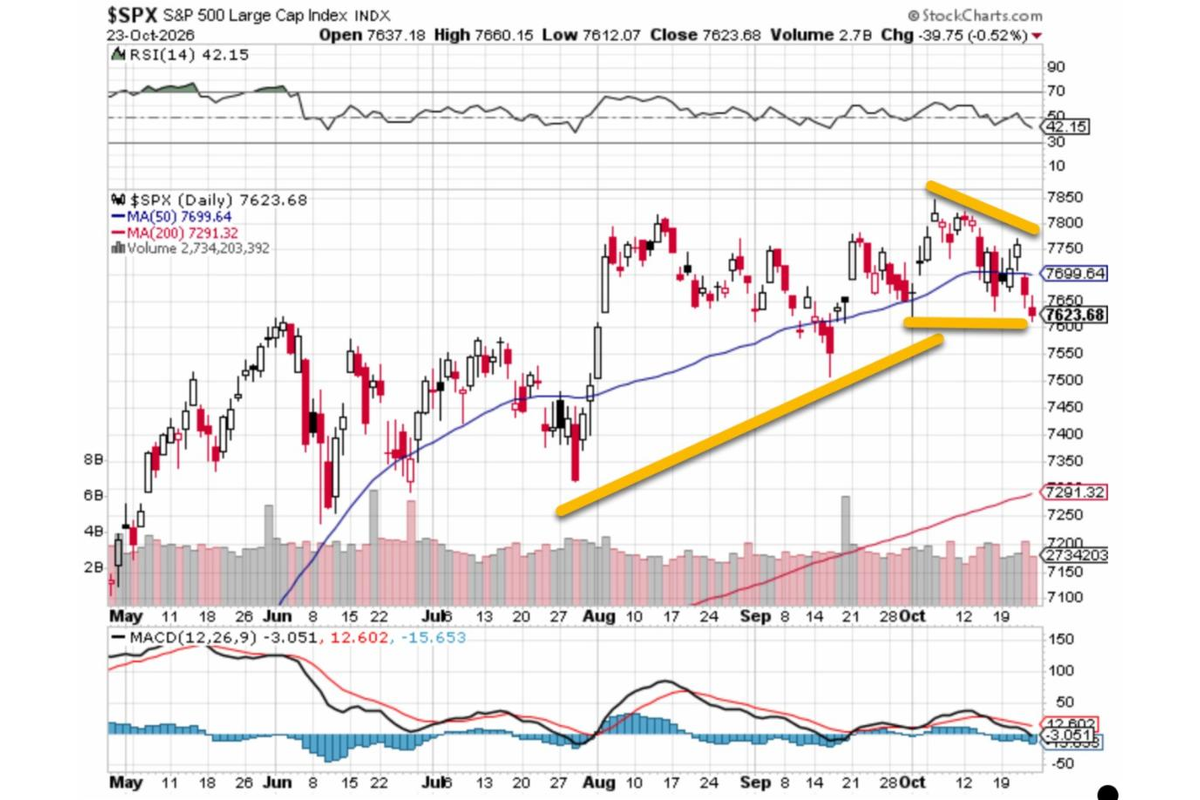
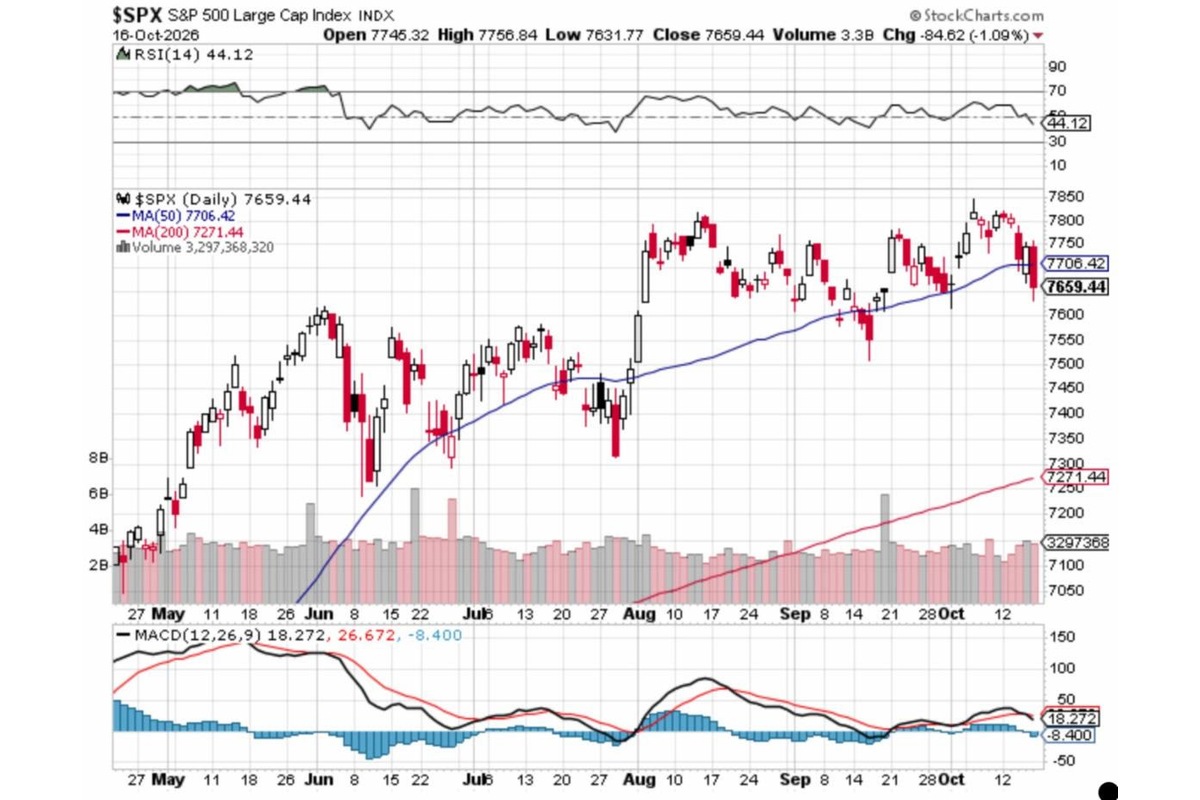
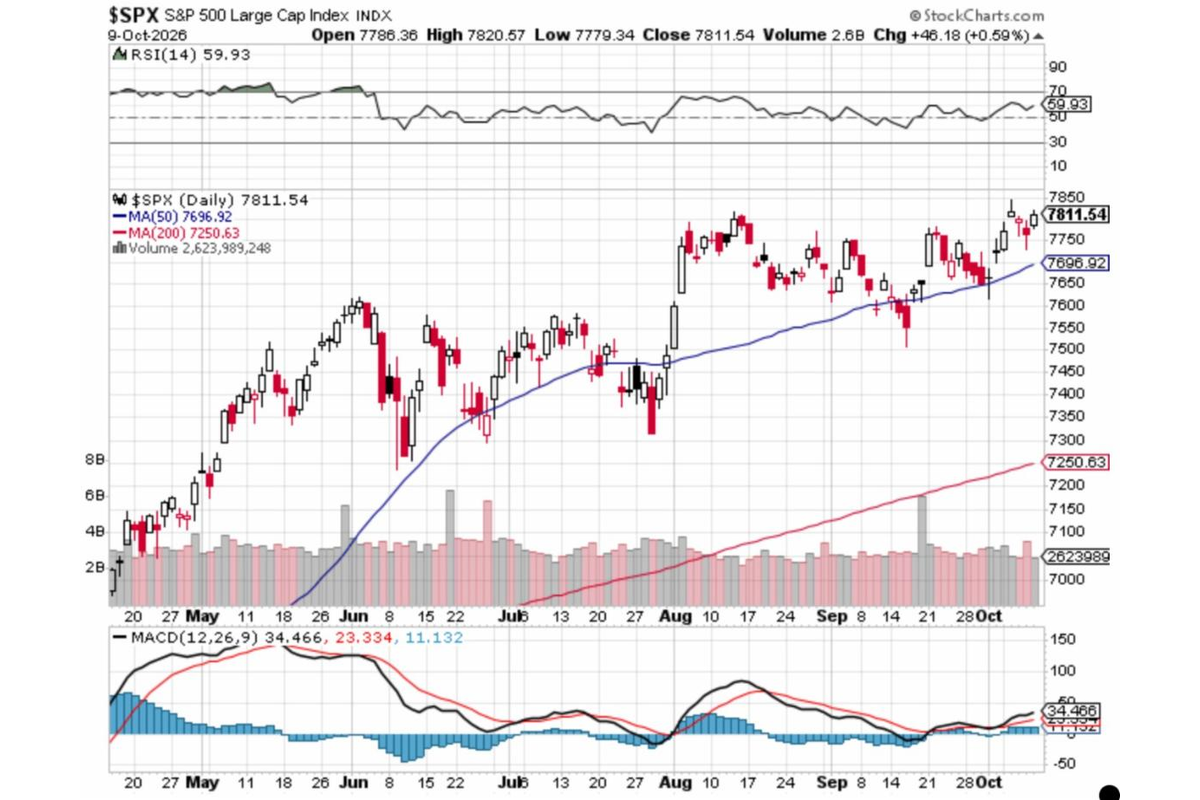
It's still 'Rocktober'. Chop remains probable and the S&P actually rebounded to the 4400 area these last 2 days; and I really didn't expect more. Now a lot will be news-dependent as here we are again, churning around the 50-DMA.
Comments
Log in or sign up to join the conversation.