

The inventory driven contraction is unlikely to reverse in 1Q20. If anything, a technical recession seems to be on the cards as the impact of Covid-19 spreads.

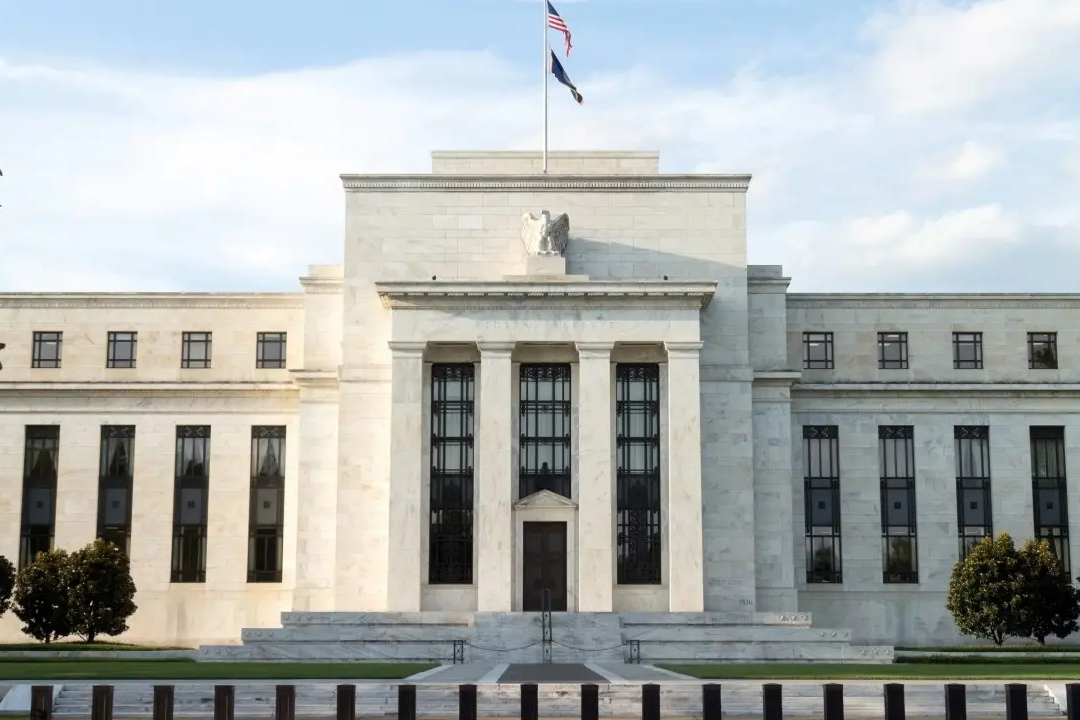
Source: Flickr
GDP contraction: Inventory decumulation the main driver
The complete set of GDP estimates for 4Q19 confirmed the Italian economy contracted by 0.3% quarter on quarter (+0.1% YoY), on the back of poor domestic demand. Data also confirms 2019 left 2020 a negative 0.2% GDP growth carryover.
Inventory decumulation was the main driver of the contraction (-0.7% quarterly contribution), followed by private consumption (-0.1% contribution), while gross fixed capital formation provided only a marginal drag. Weak domestic demand was reflected in contracting imports which drove the 0.6% positive quarterly contribution coming from net exports.
Confidence data hinted at a possible marginal rebound
Taking 4Q GDP data at face value would have awakened hopes that normalization of the stock decumulation coupled with a tentative mean-reverting adjustment to private consumption numbers might bring about a minor GDP rebound in 1Q20.
To be sure, business confidence data for January and February (collected over the first half of the month) was mildly supportive, with manufacturing, backed by a tentative pickup in orders, hinting at a bottoming out. Services were also in expansionary territory and retailers also more confident.
Until Covid-19 hit rich Northern regions
Then came Covid-19. At first as an external risk event perceived to affect inbound tourism from China and supply chains, but suddenly a very domestic event after the local outbreak of the infection became apparent.
The economic picture has clearly changed since then, with concerns about the possible economic consequences inflated by the regional distribution of the infection, concentrated in rich Northern regions of Lombardy (accounting for 22% of national GDP), Emilia Romagna (accounting for 9% of GDP) and Veneto (9% of national GDP).
Travel and consumption take the hit
Inevitable restrictions on personal mobility, social and business activities, imposed to contain the spreading of the epidemic are already impacting behaviors with apparent consequences on parts of the economy.
The first obvious victim is tourism, which is suffering as international and domestic clients suddenly cancel bookings. Travel and transport are also feeling the pain of business restrictions, as people resort to smart working modes, as is being recommended by employers. The same applies to leisure expenditure, which is feeling the brunt from all the uncertainty. In turn, such a sharp decline in demand for the tourism industry, worth more than 6% of the total Italian yearly value-added, will almost inevitably have a negative bearing on temporary jobs in the industry, adding negativity to short-term perspectives for private consumption.
The impact on manufacturing is difficult to assess
The other area which is likely to be affected soon is manufacturing. Any attempt to quantify the impact clashes with the complexity of value chains in the extremely globalized manufacturing world.
A couple of weeks ago all eyes were on the channel linking Italian manufacturers with Chinese suppliers of sub-components, but the scale of the problems has considerably changed now spanning intra-EU or even intra-regional flows, as local supply disruptions could soon emerge. Given the complexity of the issue and the lack of visibility on the prospective solution of the epidemic, we can reasonably assume that the slowdown in de-stocking might not materialize in 1Q20.
Public emergency funds to be on the table soon
When trying to make a first assessment of the possible evolution of Italian GDP, we cannot ignore the fact that the government will put some emergency money at work to counter the impact of the epidemic. Better-than-expected fiscal data for 2019, summed up in falling headline deficit to 1.6% of GDP (from 2.2% in 2018) and in a stabilization of the general government debt at 134.8% of GDP, surely creates some additional fiscal space for counter-cyclical policies, to which some extra-budgetary flexibility allowance from the EU Commission could be easily added.
This is a decent amount of ammunition, but it is hard to put fully at work before the end of the current quarter. We believe that at least in the very short time, emergency measures meant to weather the shock on battered tourism sector operators and to foster existing redundancy schemes might be prioritized, saving part of the available resources for when a speed-up of public investment plans can be credibly announced and quickly activated.
A technical recession looks extremely likely
We think economic weakness will continue in 1Q20, and Italy is likely to fall into a technical recession and think this will first show up in consumption and in export data, partially compensated by poor imports and by some emergency money.
We tentatively pencil in a 0.3% GDP contraction in 1Q20 GDP and, assuming another contraction in 2Q20, a progressive rebound thereafter. We think a 0.3% average GDP contraction for the whole of 2020 as a possible outcome.
Given the nature of the shock, we believe the risk of a deeper recession is higher than that of a quick solution.


Comments
Log in or sign up to join the conversation.