

Read more >>> Israel’s Economy In The Fog Of War: Part 2
Read more >>> Israel’s Economy In The Fog Of War: Part 3
Photo by Taylor Brandon on Unsplash
Although the combined U.S. and Israeli war effort against Iran is only a few days old, investors are already making their bets as to the economic outlook for both the short- and long-term periods.
Having come through a 2 -year war with its enemies in Lebanon, Gaza and Iran, Israelis might well feel exhausted and find it difficult to return to some semblance of normalcy. Now, the country is again waging a war, this time alongside the U.S. in Iran. Today, Israel has had to launch an invasion into Lebanon in response to the missile attacks from Hezeballah on its northern communities.
Financial markets have a mind of their own, often at odds with what the general public thinks investors should be worried about, especially during a time war. This is never more true than when we take a snap shot of some key economic indicators governing the financial markets.
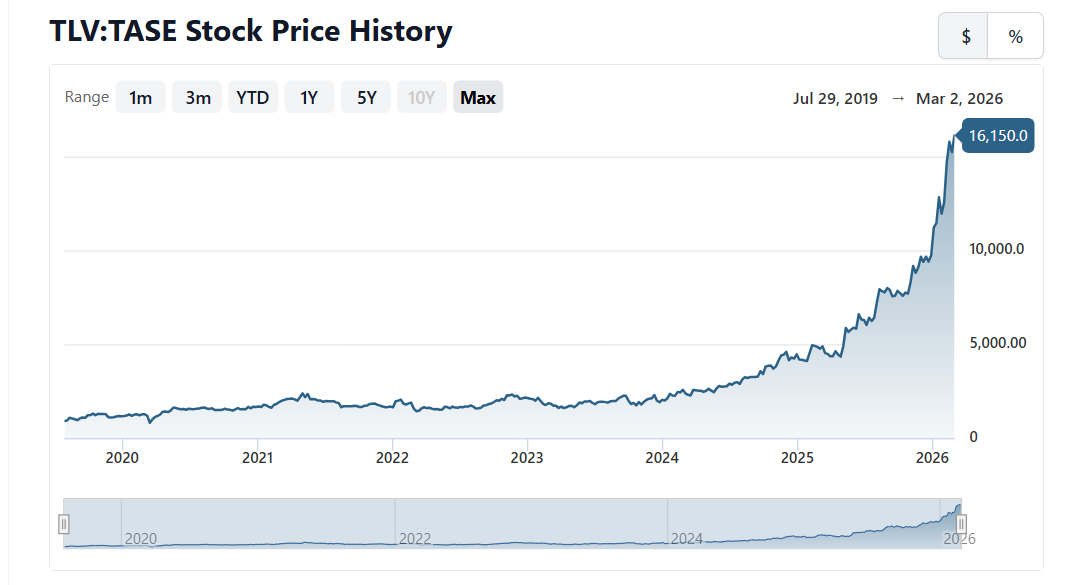
The Tel Aviv 35 stock index hit an all-time high on March 2, less than 5 days after the start of the Iranian war. Israeli economy soared after the 12-day war against Iran in June of last year, and the feeling of confidence continues now into the current war as investors remain optimistic that the war will not be prolonged and the economy will be better yet upon its conclusion.
Consistent with investor optimism is the support for the Israeli currency, the Shekel, which has reached an all time low of 3.1 down from 3.87 just 12 months ago. All during the 2024/25 period in which Israel conducted the war in Gaza the currency continued to strengthen. There was no let up in foreign direct investment headed for the hi tech sector and the continuation of Israel’s surplus on its current account drove the currency to its historic low.
The most recent Bank of Israel rate decision on Feb 23th noted that the inflation was below the 2% target, the Shekel continued to appreciate, and 4th quarter growth last year was at an annual rate of 4%, all indicators of a strong economic performance. The Bank decided to leave its rate at 4%, even in the face of the strong likelihood of imminent attack by the U.S. attack. . The outcome of wars are always unpredictable, but investors need to continuously adopt a view to support their decisions on how best to invest funds. So far, the Israeli economy continues to exhibit considerable strength giving investors ample reason to maintain their current positions.


Comments
Log in or sign up to join the conversation.