


While the world’s central bankers contend with the prospect of raising their interest rates, the Bank of Israel (BoI) lowers its policy rate for the fourth time this year. Last week the BoI cut the benchmark rate to 3.25%, in response to an inflation rate of 1.5% in July. At the same time, the economy is undergoing a steady recovery from the military conflicts starting in October 2023, and most recently with Iran. Israel has long relied on the influx of foreign direct investment and a trade surplus on the current account. Both of these components of the balance of payments continue to remain as the backbone of its economic growth. Non-inflationary growth has always been the dream of economists and one rarely achieved. The conditions allowing for rate cuts are:
GDP grew at an annual rate of 6.2% in the fourth quarter of 2026, reflecting the strong recovery from the impact of the military operations against Iran;
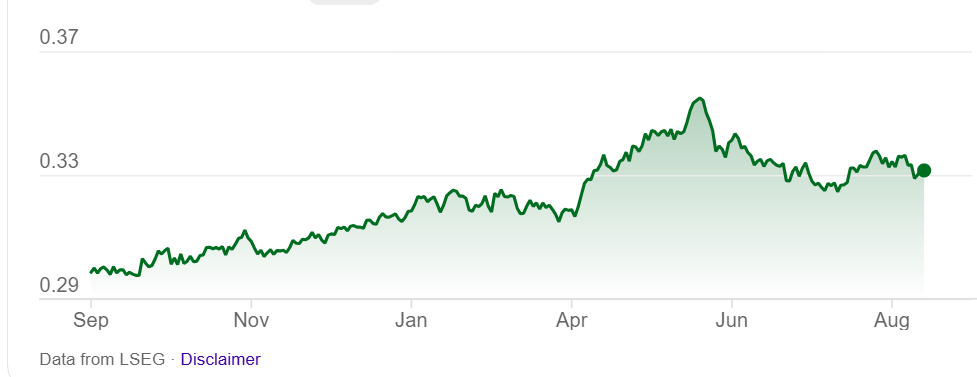
The shekel’s strength has resulted in an inflation rate 1.5%, well within the acceptable range of 1% to 3%, set by the BoI; the currency has appreciated by a further 0.6% against the USD, 1% against the Euro since the last rate cut; the forecast calls for the inflation rate to remain around this midpoint of the range for the balance of the year and next year;
USD/Shekel
Economic indicators such as credit card expenditures reveal that the consumer continues to spend and expenditures are only slightly below long term trends; the labour market remains tight ; wages in the business sector excluding high-tech increased by 5.4 % in the March–May period over the same period last year; the average worker is able to achieve real wages gains as the economy expands;
The Government deficit has returned to a respectable 3.4% of GDP, below the government’s own initial; tax revenues received are slightly above forecast;
Israel’s current account surplus ranges from $5 billion to $6 billion per quarter, driven by the exports of hi-tech products and services;
Foreign direct investment inflows continue to support the economy and represent 8.3% of GDP; Israel’s net international investment position sits at $250 billion and expanding; and
Israel is a net exporter of capital; the combined current account surplus and receipts from capital inflows, results in Israel operating as a net lender to the rest of the world.
On balance, the decision to cut rates again has been met with general widespread approval by the business community, especially those who contend with a strong shekel at home and overseas markets.


Comments
Log in or sign up to join the conversation.