

Unrest in the Middle East seems to be an unfortunate occurrence from time to time. On Saturday morning, many awakened to the news that the U.S. reached an impasse with Iran in recent nuclear weapons negotiations, and both the U.S. and Israel have initiated strikes on Iran. For investors, a question arises about the impact this event will have on equity markets and the economy.
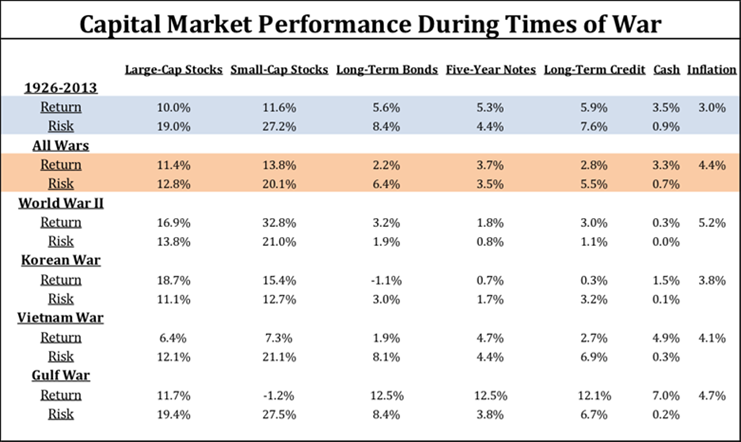
We have written about this topic from time to time and a recent article by the CFA Institute at their blog, Enterprising Investor, notes wars do not necessarily lead to poor equity returns. The below table is included in the CFA Institute blog article, What Happens to the Market if America Goes to War?:
In an article at LPL Research's blog, they include a table on a wider range of shock events and the respective stock market performance that includes market returns, drawdowns, and the time to recovery. The below table notes the average total drawdown across the listed geopolitical events is -5%, with a market bottom reached in about 20 days and a total recovery in less than 50 days.
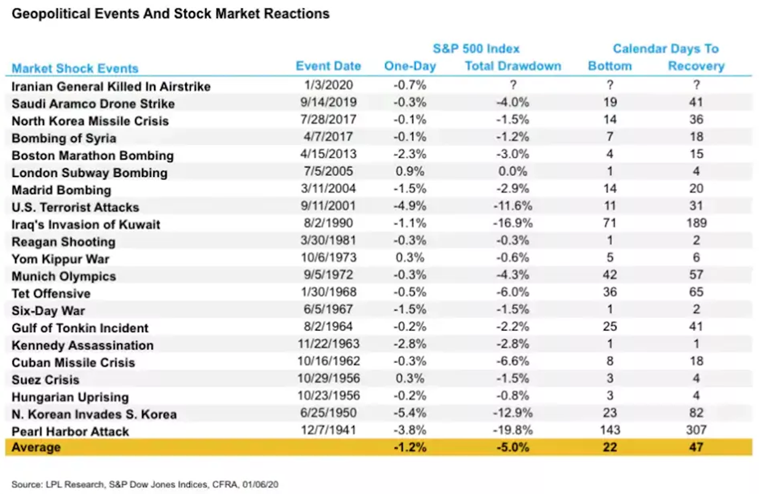
Certainly, several of the loss periods were much greater than the average, and the recovery time period much larger than the average. In an earlier S&P white paper, it highlighted the environment and impact of these longer recovery events noting the following:
"Granted, even though selected events took much longer to play out than the medians would suggest, these extreme situations usually occurred within the confines of a long-term bear market and did not precipitate the initial decline. Examples of these include: 1) Pearl Harbor, 2) President Nixon’s resignation, 3) the terrorist attacks on 9/11, and 4) the collapse of Lehman Brothers. So should history repeat itself, and there is no guarantee it will, unanticipated events that occur within bull markets that throw markets for a loop are typically assessed for their economic impact in short order, allowing opportunistic traders to step in and quickly push share prices back to break-even and beyond."
If history is any guide, market volatility will likely be elevated in the coming week or weeks. Also, based on history, this type of geopolitical shock tends to be short lived. Of course, if the conflict spreads outside of the Middle East, an extension of the volatility would probably occur.

Comments
Log in or sign up to join the conversation.