

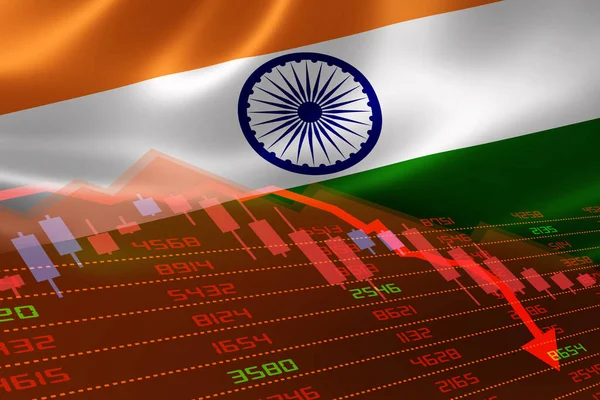
Indian markets are no longer reacting only to earnings, growth projections or domestic optimism.
A deeper macro stress cycle is beginning to emerge underneath the surface, and market behaviour over the past few sessions reflects that shift quite clearly.
On Thursday, the Sensex rebounded sharply by 789.74 points (1.06%) to close at 75,398.72, while the Nifty 50 climbed 277 points (1.18%) to settle at 23,689.60, according to Times of India market coverage.
But beneath the rebound, markets continue showing signs of nervousness.
The India VIX, often referred to as the market’s “fear gauge”, has remained elevated near the 19 zone, according to StockEdge market data.
That detail matters more than many investors realize.
Because when volatility remains elevated even during market rebounds, it usually signals that institutional confidence remains fragile rather than fully bullish.
And that is exactly the kind of market India appears to be entering now.
Markets Are Recovering, But Not Relaxed
The rebound itself was broad-based.
Banks, metals, telecom and select energy-linked stocks witnessed strong buying interest, while markets appeared encouraged by expectations that policymakers may take additional measures to stabilize the rupee and contain imported inflation pressures.
Yet the underlying macro concerns remain largely unresolved:
Brent crude remains elevated near $107 per barrel
the rupee continues hovering near historic lows around 95.85/USD
geopolitical tensions surrounding Iran and the Strait of Hormuz persist
and foreign institutional investors continue pulling money out of Indian equities
That combination is beginning to reshape investor psychology.
Markets are increasingly reacting not only to what has already happened, but to what investors fear may happen next.
Oil Is Once Again Becoming India’s Biggest Macro Variable
For India, crude oil remains the single most important external economic variable.
According to India’s Ministry of Petroleum & Natural Gas, the country imports nearly 85–90% of its crude oil requirements
That means sustained high crude prices directly affect:
inflation
fiscal management
transport costs
corporate margins
currency stability
and eventually consumer sentiment
Markets are already beginning to price this risk more seriously.
Recent fuel price hikes of nearly ₹3 per litre by state-run oil marketing companies reflect the growing difficulty of absorbing elevated energy costs indefinitely.
And once fuel inflation becomes visible at petrol pumps, macroeconomic anxiety begins spreading beyond institutional investors into households and consumers.
That transition is psychologically important.
The Rupee Is Quietly Becoming A Bigger Concern
The Indian rupee touched fresh record lows near 95.95/USD.
This is no longer merely a forex-market story.
A weak rupee amplifies imported inflation precisely when crude oil, shipping costs and geopolitical uncertainty are already elevated.
That creates a dangerous macro feedback loop:
higher crude weakens the rupee
weaker currency increases imported inflation
inflation complicates monetary policy
and rising uncertainty encourages further FII outflows
Markets are increasingly beginning to recognize this cycle.
Foreign Investors Continue Pulling Money Out
Institutional flow data reveals another important trend.
On May 13, FIIs remained net sellers worth nearly ₹4,703 crore, while DIIs absorbed part of the pressure with net buying of approximately ₹5,869 crore.
This divergence is becoming increasingly important.
Domestic flows are stabilizing Indian markets.
But persistent foreign outflows still influence:
liquidity perception
valuation comfort
rupee stability
and broader institutional confidence
And with U.S. yields strengthening alongside elevated oil prices, global capital is increasingly becoming defensive toward emerging markets.
India VIX Is Revealing The Market’s Real Mood
One of the most important indicators right now may not be the Nifty itself, but the India VIX.
Despite sharp rebounds in benchmark indices, VIX remaining elevated near 19–20 suggests markets are still uncomfortable pricing future risk confidently.
That usually happens when investors fear:
geopolitical escalation
inflation persistence
currency instability
or sudden global risk-off events
This explains why markets feel unusually sensitive to:
oil headlines
currency movements
central bank commentary
and geopolitical developments
The market is no longer trading only on growth optimism.
It is increasingly trading on uncertainty management.
Sector Rotation Is Exposing Investor Fear
The way sectors are behaving also reveals changing psychology.
Recent sessions have shown resilience in:
oil-linked companies
telecom
select PSU names
and defensive themes
Meanwhile:
IT remains under pressure
high-valuation growth trades are becoming volatile
and fuel-sensitive sectors such as aviation, paints and chemicals continue facing margin concerns
This is not random.
It reflects markets gradually shifting from:
aggressive growth positioning
toward:
macro-defensive allocation.
That transition is extremely important historically.
Because once investors begin prioritizing macro protection over aggressive growth exposure, volatility often remains elevated longer than expected.
The Bigger Story Is Psychological
The most important development right now is not simply that oil prices are high.
Markets have seen oil spikes before.
What makes this phase different is the growing realization that:
oil,
inflation,
currency weakness,
geopolitical instability,
and global capital flows
may all remain interconnected for longer than investors initially expected.
That changes market behaviour.
It reduces risk appetite.
It increases volatility sensitivity.
And it creates an environment where every macro headline begins influencing valuations much more aggressively.
That is precisely the kind of environment Indian markets may now be entering.


Comments
Log in or sign up to join the conversation.