

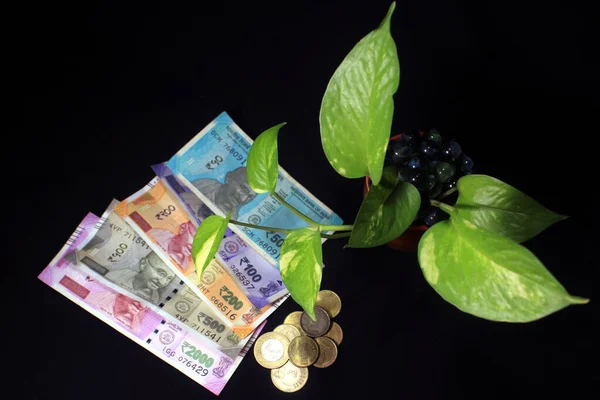
For much of the past decade, India earned a reputation for resilience.
Whenever global growth slowed, India found domestic demand.
Whenever developed economies stumbled, India found structural growth.
Whenever uncertainty emerged, investors pointed to demographics, digitalization, and infrastructure as reasons to stay optimistic.
But resilience has a hidden cost.
It creates the illusion of immunity.
And today, markets are being reminded that the two are not the same thing.
The Market Is No Longer Focused On Growth; It Is Focused On Vulnerability
The biggest shift occurring across Indian markets is psychological.
A few months ago, investors were asking: How fast can India grow?
Today they are asking: How exposed is India to global shocks?
That is a very different question.
The rupee remains under pressure from volatile oil prices and persistent foreign portfolio outflows, with traders increasingly focused on external risks rather than domestic fundamentals. Nearly $25 billion has exited Indian equities since the Iran conflict began, while the RBI continues intervening to stabilize currency markets.
The market narrative is changing.
Growth remains important.
Risk has become more important.
Oil Is No Longer Just A Commodity; It Is A Macro Multiplier
Few variables influence India as deeply as crude oil.
When oil rises, it affects:
inflation,
household budgets,
transportation costs,
manufacturing margins,
fiscal balances,
and currency stability.
Brent crude has remained near the psychologically important $100-per-barrel zone amid uncertainty surrounding U.S.-Iran negotiations and broader Middle East tensions.
The challenge for India is not simply high oil prices. It is unpredictable oil prices.
Businesses can adapt to expensive energy. They struggle when energy costs become impossible to forecast. That uncertainty eventually slows investment decisions and increases economic caution.
The Rupee Has Become The Economy’s Stress Gauge
The Indian rupee is increasingly functioning as a real-time measure of market confidence.
On one hand, the currency has shown resilience thanks to sustained RBI intervention and occasional foreign inflows. The rupee recently closed near 95 per dollar after MSCI-related inflows offset some pressure from higher crude prices.
On the other hand, the underlying trend remains fragile.
Oil volatility, capital outflows, and global risk aversion continue to create downward pressure on the currency. Analysts at major global banks have warned that a prolonged escalation in geopolitical tensions could push the rupee significantly weaker.
For households, currency weakness matters because it quietly raises the cost of imported inflation.
For markets, it signals changing confidence.
The RBI Is Buying Time
The Reserve Bank of India has become the key stabilizing force in the current environment.
Recent RBI data showed a surge in foreign-exchange trading gains as the central bank actively sold dollars to support the rupee. Those interventions helped generate record income for the RBI while also highlighting the scale of pressure being managed behind the scenes.
But interventions do not remove risk: They manage it.
The market now faces a difficult question ahead of the upcoming policy decision:
Will inflation concerns eventually force tighter monetary policy?
Several economists and bond-market participants have begun discussing the possibility of future rate hikes if elevated fuel costs continue feeding inflationary pressures.
India’s Fiscal Discipline Offers A Rare Bright Spot
Amid the uncertainty, one development deserves more attention.
India successfully met its fiscal deficit target of 4.4% of GDP for FY26, reinforcing the government's commitment to fiscal consolidation.
This achievement matters because it gives policymakers some credibility precisely when external pressures are increasing.
Fiscal discipline cannot eliminate oil shocks.
But it can improve investor confidence during periods of volatility.
That may become increasingly valuable in the months ahead.
The Hidden Casualty Could Be Corporate Margins
The next stage of this macro story may not appear first in GDP data.
It may appear in earnings.
India's oil marketing companies continue facing severe under-recoveries despite multiple fuel-price hikes, with potential quarterly losses running into tens of thousands of crores.
That observation extends beyond energy.
Many sectors now face rising input costs, currency pressure, and softer consumer sentiment simultaneously.
Margin compression is becoming a bigger risk than many investors currently appreciate.
Sector Impact
Potential Beneficiaries
Defence manufacturers
Export-oriented companies
Precious-metals-linked businesses
Select infrastructure firms
Companies with pricing power
Under Pressure
Oil marketing companies
Aviation
Consumer discretionary
Import-dependent manufacturers
Logistics-intensive businesses
Key Watch List
Banks and NBFCs
FMCG pricing trends
Auto sector margins
Energy infrastructure
Capital goods
The Real Issue Is Confidence
Markets can absorb bad news; what they struggle to absorb is uncertainty.
Today, uncertainty surrounds:
oil prices
geopolitics
inflation
capital flows
and monetary policy
Each factor alone is manageable. Together, they create hesitation, and hesitation changes behavior long before it changes economic statistics.
Final Thought
India remains one of the world's strongest long-term growth stories. But long-term stories do not prevent short-term stress.
The current environment is teaching investors an important lesson:
Resilience is not the absence of pressure.
Resilience is the ability to function despite pressure.
Over the coming months, that distinction may define market performance more than earnings, valuations, or forecasts.
Because the real battle is no longer between bulls and bears. It is between confidence and uncertainty.


Comments
Log in or sign up to join the conversation.