

The bond market is telling the Fed it wants another interest rate hike.
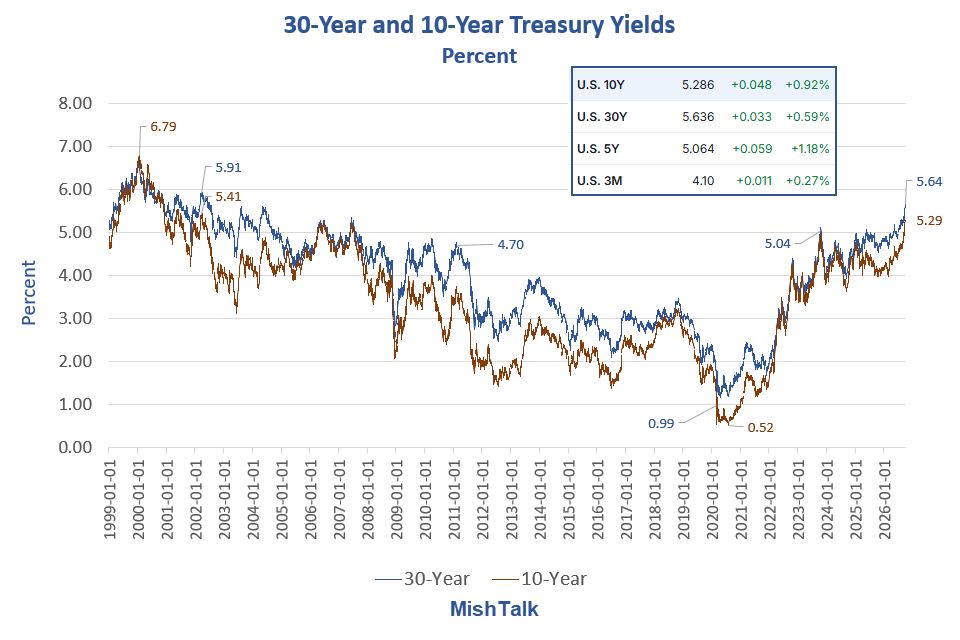
Bond Market Revolt Continues
Despite a much weaker than expected jobs report on top of a better than expected PCE inflation report, long term bond yields keep rising.
30-Year and 10-Yield Bond Yields
30-year: 5.64 percent, highest since 5.65 percent on July 12, 2001
10-year: 5.29 percent, highest since 5.31 percent on July 11, 2001
Rising long-term yields is an unmistakable signal to the Fed that inflation is not under control.
Odds of Rate Hike Drop
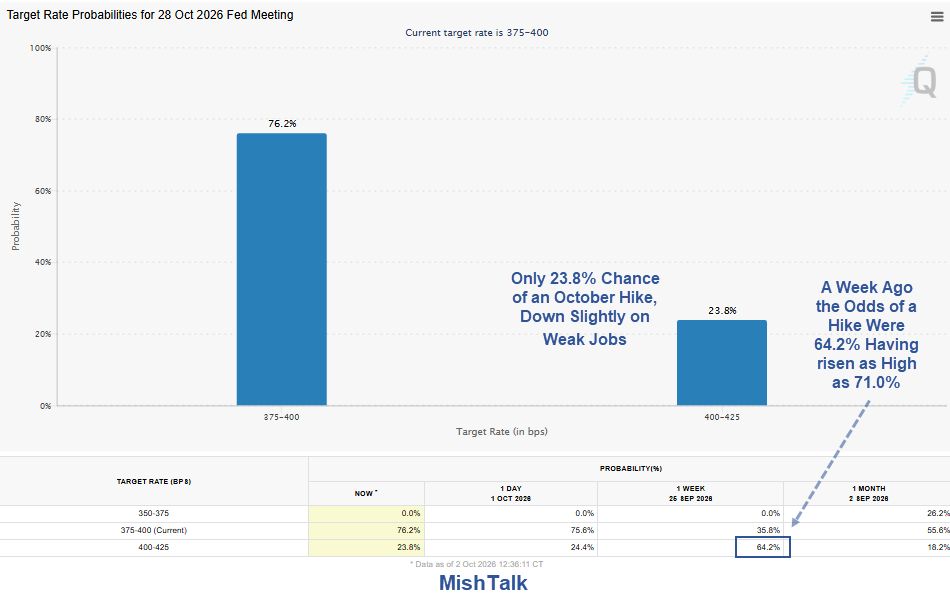
The Fed Funds Futures betting markets does not think the Fed will hike at its next meeting on October 28. I don’t either.
However, the bond market acts as if the Fed should hike, and I agree as well.
If the Fed does not do what the bond market thinks is correct, the bond market revolt will continue.
What Happened to Rate Cut Odds?
On September 30, 2026 I noted Real Personal Income Fell 0.1 Percent August, Real Spending Jumped 0.6 Percent
Real incomes are down but spending surged.
Adjusted for inflation, real personal income declined 0.1 percent in August. Real spending rose 0.6 percent.
Excluding food and energy, the PCE price index increased 0.2 percent.
The core PCE up 0.2 percent was better than the consensus estimate of 0.3 percent. Rate hike expectations plunged but long-term yields didn’t.
October 2, 2026 I noted Jobs Weaker Than Expected in September, Up 29,000 With Negative Revisions
Nonfarm payrolls rose by 29,000 and unemployment ticked u to 4.2 percent.
These events should have been favorable to falling bond yields, but they weren’t.
A comment to the September ISM Manufacturing report on October 1 helps explain.
Input prices up 24 months, increasing faster.
“Every month, we are faced with new headwinds created by this administration. This month, it is the trade war with Canada, which every day is getting worse — causing prices to go up and uncertainty that creates massive disruption. Buying continues to get pushed out indefinitely as customers don’t want to spend on capital expenditures until there is more certainty of costs and demand. The only thing that is predictable is the chaos that is created by these trade policies.”
In short, the bond market does not believe in sustained disinflation, and neither do I.

Comments
Log in or sign up to join the conversation.